
Intestinal biopsy (up to 3 locations)
700 UAH
Intestinal biopsy (up to 3 locations) — histological examination of tissue samples obtained from no more than three sections of the intestine. The examination allows to assess the structure of the mucous membrane and identify possible pathological changes.
Histological material is taken only in medical institutions.
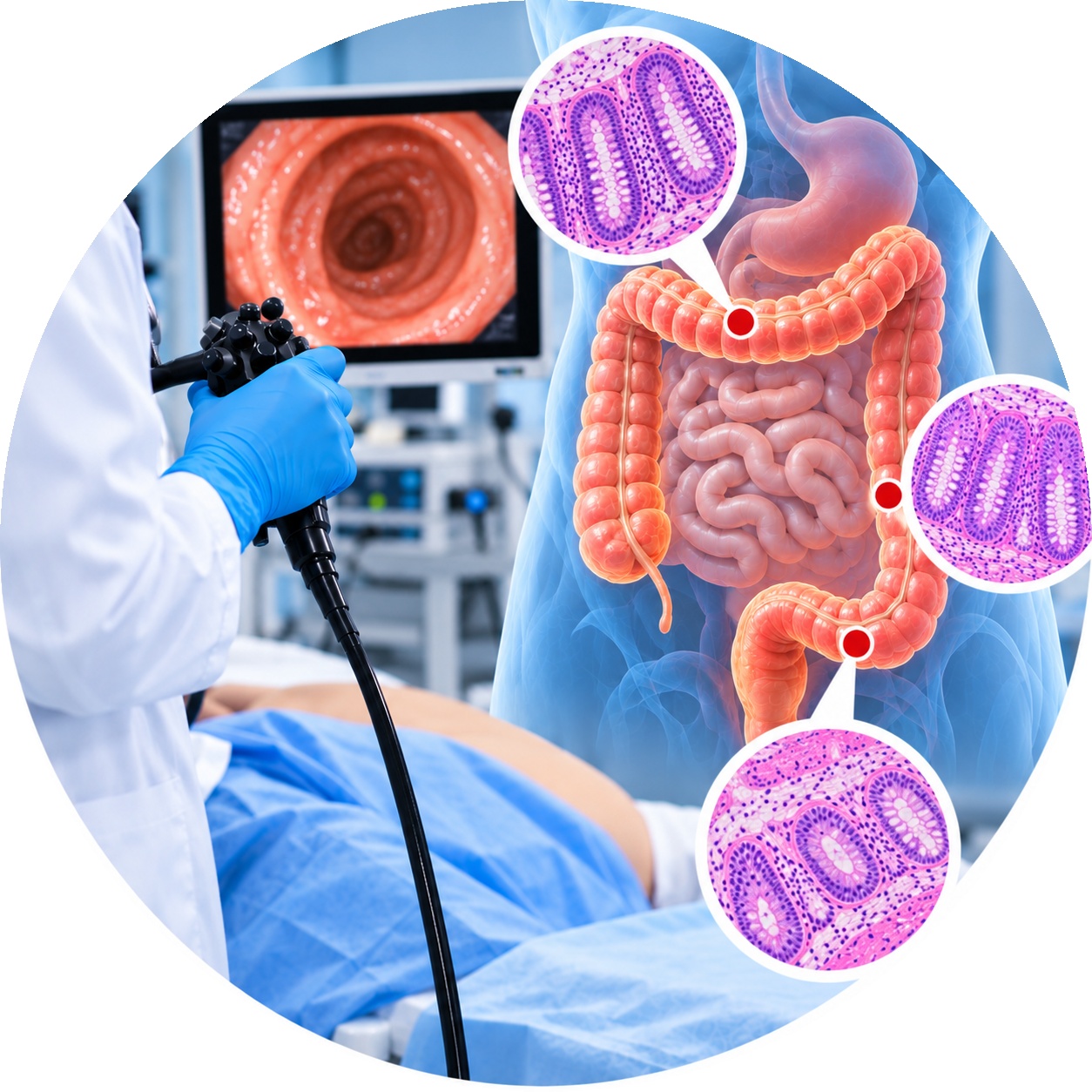
Intestinal biopsy (up to 3 locations) — is a comprehensive pathomorphological study of mucosal samples taken from different parts of the large or small intestine during a single endoscopic procedure (colonoscopy or rectosigmoidoscopy). Simultaneous collection of material from several areas allows the doctor to assess the prevalence of the pathological process and establish the most accurate diagnosis.
Research objective: Research into multiple localizations is critically important for the differential diagnosis of systemic intestinal diseases. This allows us to distinguish local inflammation from total damage, as well as to identify the «mosaic» changes that are characteristic of autoimmune and chronic inflammatory processes.
What does the pathologist evaluate:
Presence of inflammation: assessment of the activity and depth of the inflammatory process in each of the submitted samples.
Symptoms of IBD: search for specific markers of ulcerative colitis (diffuse lesion) or Crohn's disease (granulomas, segmentation).
Polyps and neoplasms: determining the type of polyps found (adenomatous, hyperplastic) and the degree of their dysplasia (precancerous changes).
Condition of the glandular apparatus: detection of atrophy, disruption of the crypt structure or epithelial metaplasia.
Microscopic colitis: diagnosis of lymphocytic or collagenous colitis, which are not visible to the eye during endoscopy.
Clinical significance: Analysis of three localizations allows the gastroenterologist to understand the boundaries of the disease and its dynamics. This helps to select adequate therapy, assess the risk of malignancy (degeneration into cancer) and predict the course of the disease. This approach significantly increases the accuracy of diagnosis compared to a biopsy of only one area.
When is it prescribed:
suspected inflammatory bowel disease (IBD) - Crohn's disease or ulcerative colitis;
the presence of multiple polyps in different parts of the intestine;
chronic diarrhea of unknown origin (to exclude microscopic colitis);
screening for colon cancer with a long history of inflammatory diseases;
assessment of treatment effectiveness and achievement of mucosal remission.
| Execution time | 2 days |
|---|---|
| Type of biomaterial | Tissues and organs |
Useful tests