
Urethral biopsy (PG042)
700 UAH
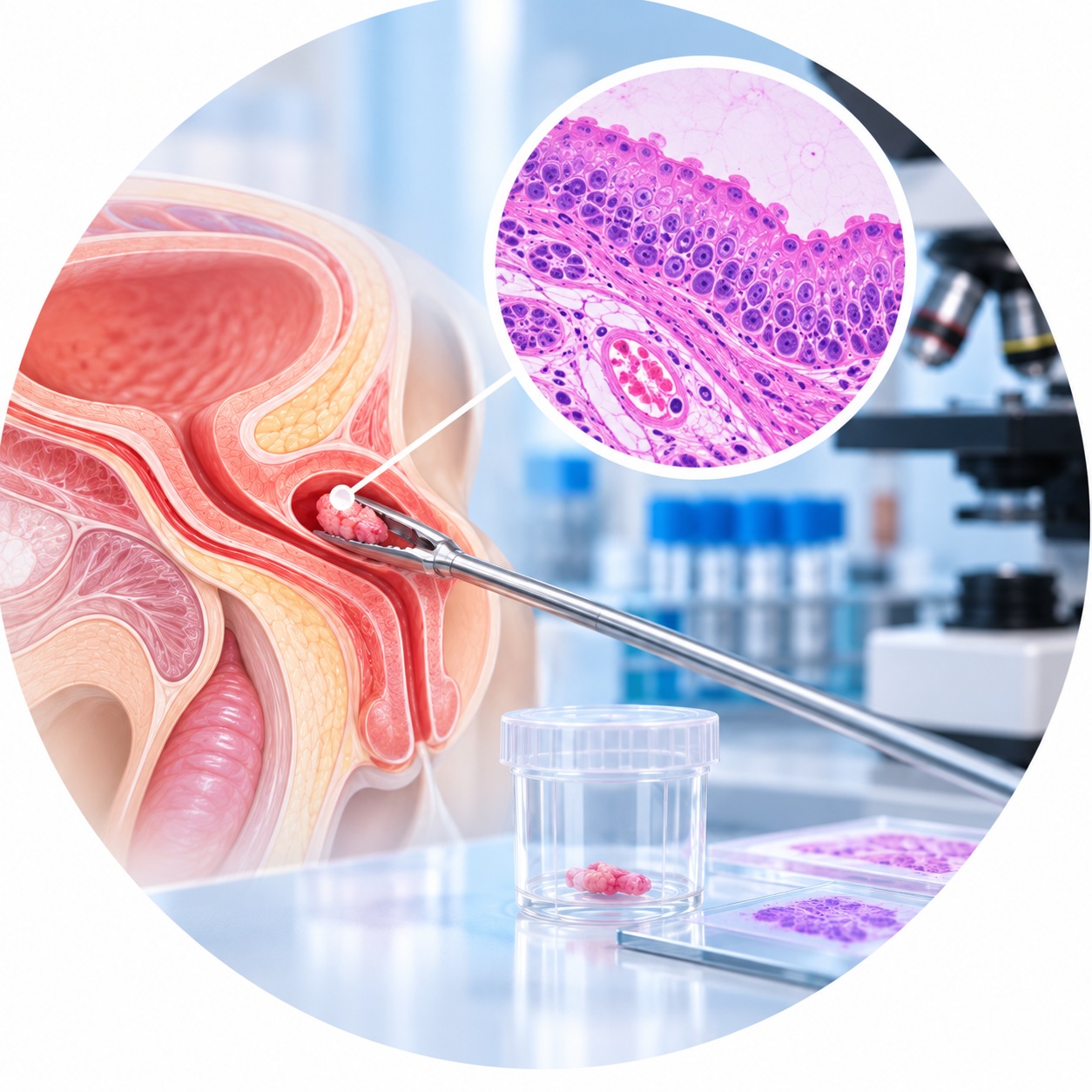
Urethral biopsy (PG042) is a histological examination of a sample of urethral tissue to assess its cellular and structural composition, as well as identify possible pathological changes.
Histological material is taken only in medical institutions.
Urethral biopsy — is a procedure for taking a piece of tissue from the wall of the urethra for pathological analysis. The study is usually performed during urethroscopy, when the doctor detects suspicious areas of the mucous membrane, growths or nodes. The code PG042 corresponds to the histological diagnosis of urethral tissue samples to determine the nature of the pathological process.
Research objective: The main task is to differentiate between benign lesions (e.g. polyps, papillomas or caruncles in women) and malignant tumors (urethral cancer). This is critically important because clinical symptoms, such as difficulty urinating or the presence of blood, can be similar in different diseases.
What does the pathologist evaluate:
Epithelium type: assessment of changes in stratified squamous or transitional epithelium depending on the urethral section.
Presence of atypical cells: looking for signs of squamous cell carcinoma, transitional cell carcinoma, or adenocarcinoma.
Degree of dysplasia: detection of precancerous changes in the mucous membrane.
Depth of invasion: determining whether the tumor has grown into the submucosa or the surrounding corpora spongiosa and cavernosa (in men).
Inflammatory and specific changes: diagnosis of chronic urethritis, genital warts (HPV infection) or rare diseases such as urethral tuberculosis.
Clinical significance: An accurate histological conclusion allows the urologist to choose the optimal scope of intervention: from gentle endoscopic removal of a benign formation to radical surgery in case of invasive cancer. Biopsy also helps to establish the cause of urethral strictures (narrowings), which is important for successful plastic surgery.
When is it prescribed:
suspected urethral neoplasm detected during examination or ultrasound;
prolonged macrohematuria (blood in the urine), the source of which is in the urethra;
the presence of dense nodes or ulcers in the area of the external opening of the urethra;
the need to clarify the nature of the stricture (narrowing) before starting treatment;
Suspicion of tumor recurrence after previous treatment.
| Execution time | 2 days |
|---|---|
| Type of biomaterial | Tissues and organs |
Useful tests