Complex "Infectious"“
Original price was: 1,150 грн.1,030 UAHCurrent price is: 1,030 грн.
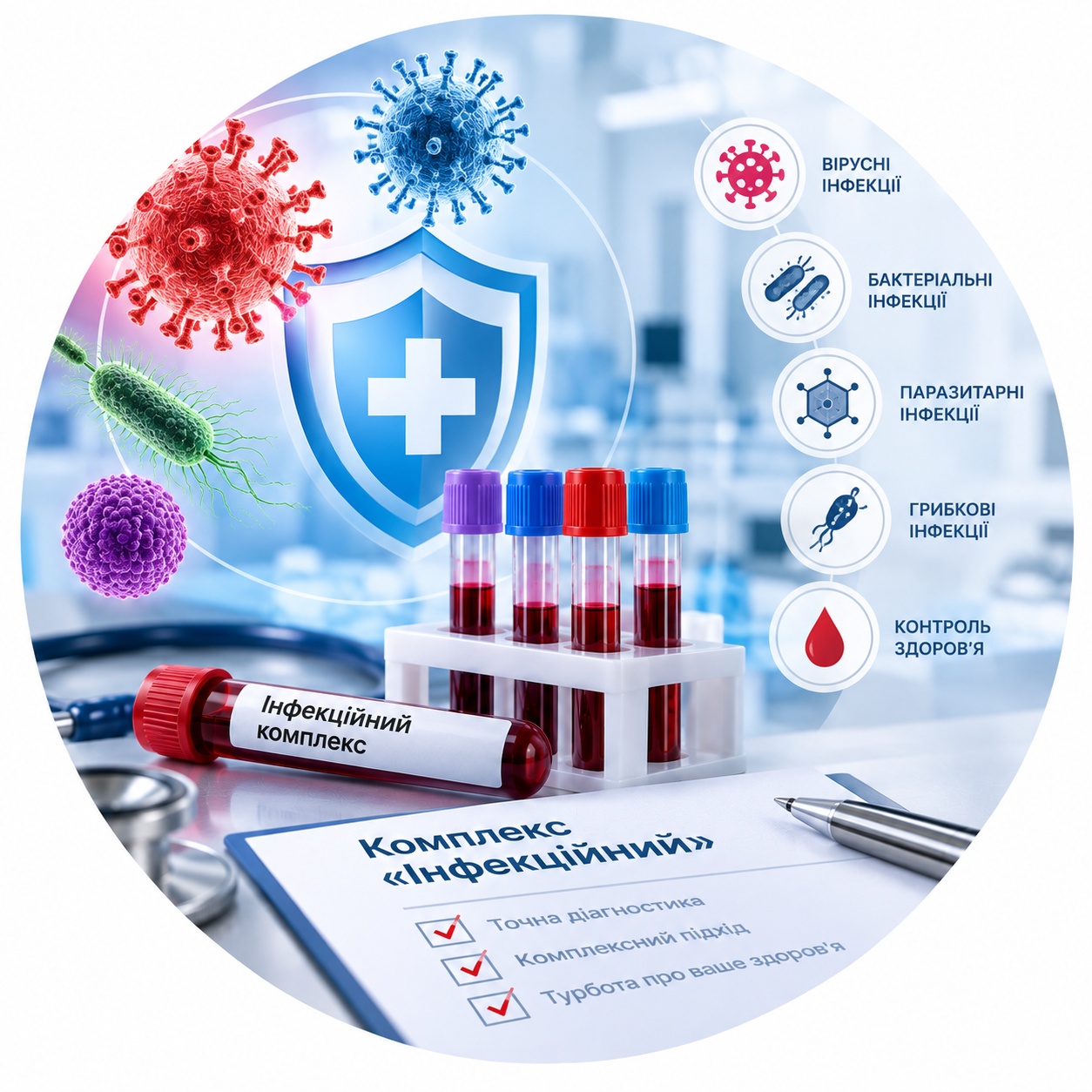
Basic screening complex for detecting the most common blood-borne infections: viral hepatitis B and C, syphilis, and HIV infection.
Biomaterial: Venous blood
Researched indicators: Hepatitis B (HBV): HBsAg; Hepatitis C (HCV): Anti-HCV, Ig(G+M); Anti-Treponema pallidum, (IgM+IgG); Blood sample testing for AIDS.
Appointment: Mandatory preoperative diagnostics, preparation for hospitalization, preparation for medical documentation, preparation for pregnancy, and preventive check of infectious status.
Complex "Infectious"« — is a basic laboratory profile that allows you to simultaneously assess the presence of the four most dangerous and common infections transmitted parenterally (through blood) and sexually: viral hepatitis B and C, syphilis, and HIV (AIDS).
These diseases often have a long latent (asymptomatic) course, but cause significant damage to the immune system and internal organs. Timely diagnosis allows you to detect pathology in the early stages and prescribe effective treatment.
Composition of the complex and studied indicators
Hepatitis B (HBV): HBsAg — the surface antigen of the hepatitis B virus, which is the main marker of infection in both acute and chronic forms of the disease.
Hepatitis C (HCV): Anti-HCV, Ig(G+M) — total antibodies of classes M and G to the hepatitis C virus, which indicate a current infection or a past disease.
Anti-Treponema pallidum, (IgM+IgG) — total specific antibodies of classes M and G to the causative agent of syphilis (pale treponema), which allow detecting infection at different stages.
Testing blood samples for AIDS — screening analysis for the presence of human immunodeficiency virus markers (HIV type 1/2 and p24 antigen).
Indications for appointment
Preoperative preparation: mandatory stage before planned surgical interventions, invasive diagnostic procedures or hospitalization.
Pregnancy planning and management: screening of both parents during planning and mandatory examination of a woman when registering at an antenatal clinic.
Medical examinations: preparation of personal medical records, certificates for admission, travel abroad or employment.
Preventive screening: after unprotected sexual intercourse, parenteral manipulations (tattoos, piercings, dental or cosmetic procedures).
Clinical indications: the appearance of symptoms of liver damage (jaundice, increased transaminases), prolonged fever of unknown origin, enlarged lymph nodes.
Preparation for the study
Delivery time: Blood sampling is performed in the morning on an empty stomach (after an 8–12-hour overnight fast).
Food and alcohol: 24 hours before the analysis, it is necessary to exclude the consumption of fatty, fried foods and alcohol.
Drinking regimen: You are allowed to drink clean, still water 1–2 hours before blood sampling.
Smoking: Refrain from smoking at least 1 hour before the procedure.
Frequently Asked Questions (FAQ)
1. What to do if one of the indicators of the complex is positive?
A positive screening test result is the basis for conducting confirmatory diagnostics (for example, PCR testing to detect viral RNA or DNA, or immunoblot) and consulting a specialized specialist (infectious disease specialist or dermatovenereologist).
2. How long after a possible infection can this test be taken?
Each infection has its own incubation (serological) period. On average, markers in the blood begin to appear 2–6 weeks after contact, depending on the type of pathogen and the individual immune response.
Recommendations after receiving the results
Interpretation of the test results should be carried out by the attending physician or a specialized specialist in conjunction with the medical history.
If the result is negative and there have been no risky contacts in the last 2–3 months, the infection is considered absent.
| Type of biomaterial | Venous blood |
|---|---|
| Execution time | 1 day |
Useful tests