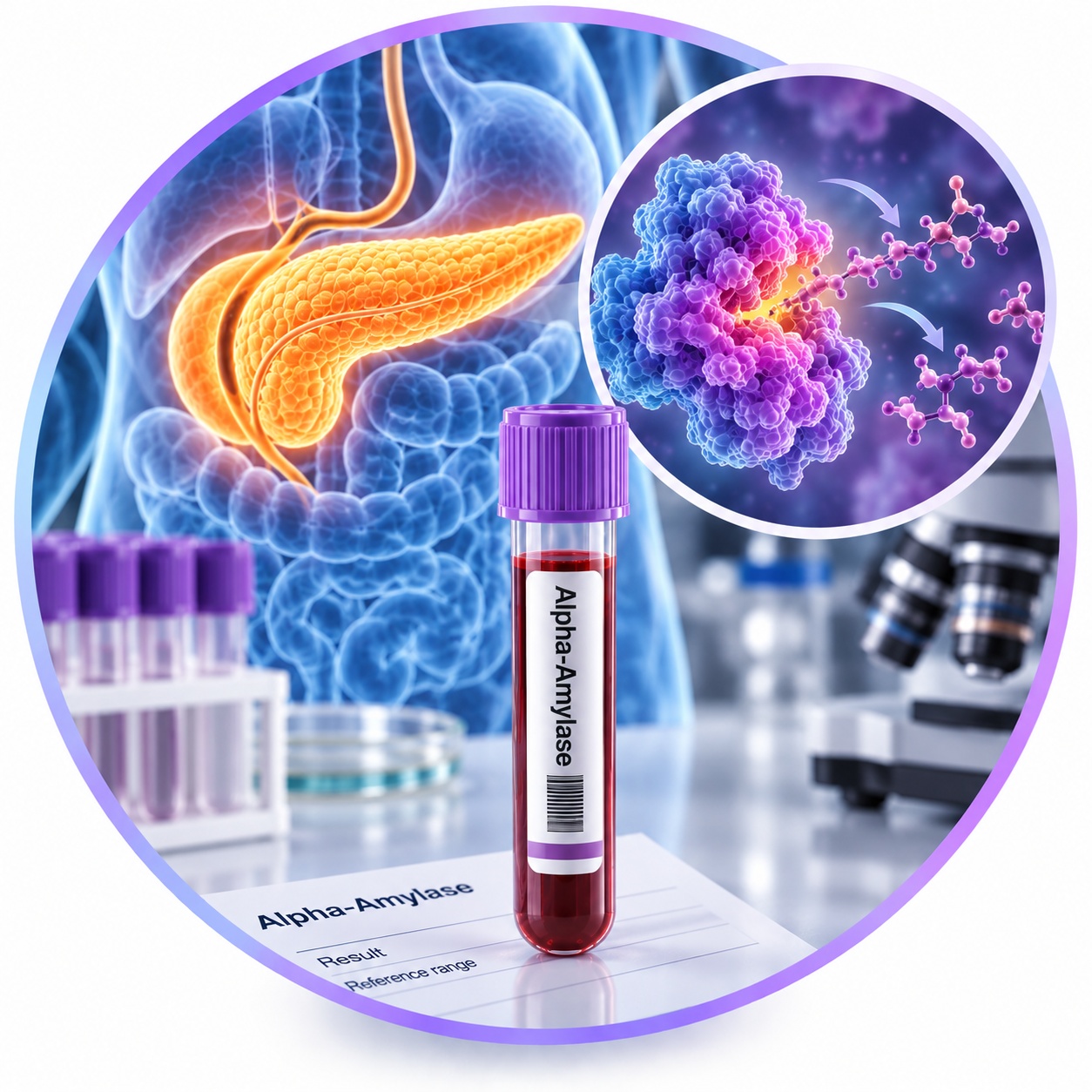


Alpha-Amylase
160 UAH
Biochemical analysis blood to assess the functional state of the pancreas and salivary glands. Helps diagnose acute and chronic pancreatitis, biliary tract pathologies and monitor the effectiveness of treatment.
Description
Alpha-amylase is an enzyme produced mainly by the pancreas and salivary glands and plays a key role in the breakdown of complex carbohydrates (starch, glycogen) into simple sugars. Normally, a small amount of this enzyme is sufficient in the blood, but when the cells of the pancreas or salivary glands are damaged or inflamed, amylase is released into the bloodstream in large quantities.
Determination of alpha-amylase levels is a basic laboratory test in gastroenterology and emergency medicine. It allows for the rapid detection of acute inflammation of the pancreas (acute pancreatitis), exacerbation of a chronic process, as well as complications from the biliary tract.
Key indicators (what determines the test)
Total blood alpha-amylase (serum): Measurement of total enzymatic activity of amylase coming from the pancreas and salivary glands.
Pancreatic amylase (if prescribed separately or in combination): A fraction of the enzyme that is synthesized exclusively by the pancreas, which provides maximum specificity for the diagnosis of pancreatitis.
Preparation for the study
To ensure the reliability of the results of a biochemical blood test, it is recommended to adhere to the following rules:
On an empty stomach: Blood is donated in the morning on an empty stomach (it is recommended not to eat for 8–12 hours before the procedure; you are allowed to drink clean, non-carbonated water).
Food: The night before, you should avoid fatty, fried foods, overeating, and drinking alcohol.
Physical activity: The day before the study, avoid intense sports training and emotional stress.
Medications: If you are taking medications (especially diuretics, oral contraceptives, corticosteroids, or analgesics), consult your doctor about their effect on the test results.
Smoking: Refrain from smoking at least 1–2 hours before donating blood.
Frequently Asked Questions (FAQ)
Why might alpha-amylase levels be elevated? The most common cause of a sharp increase is acute pancreatitis or exacerbation of chronic pancreatitis. An increase is also possible in cholelithiasis, obstruction of the pancreatic duct, perforation of a gastric or duodenal ulcer, renal failure, and epidemic parotitis ("mumps").
Do salivary gland diseases affect this test? Yes, since a significant portion of alpha-amylase is produced by the salivary glands, inflammatory processes in them (for example, salivary stones or mumps) lead to an increase in the level of the enzyme in the blood.
When is this study prescribed? The analysis is prescribed for acute abdominal pain of a girdling nature, nausea, vomiting, suspected acute or chronic pancreatitis, as well as to monitor the condition of patients after operations on the abdominal organs.
Additional information
| Execution time | 1 day |
|---|---|
| Type of biomaterial | Venous blood |
Related products