Thymol test
160 UAH
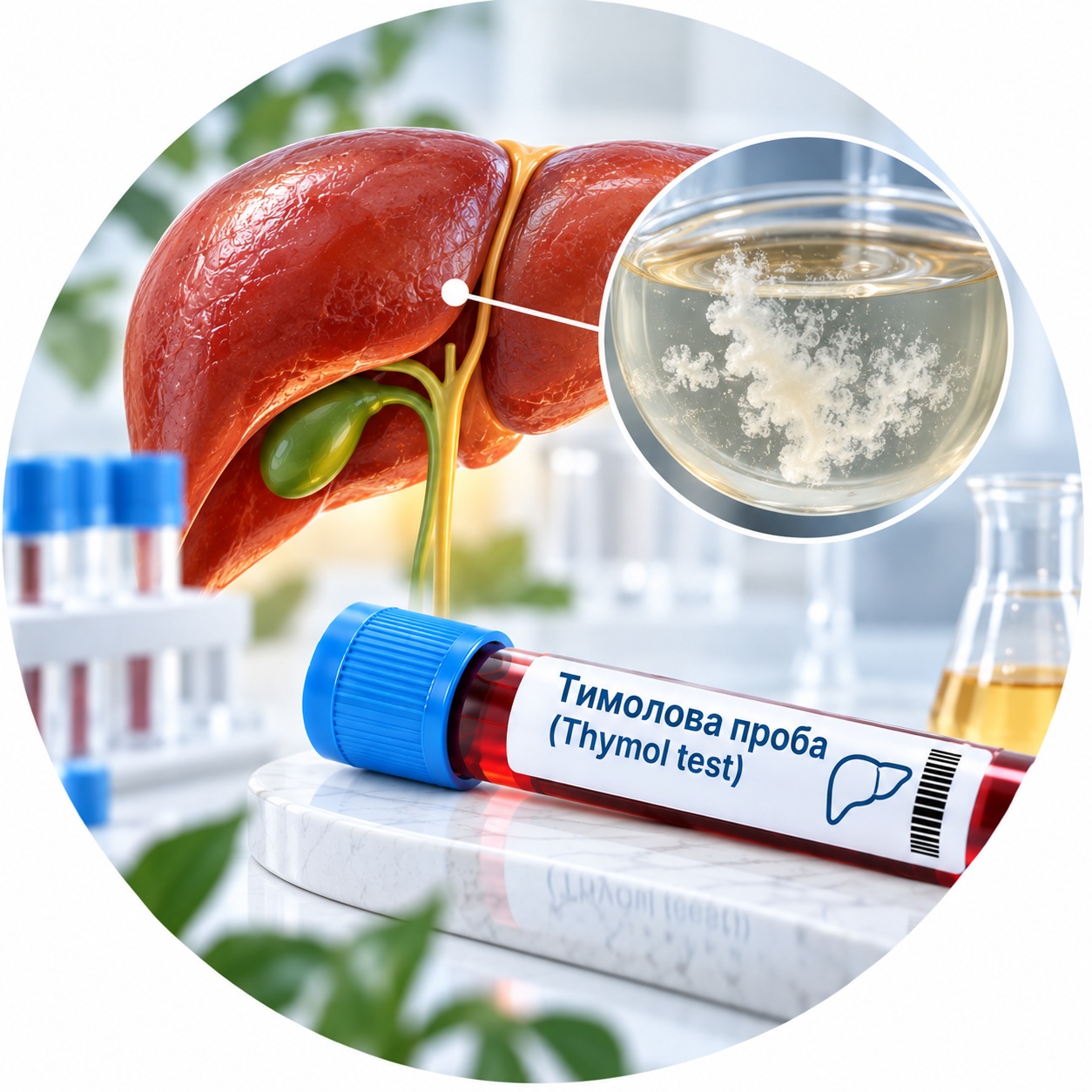
Thymol test — is a highly sensitive sedimentation laboratory test that reflects dysproteinemia, i.e. a violation of the ratio of protein fractions in the blood serum (decrease in albumin and increase in γ- and β-globulins). The study is an early marker of inflammatory processes in the liver and protein-synthetic disorders. The test allows you to detect liver pathologies even before the first clinical symptoms appear or the level of bilirubin increases, and is also used in the complex diagnosis of viral, toxic and autoimmune hepatitis, cirrhosis and systemic connective tissue diseases.
Thymol test — is a sedimentation functional test of blood serum, which reflects the ratio of protein fractions (dysproteinemia), in particular the level of γ- and β-globulins and lipoproteins bound to them. The method is based on the ability of thymol to form turbidity (precipitate) when interacting with serum proteins if their qualitative and quantitative composition is disturbed.
In laboratory diagnostics, the thymol test is a sensitive indicator of protein-synthetic disorders and inflammatory processes in the liver tissue. It often becomes positive in the early, preclinical stages of liver damage - before the level of bilirubin increases or jaundice appears.
What is this study for?
Early diagnosis of liver lesions: Detection of pathological changes in liver tissue in the initial stages, particularly during the pre-icteric periods of viral hepatitis.
Differential diagnosis of jaundice: Differentiation of parenchymal (hepatic) jaundice from mechanical (extrahepatic, caused by biliary obstruction), in which the thymol test usually remains within normal limits.
Assessment of the activity of the inflammatory process: Monitoring the course of acute and chronic hepatitis, toxic and autoimmune liver lesions.
Assessment of protein synthetic function: Detection of severe dysproteinemia in systemic diseases and chronic infections.
Who is recommended to take the test?
Patients with suspected acute or chronic hepatitis (viral, toxic, alcoholic or drug-induced).
Individuals with symptoms of liver dysfunction (dark urine, discolored stools, yellowing of the skin and sclera, heaviness in the right hypochondrium, prolonged nausea).
Patients with complex protein disorders, autoimmune pathologies and systemic connective tissue diseases (e.g. rheumatoid arthritis, systemic lupus erythematosus).
Individuals who take potentially hepatotoxic medications for a long time.
Preparation for the study
Material: Venous blood.
On an empty stomach: Blood is donated in the morning on an empty stomach (after an 8–12-hour overnight fast). You can drink clean, non-carbonated water.
Ration: The day before, you should exclude fatty, fried foods, as well as alcohol from your diet.
Physical and emotional stress: The day before the test, refrain from intense training, saunas, and stressful situations.
Smoking: Do not smoke for 1–2 hours before blood collection.
Interpretation of results
Important: The thymol test is a highly sensitive but non-monospecific test. Its results are always evaluated in combination with other liver tests (ALT, AST, bilirubin, GGT, alkaline phosphatase).
Possible reasons for an increase in the indicator (positive thymol test):
Acute and chronic viral hepatitis (A, B, C, etc.).
Toxic, drug-induced and alcoholic liver damage.
Liver cirrhosis and fatty degeneration (steatosis).
Autoimmune liver disease (autoimmune hepatitis, primary biliary cholangitis).
Systemic connective tissue diseases (rheumatoid arthritis, systemic lupus erythematosus, dermatomyositis).
Severe chronic infections and invasions (e.g. opisthorchiasis, malaria).
Malignant neoplasms with liver involvement or severe dysproteinemia (myeloma).
Reasons for normal values (negative thymol test):
Healthy liver condition and absence of pronounced dysproteinemia.
Mechanical (extrahepatic) jaundice (blockage of the bile ducts by a stone or tumor) - in the initial stages, the thymol test remains negative, which helps in differential diagnosis.
Take a thymol test at the Medi Lab Plus medical laboratory for an accurate and prompt assessment of the functional state of your liver and protein metabolism.
| Execution time | 1 day |
|---|---|
| Type of biomaterial | Venous blood |
Useful tests