

Endogenous creatinine clearance (GFR)
270 UAH
Endogenous creatinine clearance (GFR) — a comprehensive study to assess the filtration function of the kidneys.
Key indicators:
- endogenous creatinine clearance (GFR);
- creatinine in the blood;
- creatinine in urine;
- Daily diuresis is the total volume of urine in 24 hours.
The study helps assess how effectively the kidneys filter the blood and identify any abnormalities in their function.
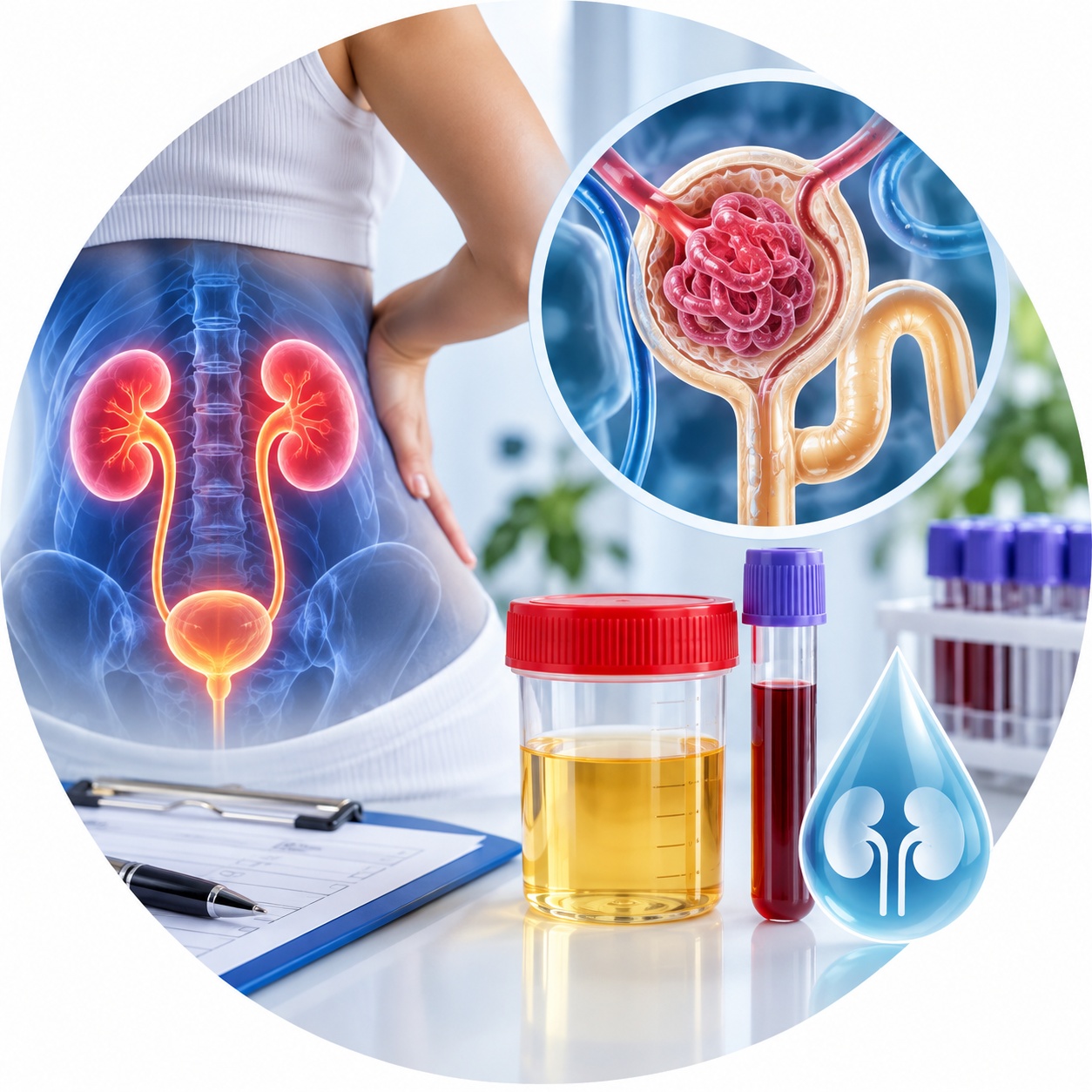
Endogenous creatinine clearance — a laboratory test used to assess the filtration capacity of the kidneys. The indicator is calculated based on the level of creatinine in the blood and urine, as well as the amount of urine excreted over a certain period of time.
This study allows for a more comprehensive assessment of kidney function than just measuring creatinine in the blood.
Key research indicators
The study includes:
Endogenous creatinine clearance (GFR) — the main calculated indicator that characterizes the rate of blood purification from creatinine by the kidneys.
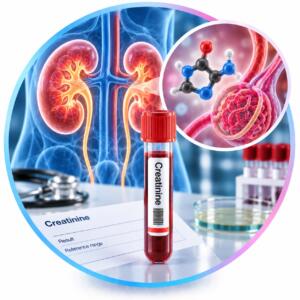
Creatinine in the blood — an indicator necessary for calculating clearance and assessing kidney function.
Creatinine in urine — determines the amount of creatinine excreted in the urine.
Daily urine output — total urine volume, allocated in 24 hours. Correct determination of this indicator is important for the accuracy of the calculation.
What does the analysis show?
Endogenous creatinine clearance characterizes kidney filtration function. A decrease in the indicator may be associated with a decrease in the ability of the kidneys to filter the blood.
The result may vary with various kidney diseases, impaired blood supply to the kidney tissue, and other conditions that affect glomerular filtration.
It is important to consider that creatinine levels and clearance calculations may be affected by age, gender, body weight, muscle mass, nutrition, exercise, and some medications.
Who is the study recommended for?
Endogenous creatinine clearance can be determined by:
- for a comprehensive assessment of kidney function;
- if there is suspicion of decreased glomerular filtration;
- with kidney diseases;
- with increased or changed levels of creatinine in the blood;
- to monitor kidney function in dynamics;
- if necessary, clarification of the filtration capacity of the kidneys;
- to assess kidney function in patients with chronic diseases.
What biomaterial is needed?
For the study you will need:
- venous blood;
- urine collected over 24 hours.
That is why the correct collection of daily urine is one of the the most important stages of preparation for analysis.
How to properly collect daily urine?
The collection is carried out for a full 24 hours.
The first morning urine at the beginning of the collection is usually not collected, but record his time. After that, all urine is collected over the next 24 hours, including nighttime portions.
Exactly 24 hours later, the last portion of urine must be collected.
During the collection it is important not to skip any urination. If some urine was accidentally lost, the laboratory must be notified as this may affect the accuracy of the calculation.
Urine container must be stored according to laboratory instructions.
Preparation for the study
It is recommended to follow your usual eating and drinking regimen the day before, unless your doctor has given you other recommendations.
Preferably:
- avoid excessive physical exertion;
- do not drink alcohol the day before;
- do not drastically change the amount of fluid you usually consume;
- inform your doctor about medications and supplements you take regularly.
You do not need to stop taking medications prescribed by your doctor on your own.
Recommendations during collection
To obtain a reliable result, it is necessary to fully observe the 24-hour interval. It is especially important to accurately record collection start and end times, as well as the total volume of urine obtained.
If the collection was carried out incorrectly or some of the material was lost, the result may be inaccurate.
How is the result evaluated?
Endogenous creatinine clearance is assessed together with blood creatinine levels, urinalysis results, and other indicators of kidney function.
Reduced clearance may indicate decreased renal filtration function., however, a single laboratory test is not used to make a definitive diagnosis.
The result must be evaluated taking into account age, gender, body weight, health status, and reference values specified by the laboratory.
| Execution time | 1 day |
|---|---|
| Type of biomaterial | Venous blood |
Useful tests