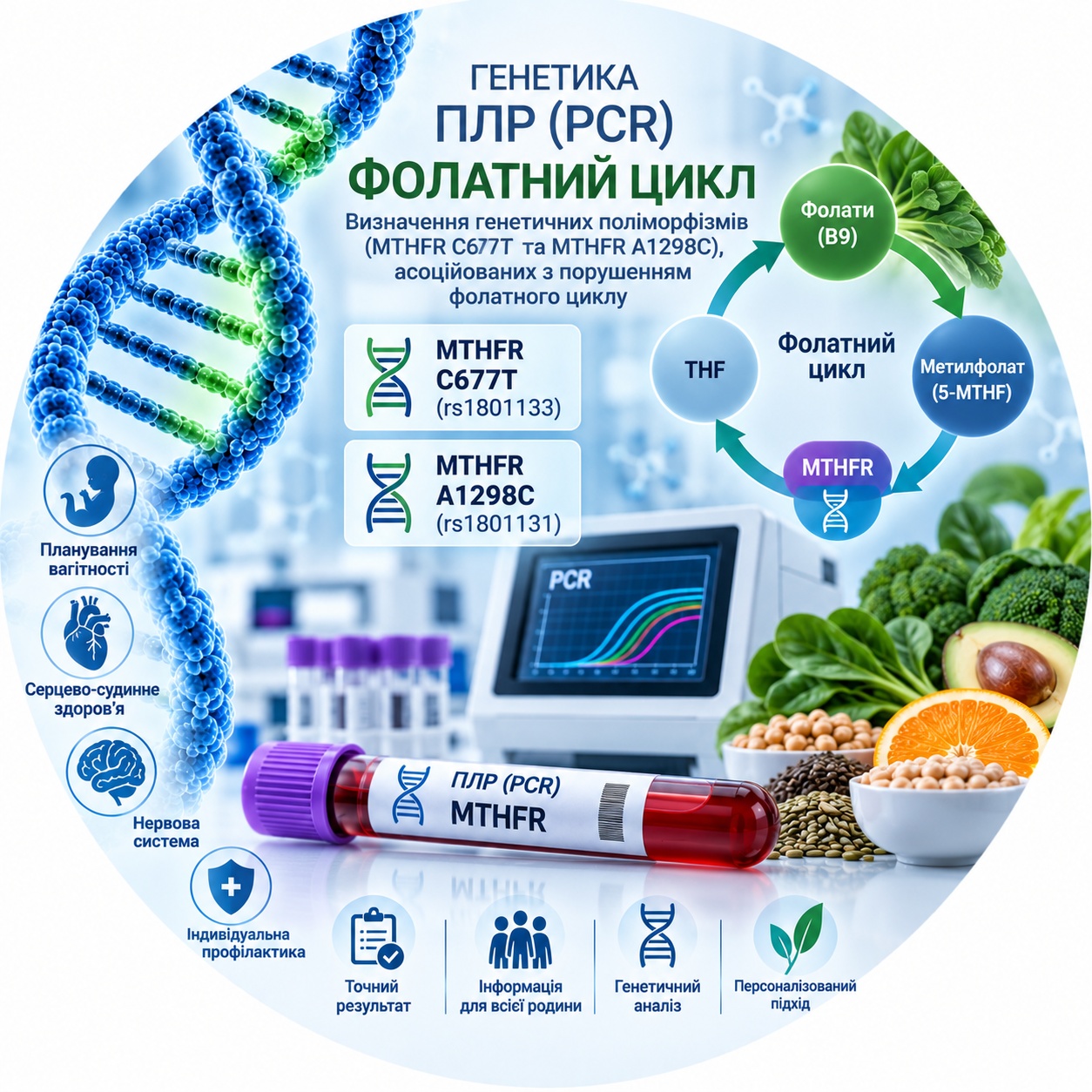


Genetics. PCR. Folate cycle (Determination of genetic polymorphisms (MTHFR C677T and MTHFR A1298C) associated with folate cycle disorders)
1,300 UAH
Genetic research of the folate cycle allows to identify individual mutations in the MTHFR genes that lead to impaired absorption folic acid and toxic accumulation of homocysteine in the blood. This test is critically important when planning pregnancy to prevent fetal malformations, as well as to assess personal risks of strokes, heart attacks, and thrombophilia.
Detailed analysis of the study
The folate cycle is a cascade of complex biochemical processes that ensures DNA synthesis, maintains optimal methylation levels, and is responsible for the proper metabolism of amino acids in the body. The enzyme methylenetetrahydrofolate reductase, encoded by the MTHFR gene, plays a key role in this process. The presence of point changes (polymorphisms) in this gene significantly reduces the activity of the enzyme, blocking the conversion of ordinary folic acid into its active, safe form.
Two polymorphisms are of greatest clinical significance: MTHFR C677T and MTHFR A1298C. In the presence of these genetic variants, the body begins to rapidly accumulate an intermediate metabolic product - the amino acid homocysteine. In high concentrations, homocysteine acts as a toxin: it damages the inner wall of blood vessels (endothelium), triggering the processes of early atherosclerosis, the formation of blood clots and increasing the risk of sudden cardiovascular catastrophes.
The main indications for the analysis:
Obstetrics and reproductive medicine: preparation for pregnancy (especially if there is a history of habitual miscarriage, stillbirth, placental abruption, or congenital neural tube defects in the fetus).
Cardiology and vascular surgery: assessment of the tendency to thrombosis, early myocardial infarctions, strokes and chronic ischemic disease hearts.
Neurology: searching for the causes of chronic migraines, depressive states, and cognitive disorders, since folates directly affect the synthesis of the neurotransmitters serotonin and dopamine.
Therapy control: selection of the correct form of vitamins (replacing synthetic folic acid with active methylfolate) and monitoring homocysteine levels.
The Real-time PCR method allows for the most accurate determination of the patient's genotype (normal, heterozygous or mutant homozygous). Timely genetic screening helps doctors develop individual tactics for the prevention of vascular pathologies and ensure the safe carrying of pregnancy.
Preparation rules and research parameters
| Execution time | 1 day |
|---|---|
| Type of biomaterial | Blood |
Useful tests