
Parvovirus B19 and modern laboratory diagnostics of infection

Parvovirus B19 is often thought of as a childhood infection with a rash on the cheeks, but its true significance is broader. In some people it is mild or almost asymptomatic, while in others it can cause joint pain, temporary suppression of red blood cell production, anemia, or risks during pregnancy.
The CDC notes that parvovirus B19 infection usually causes no symptoms or a mild illness with flu-like symptoms, rash, and joint pain. A characteristic manifestation may be a red rash on the face, often called the «slap in the cheek» symptom.
Laboratory diagnostics are not necessary for every patient with a rash. But they become important if a person is pregnant, has anemia, a weakened immune system, chronic blood diseases, or unexplained symptoms after contact with a sick person. These tests help distinguish old immunity from recent infection and understand whether additional observation is necessary.
What is parvovirus B19?
Parvovirus B19 is a virus that only infects humans. It should not be confused with animal parvovirus, which are different infections. B19 is most often spread through respiratory secretions, such as when coughing, sneezing, or close contact.
In children, the infection often manifests as fifth disease. Initially, there may be a mild fever, runny nose, headache, weakness, or sore throat. This is followed by a characteristic rash on the cheeks and sometimes a lacy rash on the trunk, arms, or legs.
In adults, the rash may be less noticeable, but the joints are more likely to be affected. A person may experience pain, stiffness, or swelling in the hands, wrists, knees, or feet. Because of this, parvovirus B19 is sometimes confused with rheumatologic conditions.
When an infection needs special attention
In most healthy children and adults parvovirus B19 goes away on its own. But there are groups of people for whom the infection may be more dangerous.
Special attention is required for:
- pregnant women after contact with a sick person or with symptoms of infection;
- people with sickle cell anemia;
- patients with other chronic hemolytic anemias;
- people with weakened immunity;
- patients after transplantation;
- people receiving immunosuppressive treatment;
- patients with sudden deterioration of blood parameters;
- children with severe weakness, pallor, or shortness of breath.
The CDC notes that people with sickle cell disease or other long-term anemias can have complications such as transient aplastic crisis. A pregnant person can also pass the infection to their fetus, and the risk of complications for the fetus is higher, especially in the first half of pregnancy.
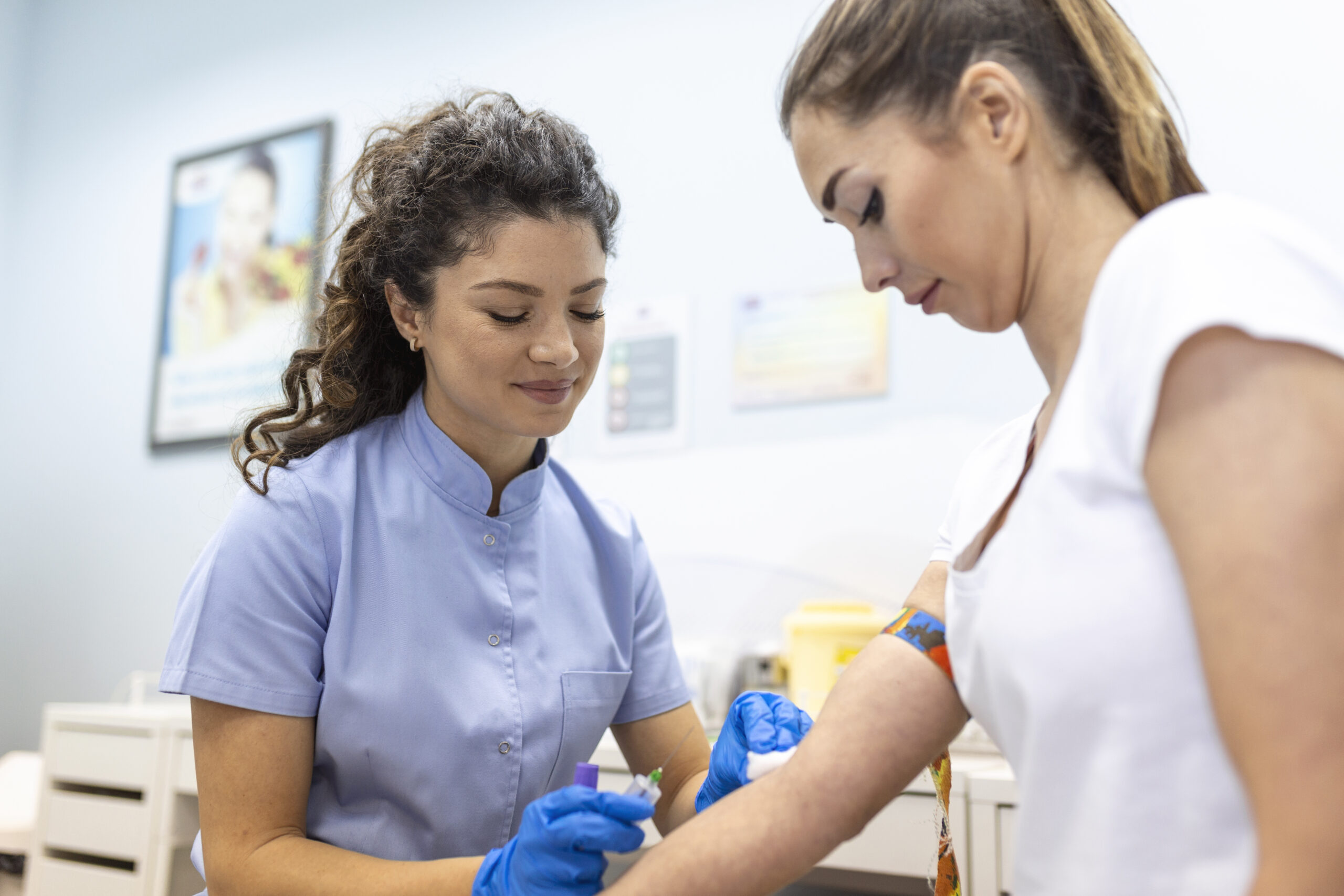
Why parvovirus B19 can affect the blood
Parvovirus B19 has a feature that sets it apart from many other respiratory viruses. It can temporarily suppress the production of red blood cells in the bone marrow. This usually goes unnoticed in a healthy person because the supply of red blood cells is sufficient.
Another situation occurs in people whose red blood cells are destroyed more quickly than normal. For example, in some hereditary anemias, the body must constantly actively produce new blood cells. If parvovirus B19 temporarily blocks this process, hemoglobin can drop sharply.
The Merck Manual explains that parvovirus B19 is a DNA virus that can cause temporary suppression of red blood cell production. In most cases, this is mild, but children with hemoglobinopathies or other red blood cell disorders may develop a transient aplastic crisis.
That is why, if a complicated course is suspected, the doctor may prescribe not only a test for the virus itself, but also complete blood count, to assess hemoglobin, red blood cells, white blood cells, and platelets.
What symptoms may be a reason for tests?
Laboratory confirmation is not always necessary. If a healthy child has the typical mild presentation of fifth disease, a doctor may be able to make the diagnosis clinically. The CDC notes that in the presence of erythema infectiosum, the diagnosis may be clinical without laboratory testing.
It is appropriate to discuss the tests with a doctor if there is:
- contact with a patient during pregnancy;
- rash after flu-like symptoms;
- joint pain or swelling in an adult;
- unexplained anemia;
- severe weakness;
- pallor;
- dyspnea;
- palpitation;
- chronic blood disease;
- weakened immunity;
- prolonged or repeated deterioration of well-being;
- suspected infection in a newborn;
- the need to distinguish an acute infection from a previously suffered one.
In pregnant women, testing is especially important not because of the severity of symptoms in the woman herself, but because of the potential risk to the fetus. The CDC explains that blood test for antibodies to parvovirus B19 can show whether there is immunity, whether a person has no protection, or whether there has been a recent infection.
Basic methods of laboratory diagnostics
Current laboratory diagnostics for parvovirus B19 are typically based on two approaches. The first is serological assays that look for IgM and IgG antibodies. The second is molecular diagnostics that detect viral DNA.
| Research method | What does it show? | When it can be useful |
|---|---|---|
| IgM to parvovirus B19 | Sign of recent or acute infection | If symptoms occur, contact, joint pain, suspected fresh infection |
| IgG to parvovirus B19 | A sign of past infection or immune response | To assess whether a person has had contact with the virus before |
| IgM and IgG together | Help distinguish acute infection from past infection | Especially useful during pregnancy or unexplained symptoms |
| PCR for parvovirus B19 DNA | Detects the genetic material of the virus | In case of immunodeficiency, chronic anemia, aplastic crisis, suspected infection in the fetus or newborn |
| Complete blood count | Evaluates anemia and other blood changes | For weakness, pallor, shortness of breath, chronic blood diseases |
| Reticulocytes | Show the activity of the formation of young erythrocytes | If hematopoiesis is suspected |
| Biochemical indicators | Helps assess the overall condition of the body | By doctor's decision in case of complicated course |
The table does not imply that all of these tests are necessary for everyone. The choice of tests depends on age, symptoms, pregnancy, immune status, presence of anemia, and clinical situation.
What do IgM and IgG to parvovirus B19 mean?
Antibodies are proteins that the immune system produces in response to exposure to an infection. For parvovirus B19, the most common test is IgM and IgG.
IgM usually indicates a recent infection. That's why it's used when you need to figure out if a virus could be the cause of your current symptoms. Mayo Clinic Laboratories notes that because IgG can persist for years, Diagnosis of acute infection is based on the detection of IgM antibodies.
IgG is more likely to indicate a past infection and an established immune response. If IgG is positive and IgM is negative, this may indicate a long-standing exposure to the virus. If IgM is positive, the doctor will consider this as a possible sign of a recent infection, but the interpretation always depends on the symptoms and the time of exposure.
When is PCR diagnostics needed?
PCR helps detect parvovirus B19 DNA. This is especially important when antibodies may not give a complete response. For example, in patients with weakened immunity, the body may not produce antibodies actively enough, so serological tests may be less informative.
The Merck Manual notes that parvovirus B19 viremia can be detected by quantitative PCR methods, which are commonly used in patients with transient or chronic aplasia, immunodeficiency, and in fetuses or newborns with hydrops fetalis or congenital infection.
PCR may be appropriate for:
- immunodeficiency;
- suspected chronic infection;
- a sharp decrease in hemoglobin;
- aplastic crisis;
- severe anemia;
- suspected infection in the fetus;
- suspected congenital infection;
- conflicting serological results.
When a doctor talks about PCR, they are referring to a method that looks not for the immune system's response, but for the genetic material of the pathogen. You can read more about such approaches in the article about molecular diagnostics.
Features of diagnosis during pregnancy
Pregnancy is one situation where laboratory testing is especially important. If a pregnant woman has been exposed to someone with suspected or confirmed parvovirus B19, she should tell her doctor. Even if symptoms are mild or absent, a blood test can help determine whether she is immune or has had a recent infection.
The CDC notes that mild illness usually does not affect the pregnancy and has no long-term effects on the baby, but if infected during pregnancy, your doctor may recommend additional visits, blood tests, and ultrasound monitoring.
The results can have different meanings:
- IgG positive and IgM negative may indicate a past infection;
- IgM positive may indicate a recent infection;
- IgG and IgM negative may indicate lack of immunity if contact was recent;
- conflicting results require re-evaluation by a physician.
During pregnancy, you should not interpret the tests yourself. The decision about repeated testing, ultrasound control, or referral to a specialized specialist is made by an obstetrician-gynecologist.
Why is a complete blood count important?
With parvovirus B19, the doctor is interested not only in the fact of infection itself, but also in how the body reacts. This is especially important in cases of weakness, pallor, shortness of breath, palpitations, or chronic blood diseases.
A complete blood count can help assess:
- hemoglobin level;
- number of erythrocytes;
- hematocrit;
- leukocytes;
- platelets;
- signs of anemia;
- the need for additional assessment of hematopoiesis.
Separately, the doctor may prescribe reticulocytes. These are young red blood cells, and their number helps to understand whether the bone marrow is actively producing new blood cells. In aplastic crisis, the formation of red blood cells can be sharply suppressed.
When it is better not to postpone tests
Most cases of parvovirus B19 do not require complex diagnostics. However, there are situations when laboratory testing is needed more quickly.
You should not postpone your application if you have:
- pregnancy and contact with an infected person;
- pregnancy and the appearance of a rash or flu-like symptoms;
- severe weakness;
- pronounced pallor;
- dyspnea;
- palpitation;
- chronic anemia;
- sickle cell disease;
- weakened immunity;
- prolonged joint pain after infection;
- sharp deterioration in blood parameters;
- suspicion of aplastic crisis.
In such cases tests help not only to confirm infection, but to assess the risks and determine further medical supervision (a similar comprehensive approach is used when analyzing Sjögren's syndrome and what tests help confirm the disease).
What can affect the interpretation of the results?
Parvovirus B19 test results should be interpreted in conjunction with the clinical picture. This includes when the contact occurred, when symptoms began, whether there is a rash, whether the person is pregnant, and whether there is anemia or immunodeficiency.
The interpretation is influenced by:
- period of contact with the patient;
- day of symptom onset;
- presence or absence of a rash;
- pregnancy;
- immune system status;
- the presence of chronic anemia;
- results of a complete blood count;
- previous serological results;
- need for retesting.
For example, a positive IgG without IgM may indicate a past infection rather than a current illness. A positive IgM is more likely to indicate recent exposure to the virus, but the doctor will still consider symptoms and timing of infection.
Is treatment necessary after a positive test?
In healthy people, parvovirus B19 usually resolves on its own, and treatment is aimed at relieving symptoms. The CDC notes that there is no vaccine or treatment that prevents parvovirus B19 infection, and prevention is based on general measures against respiratory viruses.
But in case of pregnancy, severe anemia, immunodeficiency or aplastic crisis, the tactics may be different. In such situations, medical supervision is required, sometimes additional tests, ultrasound monitoring during pregnancy or specialized care.
A positive test does not always mean danger, but it must be interpreted correctly. This is especially true for pregnant women, people with blood diseases, and patients with weakened immune systems.
FAQ
Are tests always needed for parvovirus B19?
No. In healthy children with a typical mild course, a doctor can make a diagnosis clinically. Tests are especially important in pregnancy, anemia, immunodeficiency, chronic blood diseases, or atypical symptoms.
What is better to take IgM IgG or PCR?
It depends on the situation. IgM and IgG help assess recent or past infection. PCR looks for viral DNA and is more often needed in immunodeficiency, severe anemia, aplastic crisis, or suspected congenital infection.
What does positive IgG to parvovirus B19 mean?
A positive IgG often means that the person has had contact with the virus before. If IgM is negative, it is usually not likely to be an acute infection, but the final interpretation depends on the symptoms and clinical situation.
Why is parvovirus B19 dangerous during pregnancy?
In most cases, there are no consequences, but sometimes the infection can be transmitted to the fetus and cause anemia or other complications. Therefore, pregnant women should consult a doctor after contact with a sick person. and undergo tests on his recommendation.
Can you get parvovirus B19 from pets?
No, human parvovirus B19 is different from animal parvoviruses. Pets are not the source of human B19 infection.
Parvovirus B19 is a mild disease in most people, but in some cases, it requires careful laboratory evaluation. IgM and IgG tests help distinguish between recent and past infections, PCR can be useful in difficult cases, and a complete blood count shows whether the infection has affected blood formation. It is most important not to interpret the result in isolation from the symptoms, but to evaluate it together with a doctor, especially during pregnancy, anemia, or a weakened immune system.

Director of Medi Lab Plus LLC, a doctor of the highest category. Has over 45 years of practical experience in medicine and laboratory diagnostics. Founder and head of the laboratory since 2007. More details…

