Heart profile
1,760 UAH
Indicators:
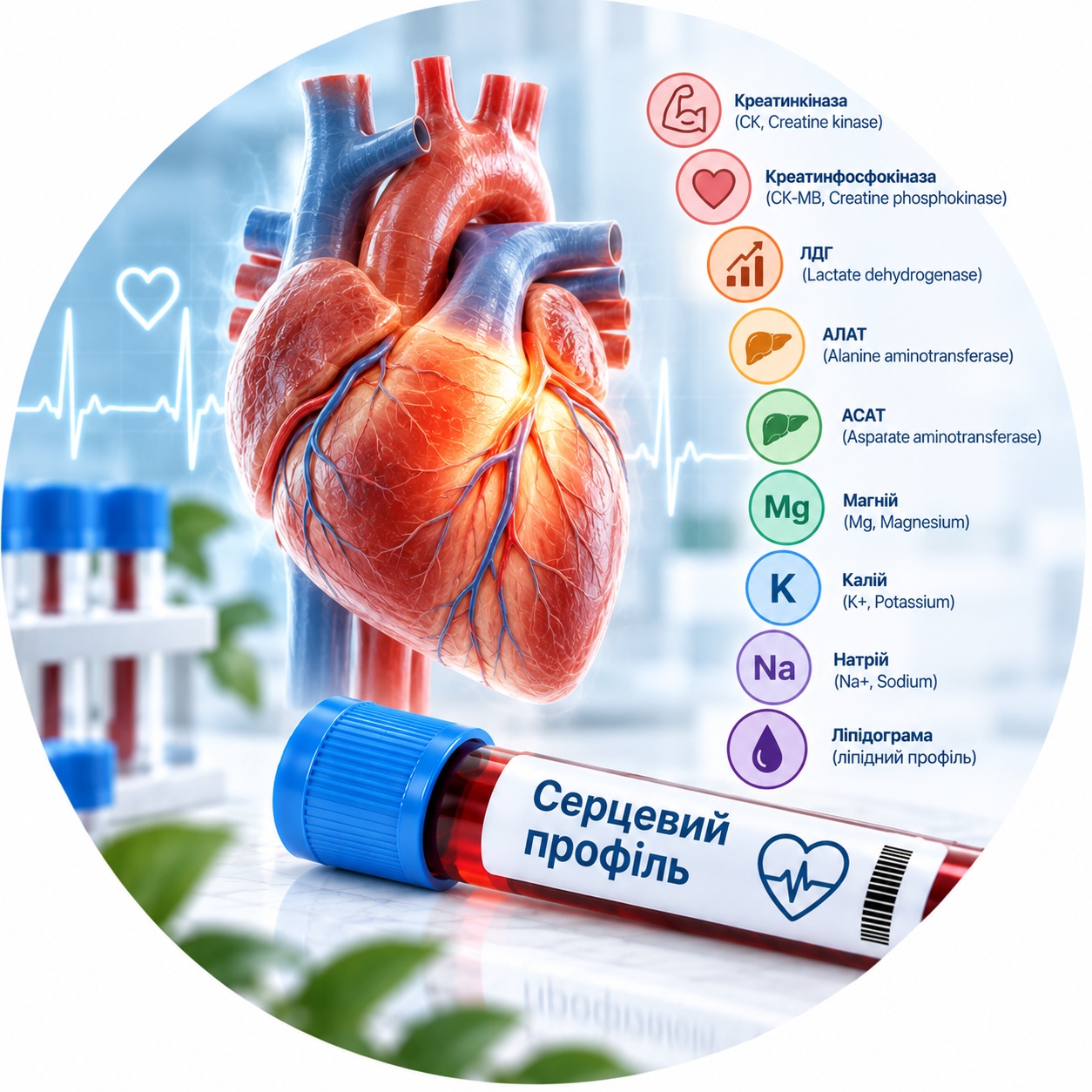
- Creatine kinase (SK, Creatine kinase),
- Creatine phosphokinase (SK-MV, Creatine phosphokinase),
- Lactate dehydrogenase (LDH, Lactate dehydrogenase),
- Alanine aminotransferase (Alat, Alanine aminotransferase),
- Aspartate aminotransferase (AsAT, Aspartate aminotransferase),
- Magnesium (Mg, Magnesium),
- Potassium (K+, Potassium),
- Sodium (Na+, Sodium),
- Lipid profile
Heart profile — is an advanced diagnostic complex that allows you to assess the integrity of heart muscle cells, the state of metabolic processes in the myocardium, the risk of developing vascular accidents and heart rhythm disorders.
Cardiovascular diseases can be asymptomatic for a long time or manifest as nonspecific fatigue. A comprehensive analysis of enzymatic activity and electrolyte composition of the blood allows you to detect myocardial damage in the early stages, assess the degree of ischemia, and also identify key risk factors - lipid metabolism disorders and electrolyte imbalance.
The complex includes the following indicators:
Total creatine kinase (CK) and its cardiac isoenzyme (CK-MB): The most sensitive enzyme markers of cardiac and skeletal muscle damage. The increase in SC-MB is a highly specific indicator of myocardial damage.
Lactate dehydrogenase (LDH): an enzyme involved in glycolysis; its elevation is a marker of tissue damage and ischemia, particularly a late marker of myocardial infarction.
Aspartate aminotransferase (AST) and Alanine aminotransferase (ALT): intracellular enzymes, the ratio of which (de Ritis coefficient) plays an important role in the differential diagnosis of heart and liver lesions.
Electrolytes (Magnesium, Potassium, Sodium): key minerals that ensure the conduction of electrical impulses in the heart, myocardial contractility, blood pressure regulation, and maintenance of normal heart rhythm.
Lipid profile (total cholesterol, HDL, LDL, VLDL, triglycerides, atherogenic index): assessment of fat metabolism and the risk of atherosclerotic plaque formation in the heart vessels.
What is this study for?
Diagnosis of ischemic myocardial lesions: Assessment of the degree of damage to the heart muscle in cases of suspected myocardial infarction or angina pectoris.
Diagnosis of inflammatory heart diseases: Detection of myocarditis of various origins (viral, toxic, autoimmune).
Risk assessment for arrhythmias and heart failure: Detection of electrolyte disorders (potassium or magnesium deficiency) that provoke heart rhythm disturbances and seizures.
Cardiovascular risk assessment: Comprehensive assessment of atherogenic profile for the prevention of coronary heart disease, stroke, and hypertension.
Monitoring of patients with chronic pathologies: Monitoring the condition of the cardiovascular system in patients taking cardiac medications, diuretics or statins.
Who is recommended to take the test?
Patients with complaints of pain, pressure, or discomfort in the chest that radiates to the left arm, shoulder blade, or lower jaw.
Persons with heart rhythm disorders (heart failure, tachycardia, bradycardia), shortness of breath, leg swelling, dizziness.
Patients with chronic arterial hypertension, ischemic heart disease, atherosclerosis.
People with diabetes, obesity, metabolic syndrome, or long-term smokers.
Patients before elective surgery or after intense physical exertion/injuries.
Preparation for the study
Material: Venous blood.
On an empty stomach: Blood is donated in the morning on a strictly empty stomach (after an 8–12-hour overnight fast). You can drink clean, non-carbonated water.
Dietary restrictions: 24–48 hours before the test, eliminate fatty, fried foods, alcohol, and energy drinks from your diet.
Physical and emotional stress: On the eve of the study, heavy training, intense physical labor, and emotional stress should be strictly avoided (physical overload increases the level of muscle enzymes).
Smoking: Do not smoke 1–2 hours before blood collection.
Interpretation of results
Important: The results of the analysis are evaluated comprehensively and dynamically, since the increase in enzymes has clear time intervals depending on the moment of myocardial damage.
Possible reasons for deviation of indicators:
Increased CK-MB, SC, LDH, AST: Acute myocardial infarction, myocarditis, heart injuries, condition after cardiac surgery or resuscitation measures, severe myocardial ischemia.
Increase in total CK, AST, ALT (without isolated increase in CK-MB): Skeletal muscle damage (myositis, injuries, intense training), toxic liver damage, or taking certain medications.
Electrolyte imbalance (Potassium, Sodium, Magnesium):
Hypokalemia / Hypomagnesemia: increased risk of arrhythmias, seizures, weakness (often when taking diuretics).
Hyperkalemia: threat of cardiac conduction disturbances and cardiac arrest (often in renal failure).
Abnormalities in lipid profile: High levels of LDL, triglycerides, and atherogenic index indicate progression of atherosclerosis and a high risk of ischemic events.
Take the "Heart Profile" test at the Medi Lab Plus medical laboratory for an accurate and prompt assessment of the condition of your heart and blood vessels.
| Execution time | 1 day |
|---|---|
| Type of biomaterial | Venous blood |
Useful tests