Kidney tests
Original price was: 490 грн.370 UAHCurrent price is: 370 грн.
Biochemical analysis blood for a comprehensive assessment of the functional state of the kidneys, glomerular filtration capacity and detection of hidden disorders of the urinary system. Helps diagnose kidney failure, inflammatory processes and monitor kidney function in chronic diseases.
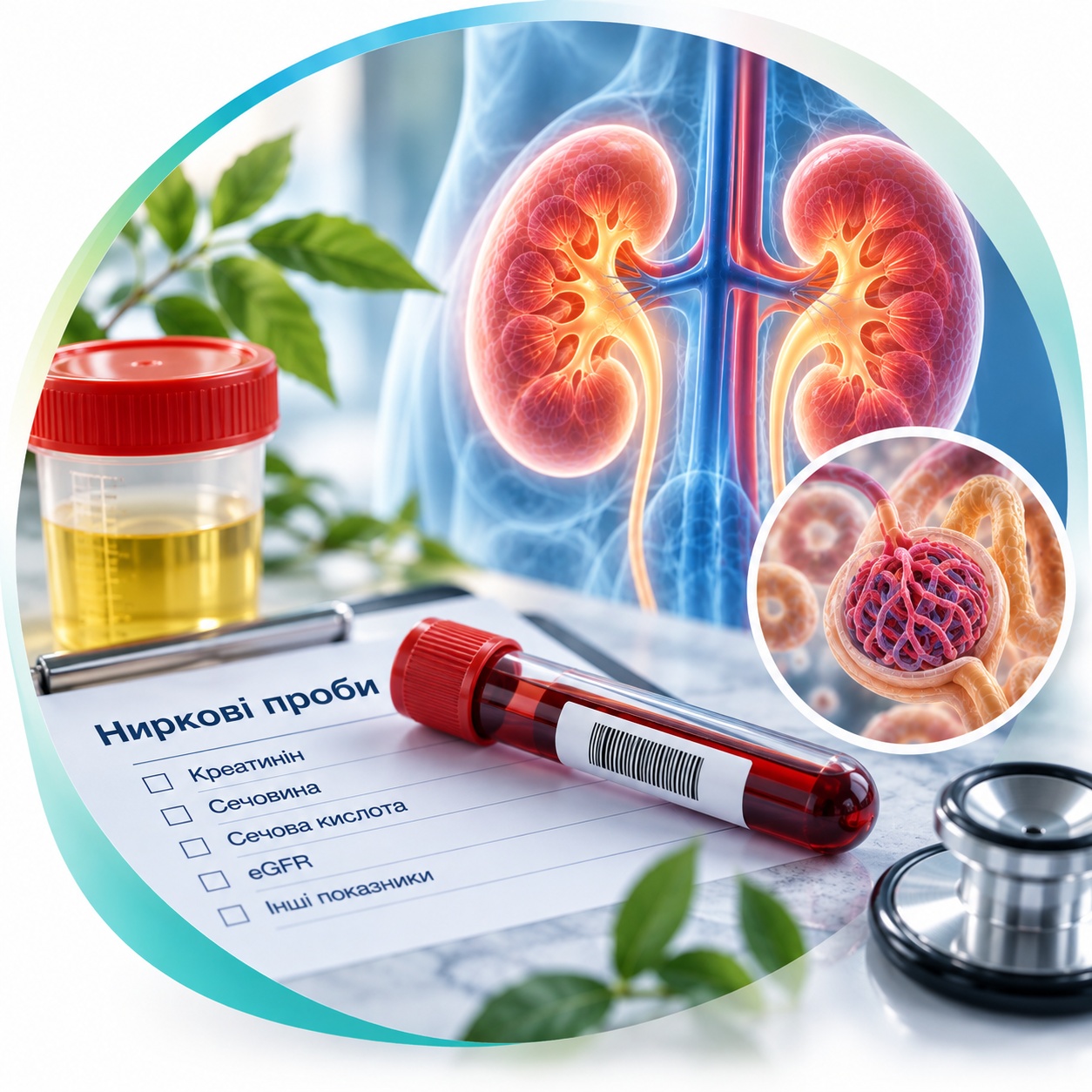
Kidney tests are a standardized set of biochemical laboratory tests that allow a comprehensive assessment of kidney function and the state of nitrogen metabolism in the body. Since the kidneys are responsible for filtering blood, removing end products of metabolism, and maintaining water-salt and acid-base balance, impaired function leads to the accumulation of toxic substances in the blood. Comprehensive determination of key indicators (such as creatinine, urea, uric acid, etc.) provides early diagnosis of pathologies.
This complex is basic in nephrology, urology, therapy, and endocrinology. It helps in timely detection of acute kidney injury, chronic kidney disease (CKD), urolithiasis, gout, and also to monitor the safety of taking medications that are excreted by the kidneys.
Key indicators (what determines the test)
Creatinine: The main marker of kidney filtration function, the end product of muscle energy metabolism.
Urea: A protein breakdown product produced in the liver and excreted by the kidneys; reflects the excretory capacity of the kidneys.
Uric acid: A product of purine metabolism, an increase in which indicates impaired salt metabolism and the risk of developing gout or kidney damage.
Glomerular filtration rate (GFR): A calculated parameter determined by creatinine levels and characterizes the efficiency of blood purification by the kidneys.
Preparation for the study To ensure maximum accuracy of blood test results, the following rules should be followed:
Fasting: Blood is donated in the morning on an empty stomach (it is recommended to fast for 8–12 hours; drinking clean, non-carbonated water is allowed).
Nutrition: The night before, you should avoid overeating, consuming large amounts of meat products, and alcohol.
Physical and emotional state: One day before the study, avoid intense sports training and excessive physical exertion.
Medications: Consult your doctor in advance about taking diuretics or other medications that may affect kidney function.
Bad habits: Refrain from smoking at least 1–2 hours before donating blood.
Frequently Asked Questions (FAQ)
What indicators are usually included in kidney tests? The classic complex usually includes creatinine, urea and uric acid, as well as the estimated glomerular filtration rate (GFR). If necessary, the doctor may supplement the complex with electrolytes (potassium, sodium, chlorine). Additionally, if liver function is suspected, the doctor may prescribe liver tests and their meaning, which will help assess the condition of this organ. This allows for timely detection of liver diseases and the necessary measures to be taken for their treatment. Thus, the analysis of kidney samples becomes an important element of the overall assessment of the patient's health.
What does an increase in urea and creatinine indicate? A simultaneous increase in these indicators most often indicates that the kidneys are not doing their excretory and filtration function properly, which can be caused by acute or chronic kidney disease, arterial hypertension, or dehydration.
When does a doctor order kidney tests? The tests are ordered for preventive examinations, edema, changes in the general urine analysis, arterial hypertension, diabetes mellitus, suspected kidney failure, and also before prescribing potentially nephrotoxic drugs.
| Execution time | 1 day |
|---|---|
| Type of biomaterial | Venous blood |
Useful tests