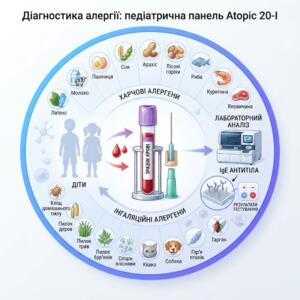


IgE specific (90 food products)
4,200 UAH
Immunoallergy diagnostics/Specific Ig E:
Immunology and allergology are currently experiencing a real boom period due to the development of new technologies and research. One of the key components of detecting allergic reactions in humans is immunoallergodiagnostics, and in particular, measuring the level of specific IgE. In this text, we will consider what specific IgE is, its significance and features of diagnostics using this indicator on the example of 90 food products.
Specific IgE (immunoglobulin E) is an antibody that the body produces in response to antigens present in various allergenic substances. A higher concentration of specific IgE in the blood indicates the severity of the allergic reaction to a particular allergen. Typically, the determination of IgE levels is carried out using the patient's blood.
However, for a more accurate diagnosis of allergies, especially food allergies, specialized tests have been developed that examine the body's response to specific allergens, such as foods. Typically, this is a panel of tests that contains a set of allergens and allows you to determine the presence of IgE antibodies to each of them.
Food allergens can be different and can cause different symptoms. Therefore, it is important to know which foods a particular person may be allergic to. For this, food allergen test panels are used, which include 90 of the most common allergens.
Products that may be included in such test panels include:
- Milk and dairy products.
- Eggs.
- Nuts (peanuts, walnuts, hazelnuts, cashews and others).
- Seafood (shrimp, mussels, crabs and others).
- Cereals (wheat, rice, rye, oats and others).
- Fruits (apples, pears, plums, peaches, apricots and others).
- Vegetables (tomatoes, cucumbers, carrots, cabbage, celery and others).
- Berries (currants, raspberries, strawberries and others).
- Sweets (sugar, honey, chocolate, etc.).
- Spices and herbs (coriander, turmeric, blue lychee, mustard and others).
Determining the level of specific IgE to these products allows for timely detection of an allergic reaction and the appointment of effective treatment or recommendations for eliminating the allergen from the diet.
However, it is important to remember that the results of the studies are not absolute. A positive IgE test does not always mean an allergy, and the decision whether to include or exclude a certain product from the diet should be made by an allergist based on a comprehensive examination of the patient.
In conclusion, specific IgE and immunoallergodiagnostics are important tools in the detection and treatment of allergic reactions, in particular to food products. The development of test panels that include 90 of the most common allergens makes this process more accurate and effective for patients. However, it is always worth consulting a professional doctor to evaluate the results and make the right decisions regarding the dietary regimen.
| Execution time | 1 day |
|---|---|
| Type of biomaterial | Venous blood |
Useful tests