

Examination of the 1st ovary during resection
600 UAH
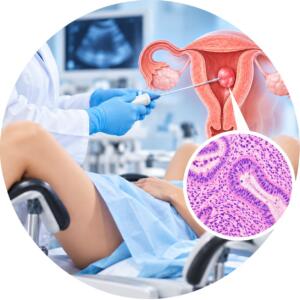
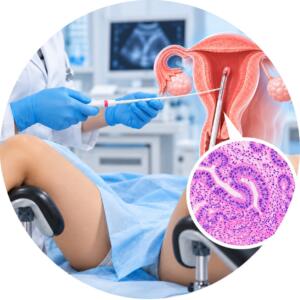
Pathohistological examination of one ovary during resection — morphological study of resected (partially removed) tissue of one ovary to establish the exact histological structure of the formation and exclude malignancy.
Why is it prescribed: for unilateral ovarian cysts (follicular, corpus luteum cyst, endometrioid, dermoid, etc.), benign tumors, ovarian apoplexy or resection for polycystic ovary syndrome (PCOS).
Material for research: surgical material (resected fragment of one ovary).
Method: pathomorphological (histological) examination.
Histological material is taken only in medical institutions.
Histological examination of ovarian tissue — is an analysis of a fragment of an organ removed during an organ-preserving operation (resection). The study allows you to determine the exact structure of the neoplasm, assess the condition of the follicular apparatus and exclude malignant processes, while preserving the woman's reproductive potential.
Research objective: The main task is morphological verification of the pathology. Since resection involves the removal of only part of the ovary, histological analysis helps to ensure that the removed formation (cyst, tumor) was benign and does not require more radical surgical intervention.
What does the pathologist evaluate:
The structure of the cyst wall: differentiation between functional cysts (follicular, corpus luteum) and true tumors (teratomas, cystadenomas).
Cellular composition: looking for atypical cells or signs of proliferation (growth), which may indicate a "borderline" condition or cancer.
Condition of stroma and vessels: the presence of inflammation, sclerosis or circulatory disorders.
Follicular reserve: assessment of the presence of healthy ovarian tissue within the resection area.
Clinical significance: The result of the study is the basis for further treatment and reproductive health prediction. If the analysis confirms benignity, the patient remains under observation. If atypical changes are detected, the doctor may prescribe additional therapy to prevent relapses.
When is it prescribed:
after removal of ovarian cysts of various genesis (dermoid, endometrioid, etc.);
if benign neoplasms are suspected;
in cases of sclerocystic changes in the ovaries;
when performing operations for ovarian apoplexy (to exclude a pathological basis).
| Execution time | 2 days |
|---|---|
| Type of biomaterial | Tissues and organs |
Useful tests