


Research on abortive material
700 UAH
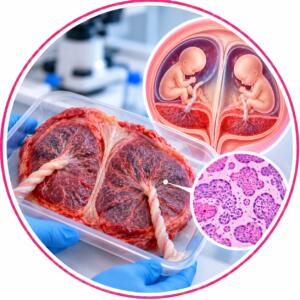
Pathohistological examination of abortive material — morphological analysis of tissues obtained after spontaneous or induced abortion (including cases of pregnancy loss) to determine possible causes of its termination.
Why is it prescribed: to establish the causes of spontaneous miscarriage or pregnancy loss (infectious, hormonal, immunological or pathomorphological factors), confirm the presence of elements of the fetal egg and chorion, exclude vesicular retention and assess the condition of the endometrium.
Material for research: surgical/biopsy material (tissues of the fetal egg, chorionic villi, elements of decidual tissue).
Method: pathomorphological (histological) examination with microscopy of dissected and stained sections.
Histological material is taken only in medical institutions.
Research on abortive material — is a histological analysis of tissues obtained as a result of spontaneous abortion (miscarriage) or medical intervention in the case of a non-viable pregnancy. The study allows you to assess the condition of placental tissue (chorionic villi), decidual membrane and germinal elements to identify the causes of pregnancy pathology.
Research objective: The main task of the analysis is to search for morphological signs that could have led to the arrest of fetal development. This helps to differentiate genetic abnormalities, infectious factors, endocrine disorders or vascular pathologies of the maternal part of the placenta.
What does the pathologist evaluate:
Condition of chorionic villi: detection of edema, fibrosis, or dystrophic changes that may indicate chromosomal abnormalities (e.g., signs of cystic fibrosis).
Inflammatory processes: search for leukocyte infiltration, which indicates the presence of an infectious factor (endometritis, chorioamnionitis).
Vascular disorders: assessment of blood circulation in the decidual membrane, the presence of blood clots or hemorrhages.
Degree of tissue development: correspondence of morphological features to the gestational age.
Clinical significance: The results of the study are critical for planning future pregnancies. Identifying the cause of the loss (infection, hormonal failure, or genetic factor) allows the doctor to prescribe appropriate pre-pregnancy preparation and minimize the risks of recurrence in the future.
When is it prescribed:
spontaneous abortion in early or late stages;
frozen pregnancy (anembryonia or fetal death);
suspected trophoblastic disease (bladder implantation);
the need to exclude specific infections as a cause of miscarriage.
| Execution time | 2 days |
|---|---|
| Type of biomaterial | Tissues and organs |
Useful tests