
Nickel allergy: how to recognize and what to do
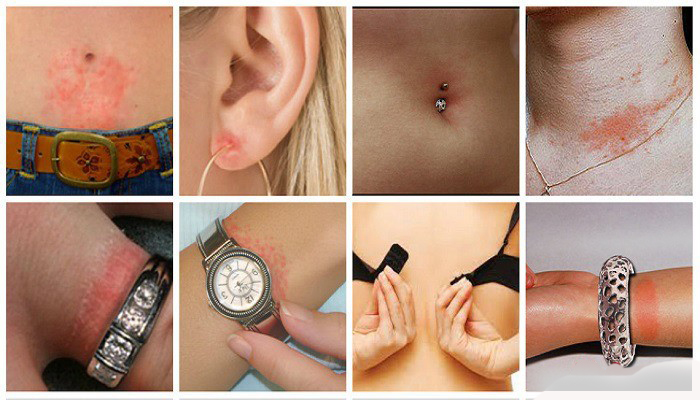
Nickel allergy is one of the most common causes of contact dermatitis. It most often manifests as an itchy rash where the metal touched the skin. Many people notice the problem after wearing earrings, watches, chains, belts, or clothing with metal fasteners. But in reality, there can be many more sources of contact.
It is important to understand that nickel allergy is not a story about «a blood test for everything.» When it comes to a skin reaction to contact with the metal, the main method of confirmation is usually a patch test, during which small amounts of possible allergens are applied to the skin and the reaction is observed. This is exactly approach is considered key for the diagnosis of allergic contact dermatitis.
What does a nickel allergy look like?
The most typical variant is itching, redness and rash at the site of contact with the metal. The skin may become dry, rough, cracked, and sometimes small blisters or oozing appear. The reaction does not always occur instantly: it often develops a day or two after contact, so not everyone immediately understands that the cause is nickel.
Because of this, nickel allergy can easily be confused with a normal skin irritation. But if the rash recurs every time you wear earrings, a belt buckle, a button on jeans, or other metal objects, you should think about contact allergy. Especially if the itching is severe and the irritation appears again and again in the same places.
Where can nickel be hiding?
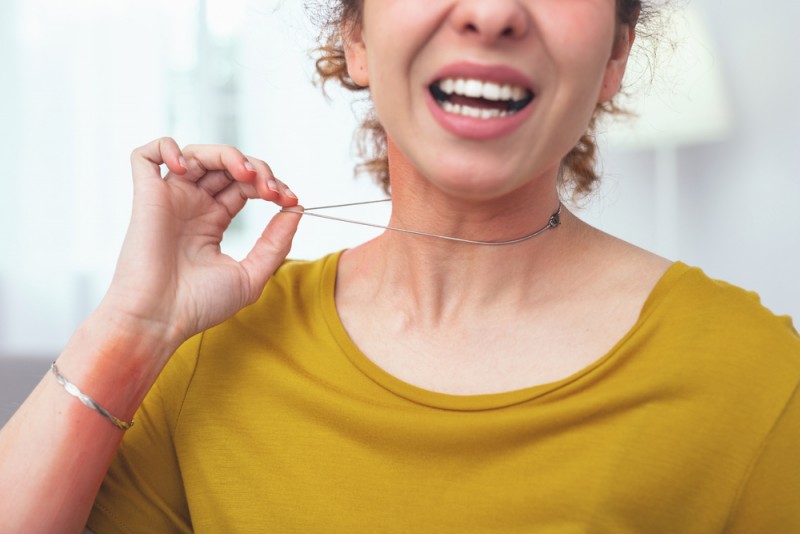
Nickel is often found not only in jewelry. It can be found in earrings and piercing jewelry, watches, clasps, buttons, zippers, belt buckles, eyeglass frames, keys, coins, some tools, and even some electronic accessories. That is why sometimes a person cannot understand for a long time why the rash does not go away: contact with the irritant continues every day.
The risk is especially noticeable after a piercing, because the metal is in contact with the skin for a long time. If itching, redness, or oozing appear in the piercing after new earrings or jewelry, it is worth paying attention to the material of the product.
Table: when to suspect nickel allergy
| Situation | What can be alarming? | What to do |
|---|---|---|
| Itching appeared after earrings or piercing | Redness, rash, irritation near the site of contact | Check the material of the jewelry, replace it with a hypoallergenic option |
| The reaction is under a button, zipper, or buckle | A rash right where the metal touches the skin | Avoid direct contact, change clothes or cover the metal element |
| Hands or fingers itch after touching small metal objects | Dryness, cracks, repeated rash | Pay attention to keys, tools, and other everyday items |
| The rash returns, but the cause is unclear | Symptoms appear again and again | See a dermatologist or allergist |
| There is swelling, pain, warmth of the skin, discharge | Infection may join. | Don't postpone seeing a doctor. |
This pattern is typical for contact dermatitis: the reaction is tied to the site of contact and often recurs after repeated contact with the same irritant.
How is the diagnosis confirmed?
If a doctor suspects a nickel allergy, he or she will assess the appearance of the skin, ask about jewelry, clothing, work, household habits, and other possible sources of exposure. When a more precise cause needs to be determined, a patch test is used. During this test, allergen patches are left on the skin for about 48 hours, and then the reaction is assessed immediately after removal and again after a certain time. A specialist examination is required for proper interpretation.
This is important for the patient to know: if a nickel allergy is suspected, the main thing is not to take random tests, but to find a way to accurately identify the contact allergen. When the cause is confirmed, it is much easier to control the symptoms.
What helps with exacerbation
The first step is to remove contact with the metal that caused the reaction. Without this, even good skin care can only provide temporary relief. It is usually advised to moisturize the skin, not to irritate it further, not to comb it, and not to apply aggressive products indiscriminately. If the reaction is severe or does not go away for a long time, you need to see a doctor who will select a treatment to reduce inflammation.
If the rash becomes painful, the skin is swollen, hot to the touch, there is discharge, or the general condition worsens, it is no longer worth postponing. In such cases, a doctor's consultation is required to avoid an infectious complication. If breathing is difficult, emergency care is required.
How to reduce the risk of recurrence
The best strategy is to minimize your exposure to nickel in your daily life. This means choosing jewelry carefully, looking at the material of earrings and piercings, and paying attention to metal elements of clothing, belts, watches, and accessories. If your skin is already reacting, it is better not to wait for it to «go away on its own,» but to immediately replace the item that may be the cause.
Many people find a simple rule helpful: if itching or a rash appears after a certain item, it is better to remove this item from daily use. In the case of nickel allergy, it is avoidance of the trigger that often gives the most noticeable result.
When to seek help
Consultation is necessary if the rash recurs, the cause is not obvious, home care does not help or the reaction becomes stronger. It is also worth consulting a doctor if the skin does not recover for a long time, the lesion spreads or new areas of rash appear without obvious contact. In such cases, it is better not to guess, but to undergo an examination and, if necessary, testing.
Nickel allergy is often not life-threatening, but it can be seriously annoying, interfere with daily life, and keep coming back because of familiar things. Therefore, the most useful approach is not just to relieve the irritation, but to understand what exactly triggers it and remove this trigger. Once the cause is found, living with this problem becomes much easier.

Director of Medi Lab Plus LLC, a doctor of the highest category. Has over 45 years of practical experience in medicine and laboratory diagnostics. Founder and head of the laboratory since 2007. More details…

