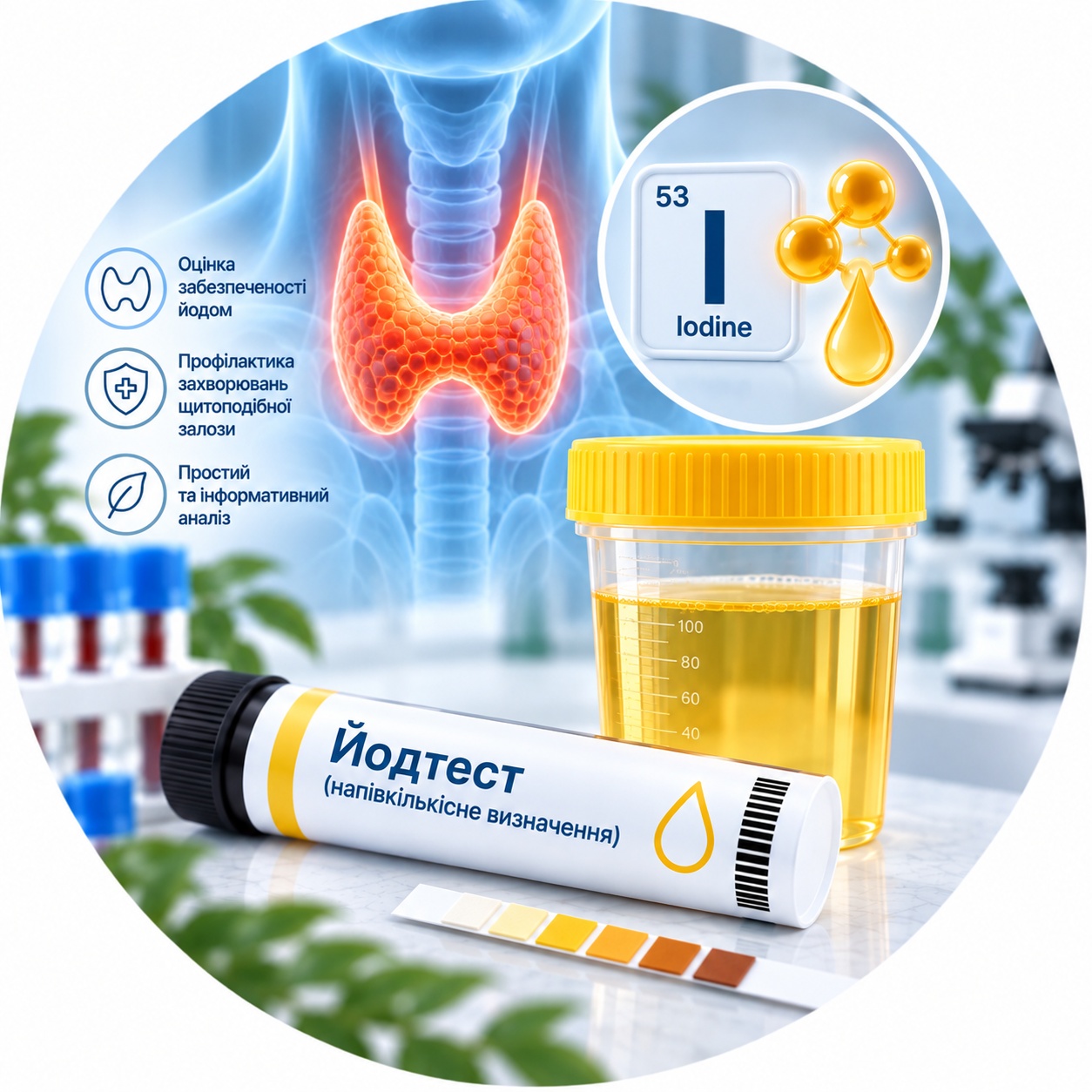
Iodine test (semi-quantitative determination)
400 UAH
laboratory research Iodine test (semi-quantitative determination) — is a quick and informative method for assessing the excretion (excretion) of iodine in the urine for the primary diagnosis of iodine deficiency conditions and assessment of the body's supply of this microelement.
Biomaterial: Morning urine sample (single)
Research method: Semi-quantitative (colorimetric)
Appointment: Screening for iodine deficiency, assessment of the functional state of the thyroid gland, control of iodine prophylaxis and correction of the diet.
Iodine test (semi-quantitative determination of iodine in urine) is a key laboratory screening test that reflects the current level of iodine intake and absorption by the body. Since more than 80–90% of the trace element absorbed with food and water is excreted through the kidneys, its concentration in a single morning urine sample directly reflects the degree of iodine supply to the body over the past few days.
Iodine is necessary for the synthesis of thyroid hormones — thyroxine (T4) and triiodothyronine (T3). These hormones regulate basic metabolism, support the functioning of the cardiovascular and central nervous systems, and are also responsible for normal growth and mental development.
Indications for appointment
Diagnosis of iodine deficiency: Identifying the causes of an enlarged thyroid gland (endemic goiter) and a decrease in its function (hypothyroidism).
Screening in risk groups: Assessment of iodine status in pregnant women, lactating women, children and adolescents, whose bodies are particularly sensitive to iodine deficiency.
Treatment and prevention control: Assessing the effectiveness of taking iodine-containing drugs or dietary supplements and preventing overdose (hyperioduria).
Preventive checkup: Checking the balance of the diet and assessing the need for additional consumption of iodized salt or special complexes.
Interpretation of results (WHO criteria)
The values given are standard diagnostic ranges according to the World Health Organization (WHO) criteria. The final interpretation is carried out by an endocrinologist in conjunction with a hormonal profile.
Preparation for the study
Material: An average portion of the first morning urine collected in a sterile container is used for analysis.
2–3 days before collection:
It is strictly forbidden to treat the skin or mucous membranes with external iodine solutions (iodine solution 5%, Betadine, Iodinol, Lugol's solution).
In consultation with your doctor, temporarily stop taking iodine-containing vitamin and mineral preparations and dietary supplements.
Exclude diagnostic procedures using radiopaque iodine-containing contrast agents.
24 hours before collection: Avoid drinking alcoholic beverages, spicy and salty foods, as well as foods that change the color of urine (beets, carrots).
Hygiene procedures: Immediately before collecting urine, thoroughly clean the external genitalia without using aggressive detergents.
Exclusion factors: Do not take the test during menstruation or acute inflammatory diseases of the urinary system.
Frequently Asked Questions (FAQ)
1. How does the semi-quantitative Iodine test differ from the quantitative measurement of iodine?
The semi-quantitative method allows for a rapid determination of the range of urinary iodine concentrations (according to WHO categories), which is ideal for primary screening. Quantitative analysis determines the exact numerical value in μg/l.
2. Is it possible to do an «iodine grid» before taking this test?
No, applying iodine mesh or treating even small scratches with iodine solution is strictly prohibited. Iodine is easily absorbed through the skin into the bloodstream and excreted by the kidneys, which will cause a false-positive result with high values.
3. With what tests should I combine Iodtest?
For a complete assessment of thyroid health, it is recommended to take an Iodine test along with a hormone test: TSH (thyroid stimulating hormone), free T4 and free T3, and also, if necessary, undergo an ultrasound of the thyroid gland.
Recommendations after receiving the results
Doctor's consultation: The result obtained must be provided to an endocrinologist or family doctor for evaluation and selection of further tactics.
If deficiency is detected (< 100 mcg/l): A specialist will help adjust your diet (including seafood, iodized salt) or select an individual dosage of iodine preparations.
Refrain from self-medication: Self-administration of high doses of iodine without medical supervision can lead to the development of autoimmune thyroiditis or iodine-induced thyrotoxicosis.
| Execution time | 1 day |
|---|---|
| Type of biomaterial | Fresh urine, collected no earlier than 2 hours before determination |
Useful tests