
Electrolytes (K+, Na+, Cl-, Ca++)
590 UAH
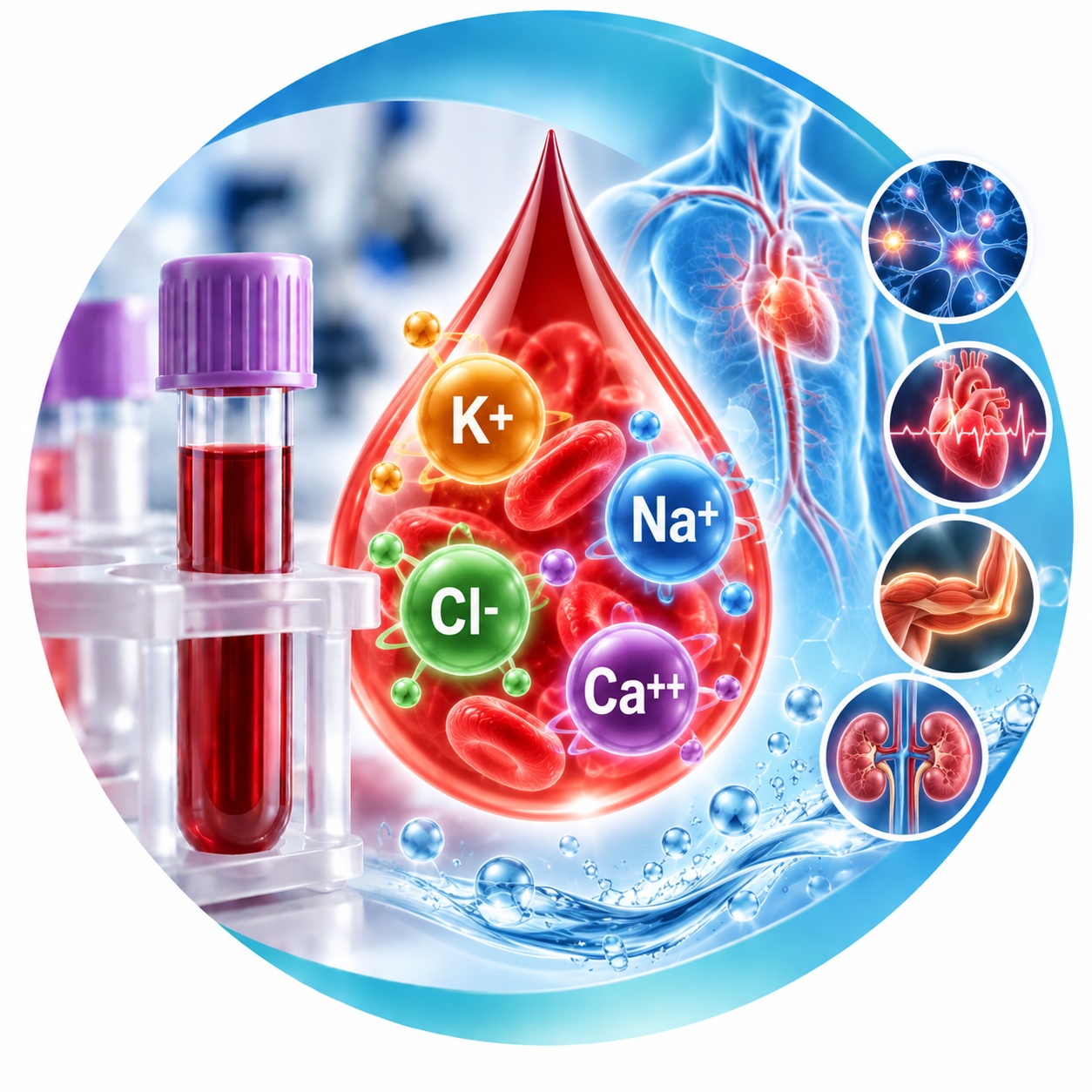
Blood test for electrolytes (, , , ) — is a comprehensive study of the levels of essential minerals that support water-salt balance, acid-base balance, and proper hydration of the body. The test allows you to assess the functioning of the kidneys and cardiovascular system, normal transmission of nerve impulses, and muscle contraction.
Blood test for electrolytes (, , , ) — is a comprehensive study of the levels of essential minerals that support water-salt balance, acid-base balance, and proper hydration of the body. The test allows you to assess the functioning of the kidneys and cardiovascular system, normal transmission of nerve impulses, and muscle contraction.
What is included in the complex:
Potassium () — is responsible for the correct heart rhythm, vascular tone, and muscle fiber function.
Sodium () — regulates the volume of fluid in the body, ensures stable blood pressure and conduction of nerve impulses.
Chlorine () — maintains acid-base balance and participates in the formation of gastric juice.
Calcium () — critically important for bone strength, blood clotting, myocardial and muscle contraction.
When is it recommended to take the test:
If dehydration or fluid retention (edema) is suspected.
With heart rhythm disturbances, blood pressure disorders, frequent cramps or muscle weakness.
To monitor the condition of the kidneys, liver, cardiovascular and endocrine systems.
While taking diuretics, heart or antihypertensive medications.
With prolonged vomiting, diarrhea or intense physical exertion.
Preparation for the study:
On an empty stomach: Blood sampling is performed in the morning, 8–12 hours after the last meal. You can drink clean, non-carbonated water.
In 24 hours: exclude alcohol, fatty foods and intense physical activity.
In 1–2 hours: abstain from smoking and avoid stress factors.
Medications: If you are taking diuretics, potassium, calcium supplements, or blood pressure medications, be sure to discuss with your doctor the possibility of temporarily stopping them before donating blood.
| Execution time | 1 day |
|---|---|
| Type of biomaterial | Venous blood |
Useful tests