Potassium (K+, Potassium)
170 UAH
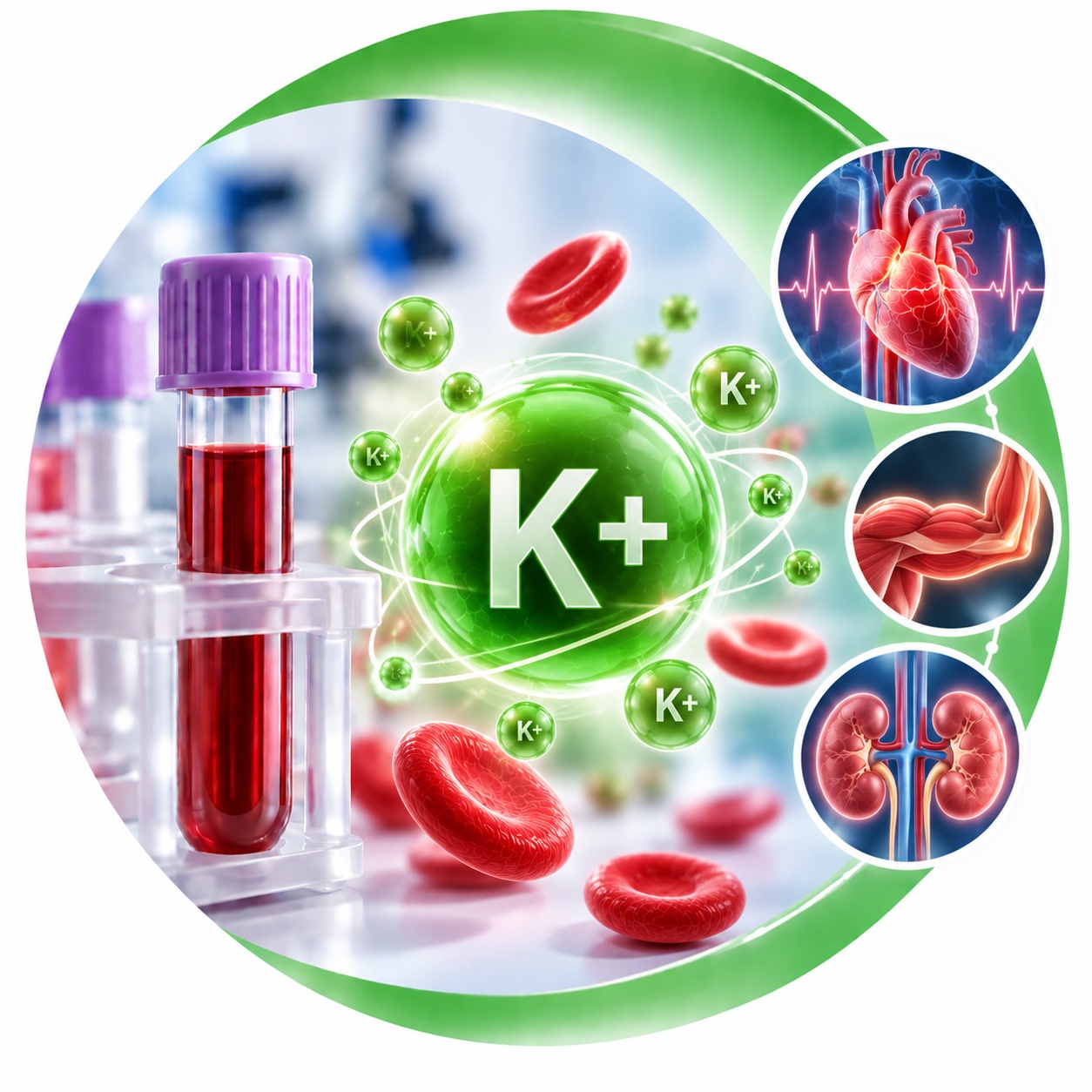
Blood test for potassium (, Potassium) — a study of the level of a key intracellular electrolyte, which is responsible for a stable heart rhythm, vascular tone, and normal muscle function. The test allows you to detect water-salt disorders, assess kidney function, and prevent dangerous malfunctions in the cardiovascular system.
Potassium (K+) is one of the most important chemical elements that plays an important role in the life of organisms, including humans. This trace element is part of the food and water we consume, and is key to various biological processes.
Potassium is an electrolyte that regulates the body's water balance. It affects the functioning of cells, helping to transmit nerve impulses and ensuring proper muscle contraction, including the heart muscle. Potassium also helps maintain normal blood pressure, as it regulates the activity of the sodium pump, which is responsible for the exchange of ions in cells.
The importance of potassium in the diet cannot be overstated. The daily requirement for potassium depends on a person's age, gender and physical activity, but on average it is about 2000-3500 mg. Many foods contain potassium in significant quantities, in particular, bananas, potatoes, spinach, lentils, fish, citrus fruits, dried fruits.
Potassium deficiency can lead to various health problems, including:
- Muscle weakness: Potassium deficiency can cause muscle atrophy and general weakness.
- Heart rhythm disorders: Low potassium levels can cause arrhythmias and other heart rhythm disorders, which can be dangerous to your health.
- Kidney problems: The kidneys play an important role in regulating potassium levels in the body. Kidney failure can lead to potassium retention in the blood, which can be dangerous.
- Decreased bone density: Potassium deficiency can affect calcium levels in the body, which can lead to decreased bone density.
On the other hand, excess potassium (hyperkalemia) can also be harmful to the body, causing symptoms such as muscle weakness, nausea, vomiting, and even arrhythmias.
Therefore, it is important to eat a balanced diet that provides adequate potassium levels but does not cause excess potassium. People with certain medical conditions, such as chronic kidney failure, may need to limit their potassium intake and take medications as prescribed by their doctor.
In conclusion, it should be noted that potassium is an integral part of the healthy functioning of the body. It regulates the work of the heart, the nervous system and other important processes. Therefore, you should pay attention to your diet and take care of a balanced diet to maintain optimal potassium levels in the body.
| Execution time | 1 day |
|---|---|
| Type of biomaterial | Venous blood |
Useful tests