

STI Research Panel #3
Original price was: 1,260 грн.1,100 UAHCurrent price is: 1,100 грн.
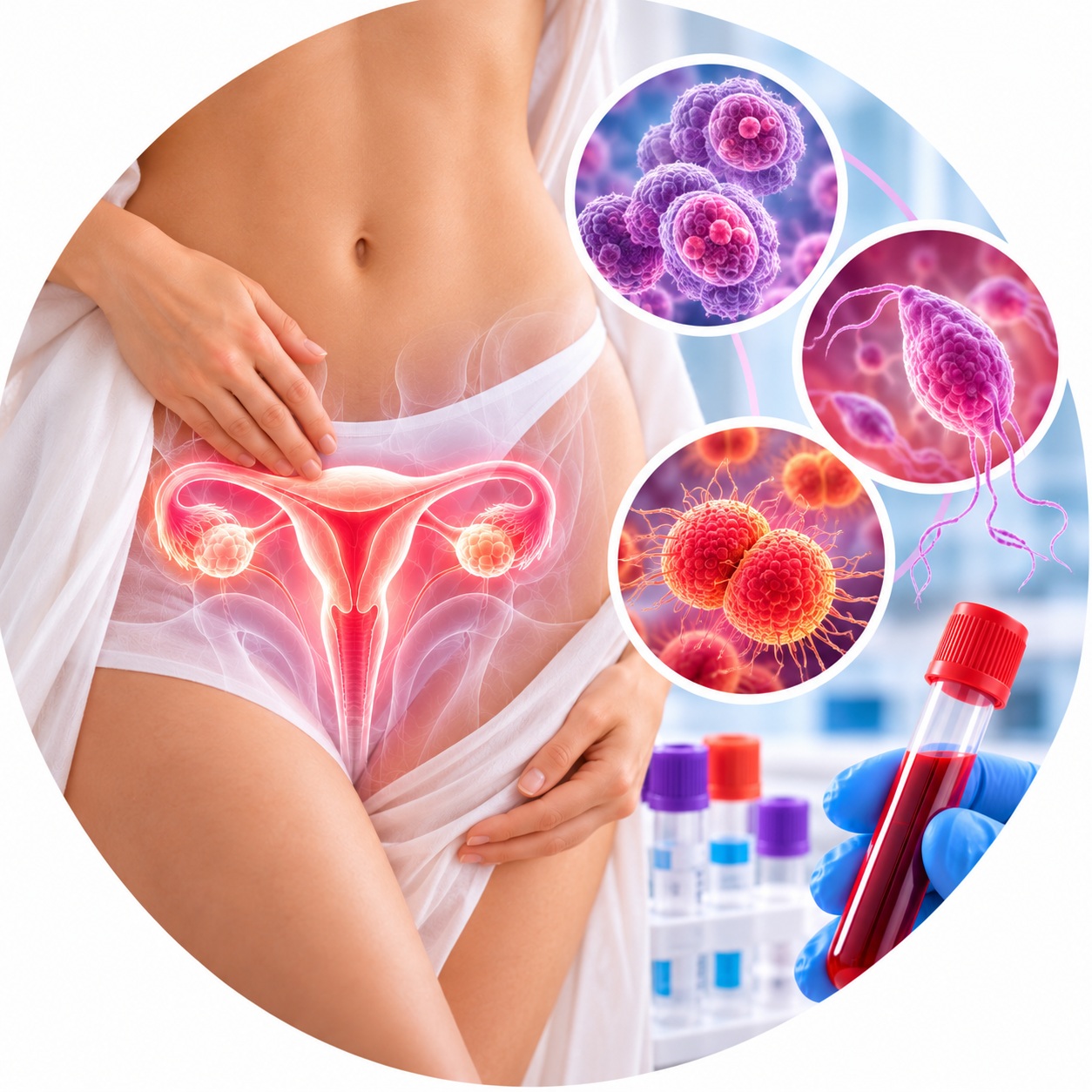
The STI Test Panel No. 3 is a qualitative PCR test for three sexually transmitted infections: Chlamydia trachomatis (chlamydia), Trichomonas vaginalis (trichomoniasis) and Neisseria gonorrhoeae (gonorrhea). The study helps to detect the genetic material of pathogens in a suitable urogenital sample. The analysis may be recommended if there are symptoms, after possible contact with the infection or for examination by a doctor. The results should be evaluated taking into account the symptoms, history and recommendations of a specialist.
STI Test Panel No. 3 — PCR for Chlamydia, Trichomoniasis, and Gonorrhea
The STI Test Panel No. 3 is a comprehensive laboratory test for the qualitative detection of three sexually transmitted infections: Chlamydia trachomatis, Trichomonas vaginalis і Neisseria gonorrhoeae. The study is conducted using the polymerase chain reaction (PCR) method, which allows the detection of the genetic material of pathogens in the biological material under study.
The infections included in the panel can be asymptomatic for a long time. Laboratory testing helps identify pathogens in the presence of complaints, after possible contact with the infection, or on the recommendation of a doctor. Timely detection and proper treatment of these infections are important for maintaining reproductive health and reducing the risk of complications.
What is included in the STI #3 panel?
The panel includes three separate indicators, each aimed at detecting a specific pathogen.
1. Chlamydia trachomatis — chlamydia
Chlamydia trachomatis — a bacterium that causes urogenital chlamydia. The infection can affect the genitourinary system of women and men and is often not accompanied by noticeable symptoms.
Symptoms may include unusual discharge, burning or pain during urination, lower abdominal discomfort, spotting between periods or after sexual intercourse. In men, discharge from the urethra, irritation, or pain during urination may occur.
If left untreated, chlamydia can lead to pelvic inflammatory disease, epididymitis, and other complications. However, the absence of symptoms does not rule out infection.
2. Trichomonas vaginalis — trichomoniasis
Trichomonas vaginalis — the simplest microorganism that causes trichomoniasis. The infection is mainly transmitted during sexual contact.
Women may experience a change in vaginal discharge, an unpleasant odor, itching, irritation, burning during urination, or discomfort during sexual intercourse. In men, the infection is often asymptomatic, but sometimes it is accompanied by urethral irritation, burning, or slight discharge.
Since the symptoms of trichomoniasis can resemble those of other urogenital infections, it is impossible to identify the pathogen based on clinical signs alone. Laboratory methods are used to confirm the infection.
3. Neisseria gonorrhoeae — gonorrhea
Neisseria gonorrhoeae — the bacteria that causes gonorrhea. The infection can affect the urethra, cervix, and other areas depending on the nature of the contact.
Possible symptoms include purulent or mucopurulent discharge, burning during urination, lower abdominal pain, intermenstrual bleeding, or genital discomfort. Some people have no noticeable symptoms.
If left untreated, gonorrhea can cause pelvic inflammatory disease, epididymitis, and reproductive dysfunction. The infection can also affect the rectum or oropharynx, so the site of the sample should be appropriate for the possible location of the infection.
How does PCR testing work?
Polymerase chain reaction is a molecular method that allows the detection of specific regions of the genetic material of a pathogen in a biological sample. The method is used to diagnose chlamydia, trichomoniasis, and gonorrhea.
The advantage of PCR is that the study is aimed directly at detecting the pathogen, and not only at assessing the immune system's response to the infection. Therefore, for these urogenital infections, molecular methods are an important tool in laboratory diagnostics.
The panel provides a qualitative determination: the result for each indicator indicates whether the genetic material of the corresponding pathogen was detected in the sample being tested. This test format does not determine the quantity of the pathogen.
When is it recommended to take the STD panel No. 3?
Examination may be recommended in the following situations:
- unusual vaginal or urethral discharge;
- burning, itching, or discomfort during urination;
- pain in the lower abdomen or in the area of the genitourinary system;
- discomfort during sexual intercourse;
- detection of an STI in a sexual partner;
- unprotected sexual intercourse or other situation with a possible risk of infection;
- examination before planning pregnancy - on the recommendation of a doctor;
- monitoring of reproductive health if there are appropriate indications;
- absence of symptoms in the presence of risk factors.
Not all of these situations mean that a person is infected. The need for testing and the optimal time to do so depend on the nature of the contact, symptoms, and doctor's recommendations.
Why is it important to test for multiple pathogens at the same time?
Different infections of the genitourinary system can have similar symptoms. For example, discharge, burning, and discomfort during urination can occur with chlamydia, gonorrhea, or trichomoniasis.
In addition, simultaneous infection with multiple pathogens is possible. Therefore, the detection of one microorganism does not exclude the presence of another.
Comprehensive study helps test for three common pathogens within a single panel. This can make it easier to choose further testing and treatment tactics if the result is evaluated by a doctor.
What biological material is needed for analysis?
PCR diagnostics of urogenital infections use appropriate biological material, such as a urogenital scraping or swab. The specific type of specimen depends on gender, clinical situation, possible site of infection, and requirements of the laboratory test system.
If a rectal or oropharyngeal infection is suspected, it is necessary to clarify with the doctor whether the material from the corresponding area should be examined. A urogenital sample does not exclude infections in other anatomical locations.
Before signing up for a test, it is worth clarifying the types of biomaterial available in the laboratory and the rules for its collection.
How to prepare for a PCR test for STIs?
To obtain a reliable result, it is important to follow the preparation rules recommended by the laboratory for the specific type of sample.
General recommendations:
- follow the instructions regarding the time and method of sampling the material;
- Before the examination, clarify whether temporary abstinence from urination is required;
- inform your doctor about taking antibiotics or recently completed treatment;
- do not start taking antimicrobial drugs on your own before the examination;
- If you have been treated for an STI, specify the optimal timing of follow-up testing.
Exact requirements may vary depending on the sample type and technique. Follow the instructions provided by the laboratory prior to collection.
How to interpret the results of the STD panel No. 3?
The result for each indicator is usually reported as «detected» or «not detected.».
Not detected. The genetic material of the relevant pathogen was not detected in the tested sample. However, the result depends on the correctness of the sample collection, the time after the possible contact and the place of sample collection. If symptoms persist or the risk of infection was recent, the doctor may recommend a repeat or additional examination.
Detected. The sample has detected genetic material of the relevant pathogen. The result should be discussed with a doctor to determine further actions and, if necessary, prescribe treatment. You should not choose antibiotics or other antimicrobial drugs yourself.
A positive result for one indicator does not necessarily mean that other pathogens are also present. Each component of the panel is evaluated separately.
What to do if the result is positive?
If detected Chlamydia trachomatis, Trichomonas vaginalis or Neisseria gonorrhoeae, consult a doctor to determine the appropriate treatment strategy. The regimen depends on the pathogen, clinical situation, concomitant conditions and current recommendations.
If an STI is confirmed, your doctor may recommend testing and treating your sexual partners, as well as temporarily abstaining from sexual contact until you have completed the necessary measures. This helps reduce the risk of reinfection and further transmission of the pathogen.
Do not use leftover antibiotics or take a treatment regimen prescribed for someone else. Different pathogens require different approaches, and the wrong treatment may be ineffective.
Frequently asked questions
Is it possible to have an STI without symptoms?
Yes. Chlamydia, trichomoniasis, and gonorrhea can be asymptomatic. The absence of symptoms does not always mean that there is no infection.
Does the panel detect all sexually transmitted infections?
No. Panel No. 3 covers only three pathogens: Chlamydia trachomatis, Trichomonas vaginalis і Neisseria gonorrhoeae. It does not replace testing for other STIs, including syphilis, HIV, viral hepatitis, genital herpes, or human papillomavirus.
Do I need to take the test if nothing is bothering me?
This depends on your risk of infection, age, sexual history, and your doctor's recommendations. Some infections may not cause symptoms, so testing is sometimes advisable even if you feel well.
Does a positive result mean that the infection occurred recently?
No. The PCR result alone does not determine the exact time of infection. To assess the situation, the doctor takes into account symptoms, previous results, treatment, and possible contacts.
Do both partners need to be treated?
If certain STIs are confirmed, testing and treating partners can be an important part of preventing reinfection. Specific recommendations depend on the pathogen identified and are determined by your doctor.
Can the panel be used for post-treatment monitoring?
The timing and appropriateness of follow-up testing depends on the specific infection, the therapy administered, and clinical recommendations. Molecular testing too early after treatment may in some situations detect residual genetic material, so the date of retesting should be agreed with the doctor.
Where to take the STD panel test #3?
You can take the test at the Medi Lab Plus laboratory. Before your visit, check the availability of the test, the type of biological material required, the preparation rules, and the completion time.
The panel helps detect three common urogenital infections by PCR. The final interpretation of the results, the need for additional tests, and further tactics are determined by the doctor, taking into account the clinical situation.
| Type of biomaterial | Urogenital scraping |
|---|---|
| Execution time | 1 day |
Useful tests