
Prostate-specific antigen free (PSA, free PSA)
290 UAH
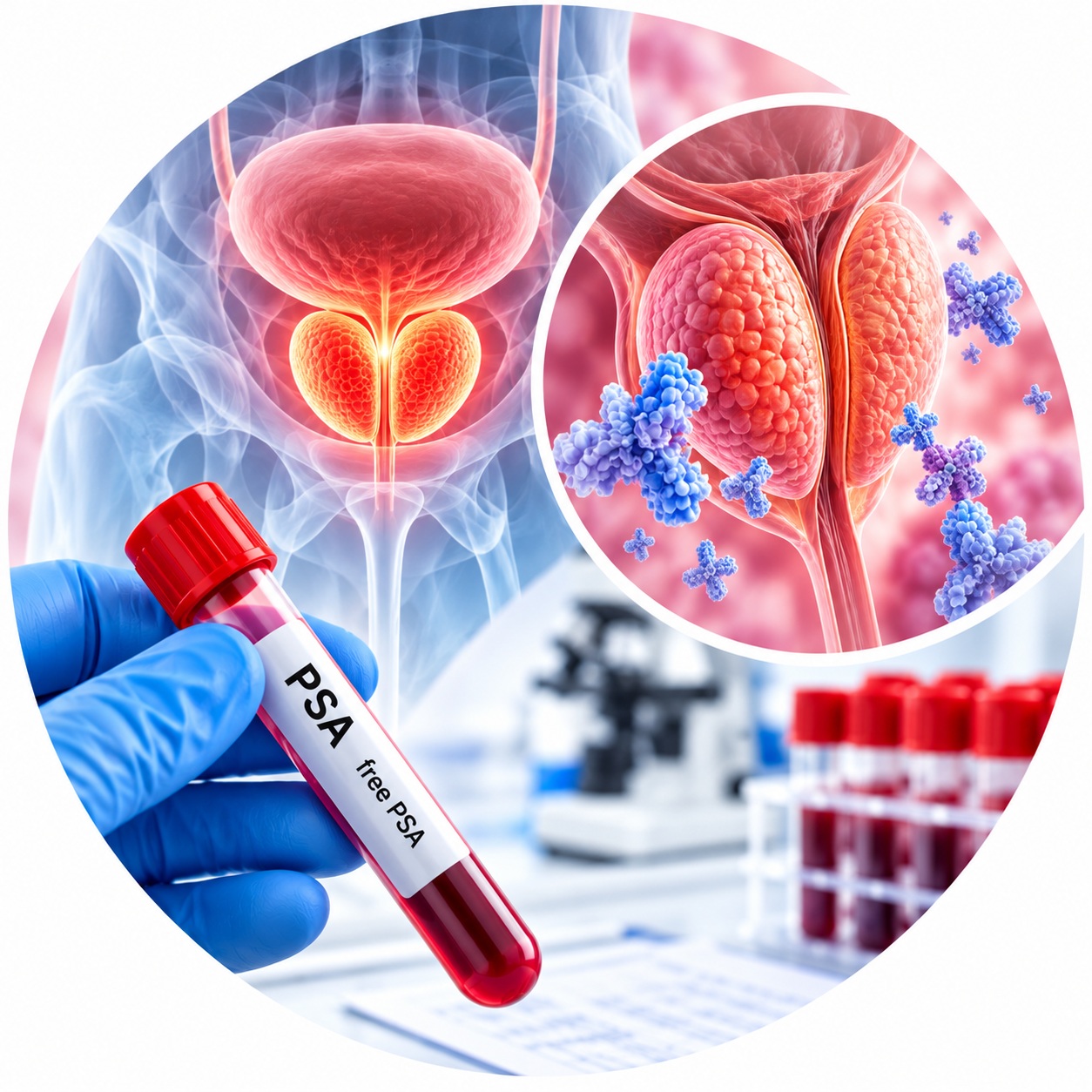
Free prostate-specific antigen (PSA) is a laboratory blood test that measures the concentration of the free fraction of prostate-specific antigen, a protein produced by prostate cells. The test is used in conjunction with total PSA to assess the condition of the prostate and to determine the risk of prostate cancer. The result is interpreted taking into account the ratio of free to total PSA, age, symptoms, and other clinical data. This indicator alone does not establish a diagnosis.
The prostate, a small organ located in men, performs important functions in the reproductive system. One of the key biomarkers associated with prostate health is prostate-specific antigen (PSA). PSA is a protein produced by the prostate and is responsible for the fluid part of the seminiferous tubule secretion. This protein has been the subject of intensive research in the context of diagnosing prostate tumors.
Free PSA is a form of PSA that is not bound to other proteins or molecules in the blood, and its concentration can be measured separately. Total PSA, which includes both free PSA and PSA that is bound to proteins, is a more general measure. But measuring the concentration of free PSA allows doctors to get additional information about the condition of the prostate and the risk of tumors.
Free PSA plays an important role in the diagnosis of prostate tumors. Its measurement can be useful in determining the possibility of prostate cancer in men with elevated total PSA levels. A high percentage of free PSA in total PSA may indicate benign prostatic hyperplasia (enlargement of the prostate) or other non-acute conditions in which total PSA levels may be elevated.
However, a low percentage of free PSA may be suggestive of prostate cancer. This may be a clue to further testing, such as a prostate biopsy, which can confirm the presence of cancer cells.
It is important to emphasize that PSA and free PSA levels can vary depending on age, prostate size, and other factors. Therefore, for accurate interpretation of the results, it is necessary to consult a doctor who will take into account all the clinical data and risks of the patient.
With the development of medical science and technology, PSA and free PSA testing have become more accurate and reliable methods for diagnosing prostate tumors. They can also be used to monitor patients with already diagnosed prostate cancer, assess the effectiveness of treatment, and predict the risk of recurrence.
In summary, free PSA is an important biomarker in the diagnosis of prostate tumors, which can provide valuable information to physicians to determine possible risks and further steps in the treatment of men with suspected prostate cancer. However, it is always important to consider all clinical data and consult a physician for accurate interpretation of the results and development of an optimal diagnostic and treatment plan.
| Execution time | 1 day |
|---|---|
| Type of biomaterial | Venous blood |
Useful tests