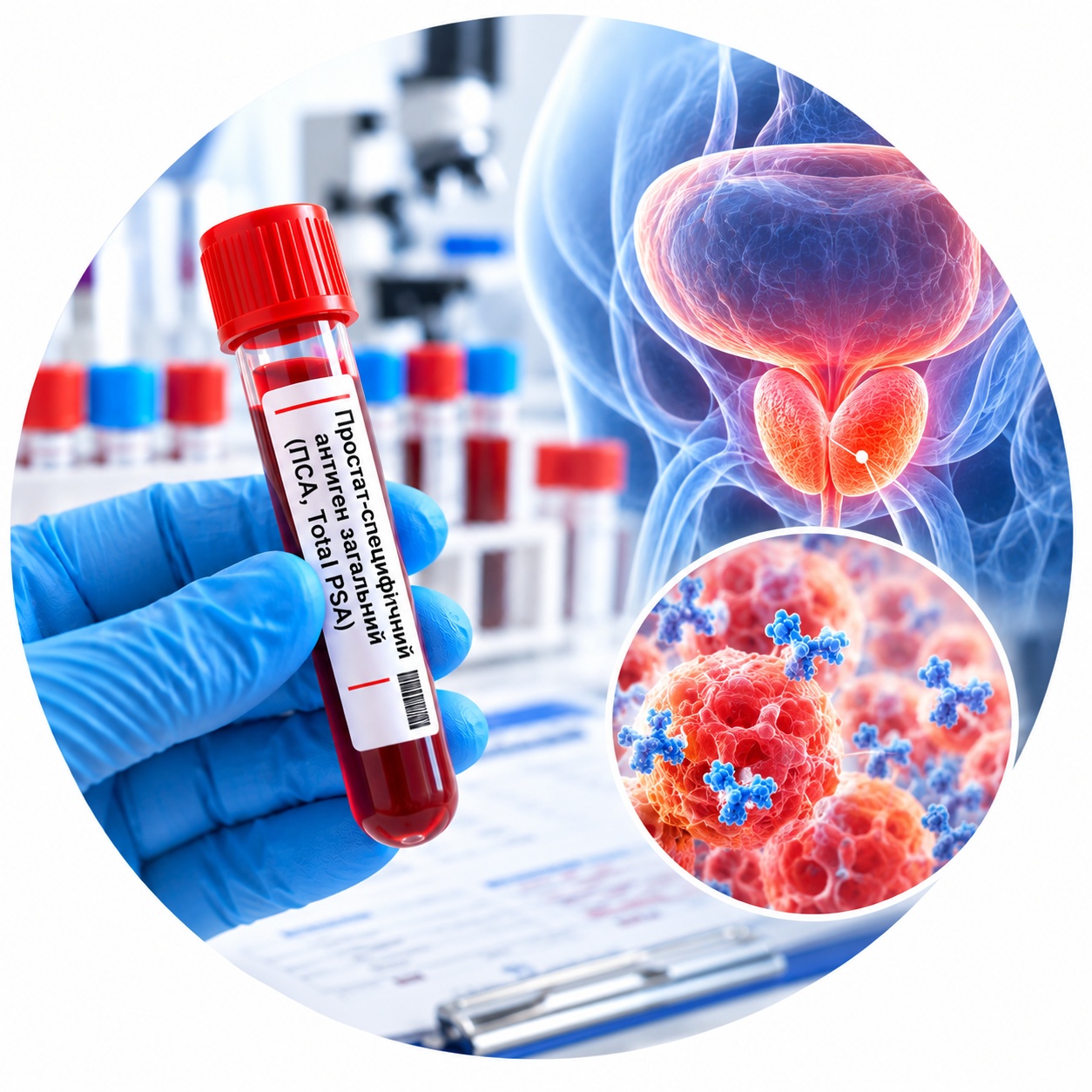

Total prostate-specific antigen (PSA)
290 UAH
Total PSA (prostate-specific antigen) is a blood test that measures the total concentration of prostate-specific antigen (PSA) produced by prostate cells. The test is used to assess the condition of the prostate, to screen for urological symptoms, and to monitor the progress of prostate diseases. An elevated PSA level does not necessarily indicate cancer; it can also be elevated in benign prostatic hyperplasia (BPH) or inflammation. The result is evaluated in conjunction with other clinical data.
Total prostate-specific antigen (Total PSA) is one of the key biomarkers used in the diagnosis and monitoring of prostate diseases, including prostate cancer. This protein is produced by the prostate and can be detected in the blood of men. In this article, we will look at what Total PSA is, how it is measured, and how it is used to diagnose cancer.
What is Total PSA?
Prostate-specific antigen (PSA) is a protein produced by the prostate gland in men. It is responsible for liquefying semen during ejaculation and its function is to break down substances that may hinder sperm movement. PSA is present in both prostate secretions and the blood of men, but under normal conditions its levels in the blood are very low.
Total PSA measures the total the amount of prostate-specific antigen in the blood, including both free PSA and protein-bound PSA. Free PSA is the part of PSA that is not bound to other proteins in the blood, while bound PSA usually includes PSA that is bound to the protein alpha-1-antitrypsin.
How is Total PSA measured?
Total PSA is measured using blood, usually taken from a vein in your arm. The blood sample is sent to a laboratory where it is analyzed. The results are reported in nanograms per milliliter (ng/mL).
Preparation for the test is important. For example, it is not recommended to ride a bike, do heavy physical exertion, and do activities that may affect the prostate, such as prostate massage, for a few days before the test. It is also important to refrain from sexual activity before the test.
Using Total PSA for the diagnosis of tumor diseases
One of the main uses of Total PSA is to detect prostate cancer. Typically, if the Total PSA level is elevated compared to normal, the doctor may advise the patient to undergo additional tests, such as a prostate biopsy, to determine the possible presence of cancer.
However, it is important to note that an elevated Total PSA level does not always indicate prostate cancer. Other conditions, such as inflammation of the prostate or enlargement of the prostate (benign prostatic hyperplasia), can also cause an elevated PSA level. Therefore, the results of a Total PSA test should always be evaluated in the context of other clinical data and diagnostic methods.
Conclusion
Total prostate-specific antigen (Total PSA) is an important biomarker for the diagnosis and monitoring of prostate diseases, including prostate cancer. Measuring the Total PSA level helps doctors identify possible abnormalities and make timely decisions about further diagnosis and treatment. However, it is important to remember that an increase in PSA levels does not always indicate the presence of cancer, and the results of the test should always be evaluated in the context of the clinical picture.
| Execution time | 1 day |
|---|---|
| Type of biomaterial | Venous blood |
Useful tests


Sexually transmitted infections, STIs (men)
Original price was: 3,980 грн.3,180 UAHCurrent price is: 3,180 грн.