

Squamous cell carcinoma (SCC) antigen
550 UAH
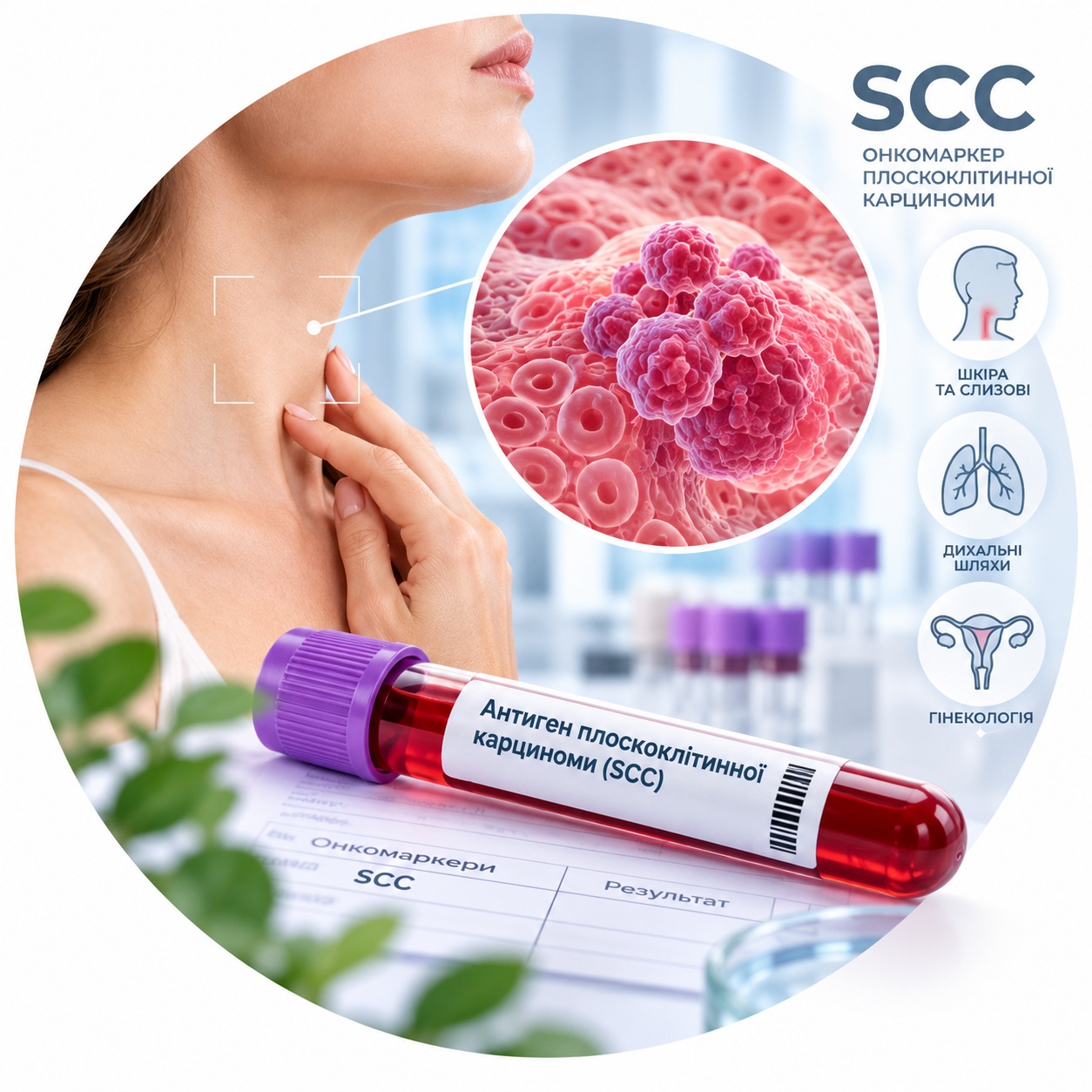
Squamous Cell Carcinoma Antigen (SCC) blood test is a study of the level of a specific protein tumor marker produced by squamous cell carcinoma cells. The test is used for primary diagnosis, assessment of the prevalence of processes, monitoring the effectiveness of treatment, and early detection of recurrence of tumors of the cervix, esophagus, lungs, oral cavity, nasopharynx, and skin.
Squamous cell carcinoma (SCC) antigen is a glycoprotein from the family of serine protease inhibitors, which is synthesized in increased amounts by malignant squamous epithelial cells.
Normally, a small amount of SCC is present in healthy epithelium, but with malignancy (malignant degeneration) of cells, its concentration in the blood serum increases rapidly. The level of the antigen correlates with the mass of the tumor, the stage of the disease and the presence of metastases in the lymph nodes.
What is this study for?
Treatment monitoring: Assessment of the effectiveness of surgery, radiation or chemotherapy (a decrease in the SCC level indicates the success of the therapy).
Early detection of relapses: Detection of tumor recurrence several months before the first clinical symptoms or imaging signs (on ultrasound/CT/MRI).
Forecasting the course: Assessment of the aggressiveness of the tumor process and the risk of metastasis.
Comprehensive diagnostics: As an auxiliary marker in combination with other examinations in cases of suspected squamous cell neoplasms.
Who is recommended to take the test?
Patients diagnosed with squamous cell carcinoma (cervix, esophagus, lung, head and neck, anus, skin) to monitor the course of the disease.
Patients after completing a course of oncology treatment (for regular monitoring of relapses).
If a widespread squamous cell cancer process is suspected, as prescribed by an oncologist or gynecologist.
Preparation for the study
On an empty stomach: Blood is donated in the morning on an empty stomach (after 8–12 hours of fasting). Drinking clean, non-carbonated water is permitted.
Special precautions: Avoid damage to the skin and mucous membranes before donating blood, as particles of epidermis or saliva entering the sample may lead to a false-positive result.
Bad habits: Avoid smoking 1–2 hours before blood sampling.
Rest: Be in a state of physical and emotional calm 20–30 minutes before the procedure.
Interpretation of results
Importantly: The results of SCC measurement are not a basis for independent diagnosis. Interpretation is carried out exclusively by an oncologist in combination with instrumental and histological examinations.
Norm: Typically, the SCC level is up to 1.5–2.0 ng/ml (depending on the laboratory's test system).
Advanced level:
Oncological diseases: Squamous cell carcinoma of the cervix, lungs (non-small cell), esophagus, head and neck organs (larynx, oral cavity, nasopharynx), skin, anal canal.
Non-cancerous (benign) conditions: Chronic renal or hepatic failure, dermatological diseases (psoriasis, eczema, pemphigus), severe inflammatory lung diseases (tuberculosis, sarcoidosis, chronic bronchitis).
💳 Order a test for squamous cell carcinoma antigen (SCC) at the medical laboratory "Medi Lab Plus"«. We ensure accurate measurements using modern equipment, safe blood collection, and prompt results!
| Execution time | 1 day |
|---|---|
| Type of biomaterial | Venous blood |
Useful tests