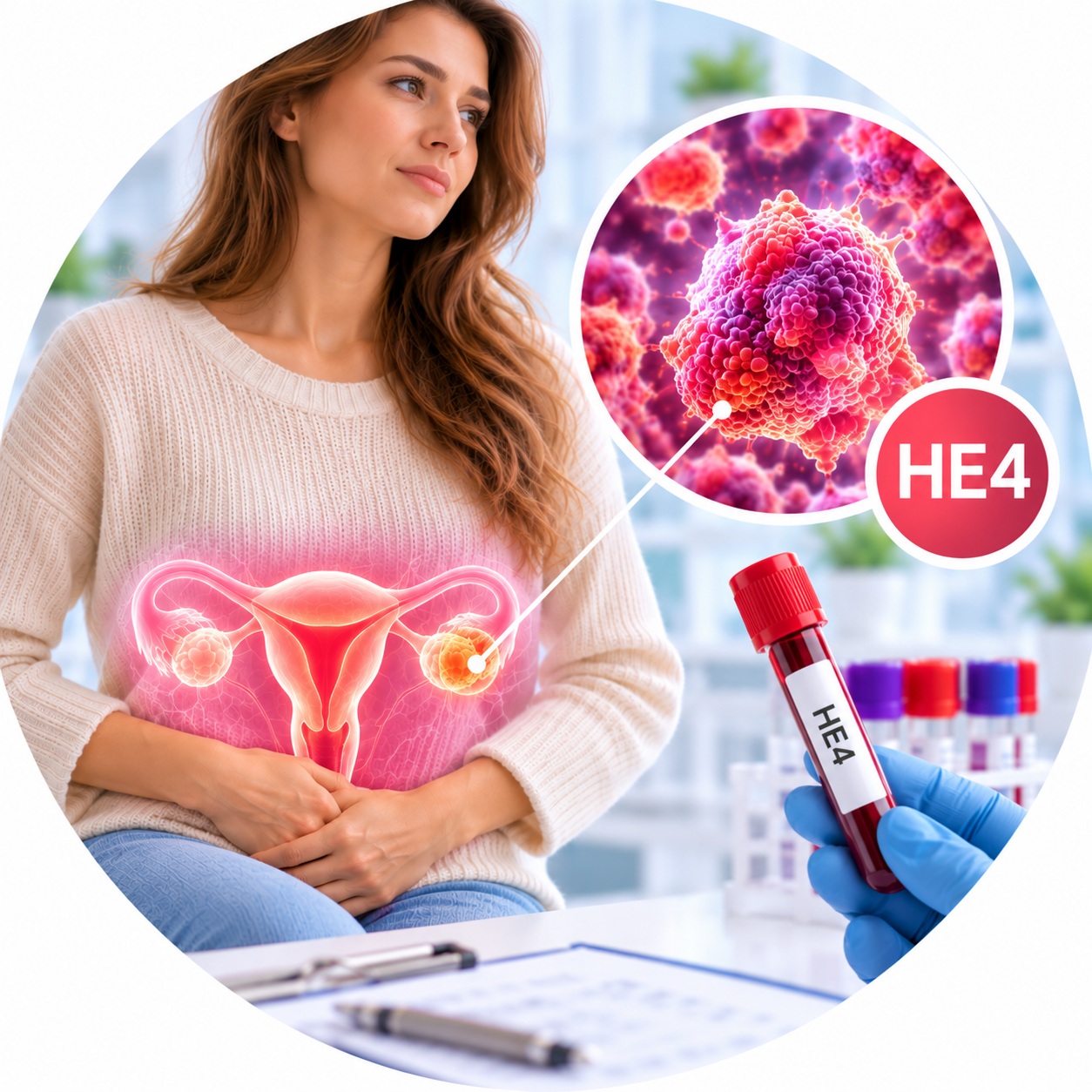


Early ovarian tumor marker (HE4)
580 UAH
HE4 (human epididymal protein 4) — a laboratory marker, the level of which is determined in the blood to assess the risk of epithelial ovarian cancer. The study can be used together with CA 125 and other clinical data to calculate the ROMA index in women with detected masses in the appendages. The analysis is not an independent method of early screening for ovarian cancer and does not confirm the diagnosis without additional examination. The result is evaluated by a doctor taking into account age, menopausal status and clinical picture.
Ovarian cancer is one of the most aggressive and difficult to detect cancers in its early stages. However, modern diagnostic methods and the study of tumor markers such as HE4 (human epithelial antigen 4) make it possible to detect the disease in its early stages and increase the chances of successful treatment.
HE4 is a protein that is normally produced by ovarian epithelial cells. The detection of elevated levels of HE4 in the blood of women can serve as an indicator of the development of tumors in the ovaries or other pathologies in this region. However, it should be remembered that HE4 is not a specific marker for ovarian cancer, and elevated levels of this protein can be caused by other conditions, such as inflammatory processes, endometriosis, uterine fibroids, and others.
However, detection of elevated HE4 levels can be a useful component of the comprehensive diagnosis of ovarian cancer. Here are some key points related to the role of HE4 in tumor marker diagnosis:
- Screening and risk identification: Measuring HE4 levels may be useful for screening women at high risk of developing ovarian cancer, particularly those with a family history of the disease or BRCA1/BRCA2 genes. Elevated HE4 may indicate the potential need for further testing.
- Differentiation between benign and malignant tumors: Detection of elevated HE4 can help doctors distinguish ovarian cancer from benign tumors or other gynecological pathologies.
- Monitoring during treatment: HE4 levels may be useful for assessing the effectiveness of ovarian cancer treatment and monitoring tumor dynamics during therapy.
- Prognosis and prediction of relapses: Studies have shown that HE4 levels may be useful in predicting survival and detecting possible relapses after treatment.
It is important to note that the diagnosis of ovarian cancer should always be comprehensive and include various methods such as ultrasound, computed tomography, biopsy, etc. HE4 may be one of the components of this diagnosis, but should not be considered as the only criterion.
Загальний висновок полягає в тому, що HE4 може бути корисним пухлинним marker for cancer diagnosis яєчників та моніторингу хворих. Проте важливо враховувати всі інші клінічні та лабораторні дані, а також консультуватися з кваліфікованим лікарем для точної діагностики і планування лікування в кожному конкретному випадку.
| Execution time | 1 day |
|---|---|
| Type of biomaterial | Venous blood |
Useful tests