

PCR. Helicobacter pylori DNA with determination of Clarithromycin resistance – qualitative determination
1,350 UAH
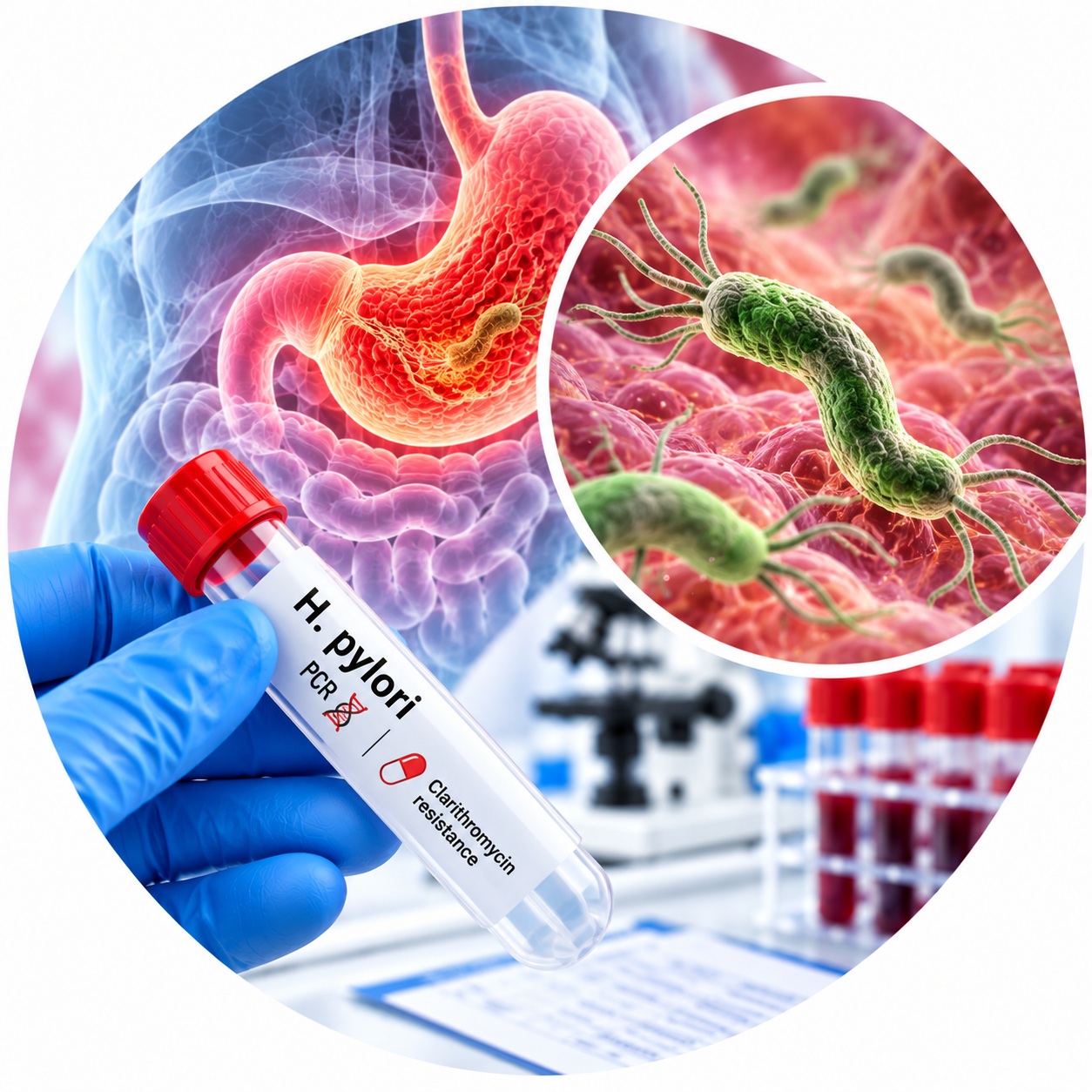
PCR. Helicobacter pylori DNA with Clarithromycin Resistance Determination — qualitative determination — a molecular genetic study that detects the genetic material of Helicobacter pylori and determines the presence of genetic markers of clarithromycin resistance in the bacterium. The analysis helps to identify the infection and provide the doctor with information for choosing the appropriate antibacterial therapy. The results are evaluated taking into account symptoms, history, and other clinical data.
Helicobacter pylori (H. pylori) — a bacterium that can colonize the lining of the stomach and duodenum. Infection is associated with the development of chronic gastritis, peptic ulcer disease, and an increased risk of certain stomach diseases.
One of the reasons for the ineffectiveness of treatment H. pylori The bacteria may be resistant to antibiotics, particularly clarithromycin. PCR testing can detect the bacteria's DNA and determine the presence of certain mutations associated with resistance to this antibiotic.
What determines research?
Real-Time PCR in a stool sample determines:
- DNA Helicobacter pylori — by a specific region of the gene ureA.
- Mutations associated with clarithromycin resistance: A2142G, A2143G, and A2142C in the 23S rRNA gene.
When is the study recommended?
The analysis may be recommended by a doctor:
- for diagnosing infection H. pylori in patients with dyspepsia, gastritis or gastric and duodenal ulcers;
- before prescribing eradication therapy if a treatment regimen with clarithromycin is being considered;
- after unsuccessful eradication therapy - to clarify the possible cause of treatment inefficiency and choose further tactics.
Biomaterial and research method
Biomaterial: dung.
Method: Real-Time PCR.
Benefits of the study
- Non-invasive method of obtaining biomaterial.
- Simultaneous DNA detection H. pylori and the studied clarithromycin resistance mutations.
- Additional information for the doctor when choosing antibacterial therapy.
Preparation for the study
- In 1 month: Stop taking antibacterial drugs and bismuth preparations (De-nol, Pepto-Bismol).
- In 2 weeks: stop taking medications that affect gastric secretion, namely proton pump inhibitors (PPIs): Pantoprazole, Omeprazole - in consultation with your doctor.
- In 24 hours: Stop using laxatives; drugs that affect peristalsis and stool color (castor or vaseline oil, iron preparations); topical preparations - suppositories, ointments, etc.
- Immediately before the examination: do not consume alcohol, foods that increase fermentation in the intestines, and foods containing seeds.
Rules for collecting biomaterial
The stool is collected in a clean special container for biomaterial, purchased at a pharmacy or issued by the laboratory. Do not allow urine, water or other impurities to enter the sample. Follow the laboratory instructions regarding the amount of material, its storage and delivery.
| Execution time | 1 day |
|---|---|
| Type of biomaterial | Dung |
Useful tests