


Immunoglobulin M (total IgM)
330 UAH
The total immunoglobulin M (IgM) test measures the concentration of antibodies of this class in the blood. The test helps assess humoral immunity and may be ordered during a screening for suspected immune disorders or certain infections. The result is interpreted in conjunction with symptoms and other indicators.
Immunoglobulin M (total IgM): what the analysis shows
Immunoglobulin M (IgM) is a class of antibodies produced by the immune system in response to various stimuli, including infectious agents. They are involved in the early stages of the immune response and also help the body recognize foreign structures.
A total IgM test measures the concentration of these antibodies in the blood. It can be used to assess the state of humoral immunity, particularly during testing for suspected immunoglobulin production disorders.
When is an IgM test prescribed?
The test may be part of a workup if the doctor suspects an immune system disorder or wants to assess levels of major antibody classes. The result is usually considered along with IgG and IgA levels, symptoms, and other laboratory data.
A total IgM test may be prescribed by:
- when examining for possible immunodeficiency states;
- in the presence of repeated or unusually severe infections;
- for assessing humoral immunity;
- during a comprehensive examination if certain immune or hematological disorders are suspected;
- to clarify the clinical picture on the recommendation of a doctor.
What does elevated or lowered IgM mean?
Elevated IgM level can be observed in various conditions, including certain infections, immune disorders, and certain blood diseases. However, this indicator is nonspecific: it is impossible to establish the specific cause of the deviation from a single result.
Reduced IgM level may be associated with impaired antibody production, some immunodeficiency states, exposure to certain medications, or other factors. The significance of the result depends on age, clinical situation, and other immunoglobulin parameters.
If the result falls outside the laboratory's reference range, the doctor determines whether additional testing is needed.
How does total IgM differ from specific IgM antibodies?
It is important to distinguish between two types of research. Total IgM shows the total concentration of antibodies of this class in the blood. In contrast, specific IgM antibodies are determined against a specific pathogen, such as a specific virus or bacteria.
It is specific antibodies that can be used in the diagnosis of certain infections, but they also require correct interpretation, taking into account the time from the onset of symptoms, test characteristics, and clinical data.
Total IgM does not determine which infection may have triggered the immune response, nor does it confirm active infection on its own.
Can IgM detect allergies?
Total IgM is not a standard marker for diagnosing allergic diseases. For testing if an allergy is suspected, your doctor may recommend total or specific immunoglobulin E (IgE), skin prick tests, or other tests depending on your symptoms.
Therefore, the choice of analysis should correspond to the clinical question: assessing the total level of IgM and searching for a specific allergen are different tasks.
How to prepare for the study
Follow the laboratory's preparation instructions before donating blood. If you are taking medication or undergoing treatment, inform your doctor. Do not stop taking prescribed medications on your own.
Where to get tested for total IgM
At the Medi Lab Plus laboratory, you can donate blood to determine the level of immunoglobulin M. The result helps the doctor assess one of the indicators of humoral immunity and, if necessary, determine a further examination plan.
Laboratory results should not be interpreted in isolation from symptoms and medical history. The final assessment is made by the physician, taking into account the clinical situation.
| Execution time | 1 day |
|---|---|
| Type of biomaterial | Venous blood |
Useful tests


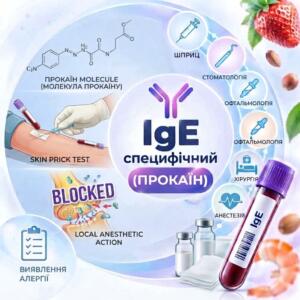
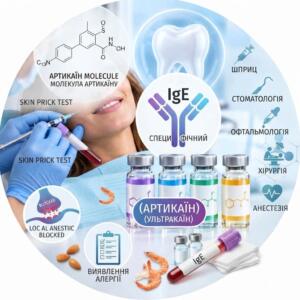

Anesthetics. No. 4 (Articaine, Lidocaine, Mepivacaine, Procaine)
Original price was: 1,680 грн.1,500 UAHCurrent price is: 1,500 грн.