Herpes simplex virus (HSV-1) (scrape)
540 UAH
Infection panel/Herpes virus infection.
Real-time PCR (PCR) – qualitative determination. (The study is carried out only at the address: Kam'yanets'ka, 106)
Description
Rules for preparing patients for urinalysis in men
– Abstain from sexual intercourse for 3 days.
– Refrain from alcohol and spicy food for 3 days.
– Submit the material for examination before, or no earlier than 14 days after the end of the course of medical therapy (antibacterial and antifungal drugs), unless otherwise recommended by the doctor.
– Refrain from using local medications and procedures during the day.
– Immediately before taking the test, refrain from urinating for 2-3 hours.
Rules for preparing patients for a vaginal scraping in women
– Abstain from sexual intercourse for 3 days.
– Refrain from alcohol and spicy food for 3 days.
– Submit the material for examination before, or no earlier than 14 days after the end of the course of medical therapy (antibacterial and antifungal drugs), unless otherwise recommended by the doctor.
– During the day, refrain from using local dosage forms (suppositories, ointments, douches, contraceptives, etc.) and intimate hygiene products containing bactericidal additives.
– If the scraping will be performed from the urethra, do not urinate for at least 3 hours before taking the material.
– The material cannot be donated during menstruation (only 3 days after its end).
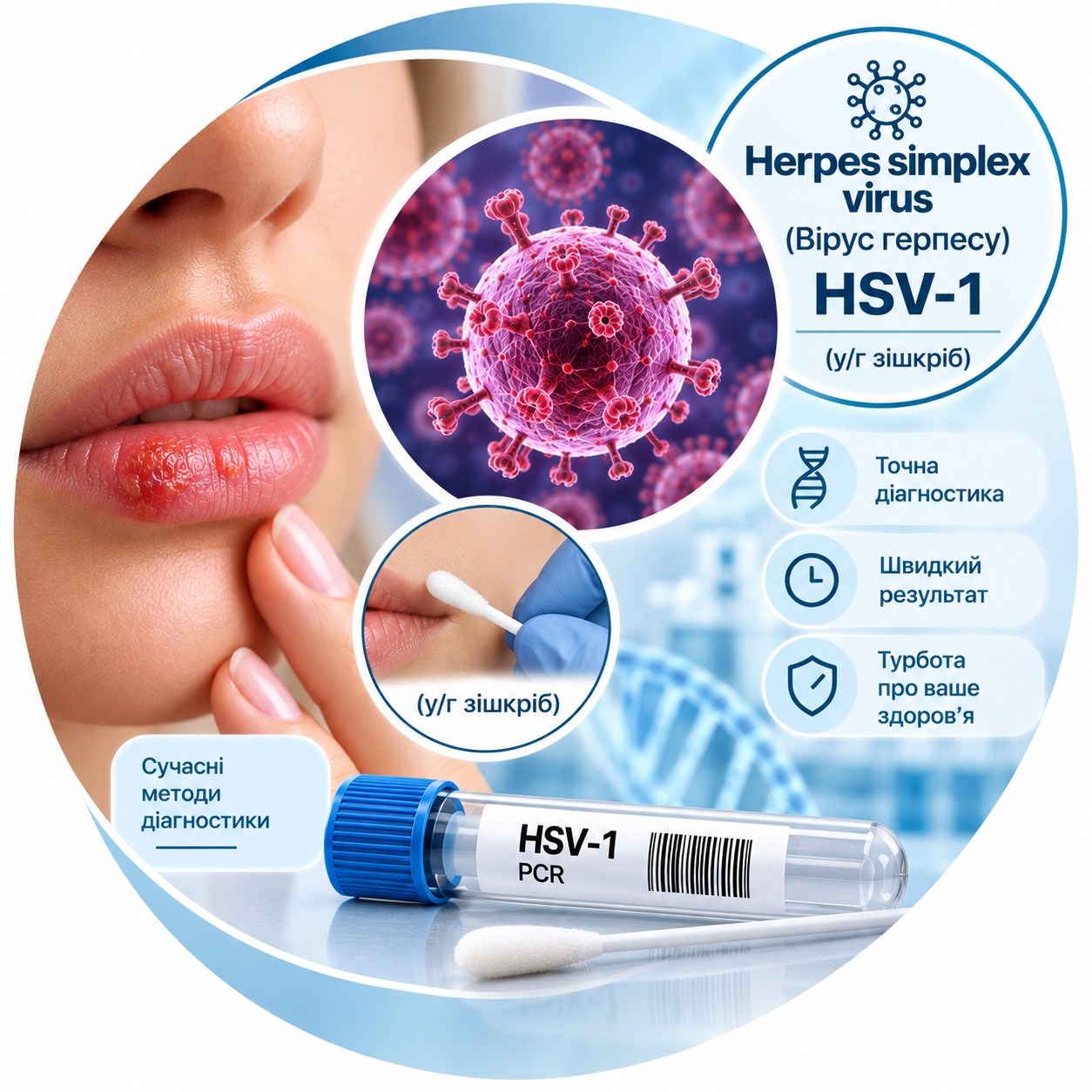
Herpes simplex virus (HSV) is a family of viruses that includes two main types: HSV-1 and HSV-2. Both types can cause infection in humans, but HSV-1 is usually associated with infection of the face and mouth, while HSV-2 causes genital infections. Today, we will focus on HSV-1 and the infection panel for diagnosing herpes virus infection.
HSV-1: The First Encounter
HSV-1 is one of the most common viruses in the world. It is transmitted through contact with the mucous membranes of the mouth and skin. It can cause cold sores (herpes simplex) – a rash covering the face, around the mouth and nose. Although this infection is usually not serious, it can be extremely uncomfortable for those who experience its symptoms.
HSV-1 infection can reactivate and recur as a rash in people who have recovered from it. This most often happens when the immune system is weak or under stress. Herpes can also be spread to other parts of the body or to other people through contact.
Diagnosis and Treatment
There are various methods used to diagnose herpes. These include a clinical examination, a medical history, and laboratory tests. One of the most common methods is polymerase chain reaction (PCR), which detects the genetic material of the virus in samples from rashes or tumors.
In terms of treatment, herpes cannot be completely cured because the virus remains in the body for life. However, antiviral medications such as acyclovir, valacyclovir, and famciclovir can help reduce the duration and severity of symptoms during relapses. Maintaining a healthy lifestyle and keeping your immune system in good condition are important to controlling the infection.
Herpes Virus Infection Panel
A herpes virus infection panel is a set of laboratory tests that detect the presence of herpes in the body and determine its type (HSV-1 or HSV-2). This helps doctors accurately diagnose the infection and choose an appropriate treatment strategy.
In other words, the infection panel allows you to:
- Detect the presence of herpes in the body.
- Determine the type of virus (HSV-1 or HSV-2).
- Assess the degree of infection activity.
- Monitor treatment results and relapses.
This set of tests is essential for the accurate diagnosis and management of herpes virus infection so that patients receive appropriate medical care.
Conclusion
Herpes virus infection, especially HSV-1, is a common occurrence and can be extremely distressing for those experiencing its symptoms. Diagnosis and treatment are important aspects of managing this infection. A herpes virus infection panel helps doctors accurately determine the presence and type of virus, allowing them to develop an effective treatment plan and monitor the course of the infection. It is important to remember that herpes can be transmitted to others, so it is important to follow preventive measures and consult a doctor for reliable management of this infection.
Additional information
| Execution time | 1 day |
|---|---|
| Type of biomaterial | Urogenital scraping |
Related products