Detection of intestinal parasites and their eggs
200 UAH
Infectious Parasitology Panel/(Biomaterial accepted: Monday-Friday)
Description
- The stool is delivered to the laboratory for examination within 2 hours of collection. If the delivery time exceeds 2 hours, it is necessary to use containers with a preservative for transporting the material.
- The container with feces is tightly closed with a lid, packed in a clean disposable bag and delivered to the laboratory.
- Stools should not be submitted for testing after an enema, suppository insertion, or castor oil administration. Stools for testing should not contain foreign substances, such as urine.
- In newborn babies, feces are collected from the diaper or nappy immediately after defecation.
Parasites have always been and remain one of the main threats to human health around the world. These microscopic organisms can live in the human body, feed on its resources and cause a variety of diseases. One of the methods for detecting intestinal parasites and their eggs is the infectious panel in parasitology. Let's take a closer look at this process.
What are intestinal parasites?
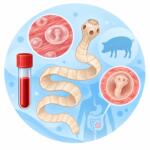
Intestinal parasites are microscopic organisms that can live in the human intestines and cause a variety of diseases. They can be divided into several groups:
- Helminths: These are large worms, such as roundworms, trematodes, and cestodes. They can grow to considerable sizes and cause damage to the intestines and other organs.
- Protozoa: These are microscopic single-celled organisms, such as Giardia and amoeba. They can cause inflammation in the intestines.
- Crocodiles: this is the smallest class of parasites, which includes helminths that cause diseases such as schistosomiasis and fasciosis.
What symptoms may indicate an intestinal parasite infection?
Symptoms of intestinal parasite infection can vary greatly and depend on the type of parasite, the extent of the infection, and other factors. The main symptoms may include:
- Diarrhea
- Abdominal pain
- Dizziness
- Loss of appetite
- Vomit
- Diarrhea
- Changes in stool texture and color
- Weakness and fatigue
If you experience these symptoms, it is important to see a doctor for diagnosis and treatment.
What is an infectious panel in parasitology?
An infectious panel in parasitology is a set of laboratory tests that detect the presence of intestinal parasites and their eggs in biological samples, such as feces or blood. These tests help doctors accurately diagnose infections and determine the type of parasite that caused them.
How is an infectious panel performed in parasitology?
The infection panel procedure includes several steps:
- Collection of biological material: This is usually a stool or blood sample that is collected in special containers.
- Laboratory analysis: The sample is sent to a laboratory where various tests are performed to detect the presence of parasites or their eggs.
- Microscopy: Laboratory technicians use microscopes to examine samples and identify the structures of parasites and their eggs.
- Molecular methods: Molecular methods such as polymerase chain reaction (PCR) can be used to more accurately detect parasites.
- Parasite identification: If parasites are detected, laboratory personnel determine their species and differences.
- Treatment and advice: Depending on the test results, the doctor provides advice on treatment and further management of the disease.
The importance of the infectious panel in parasitology
The infection panel in parasitology is an important tool for the detection and control of intestinal infections. Early detection and treatment of infections can prevent the development of serious diseases and complications.
Thanks to modern laboratory technologies and infectious panel tests, it is possible to quickly and accurately detect intestinal parasites and their eggs, which contributes to effective treatment and prevention of the spread of infections.
If you suspect you have an intestinal parasite infection, it is important to see a doctor and undergo an appropriate infection panel for an accurate diagnosis and to receive the necessary treatment. Timely diagnosis and treatment will help maintain your health and prevent further complications.
Additional information
| Execution time | 1 day |
|---|---|
| Type of biomaterial | Dung |
Related products