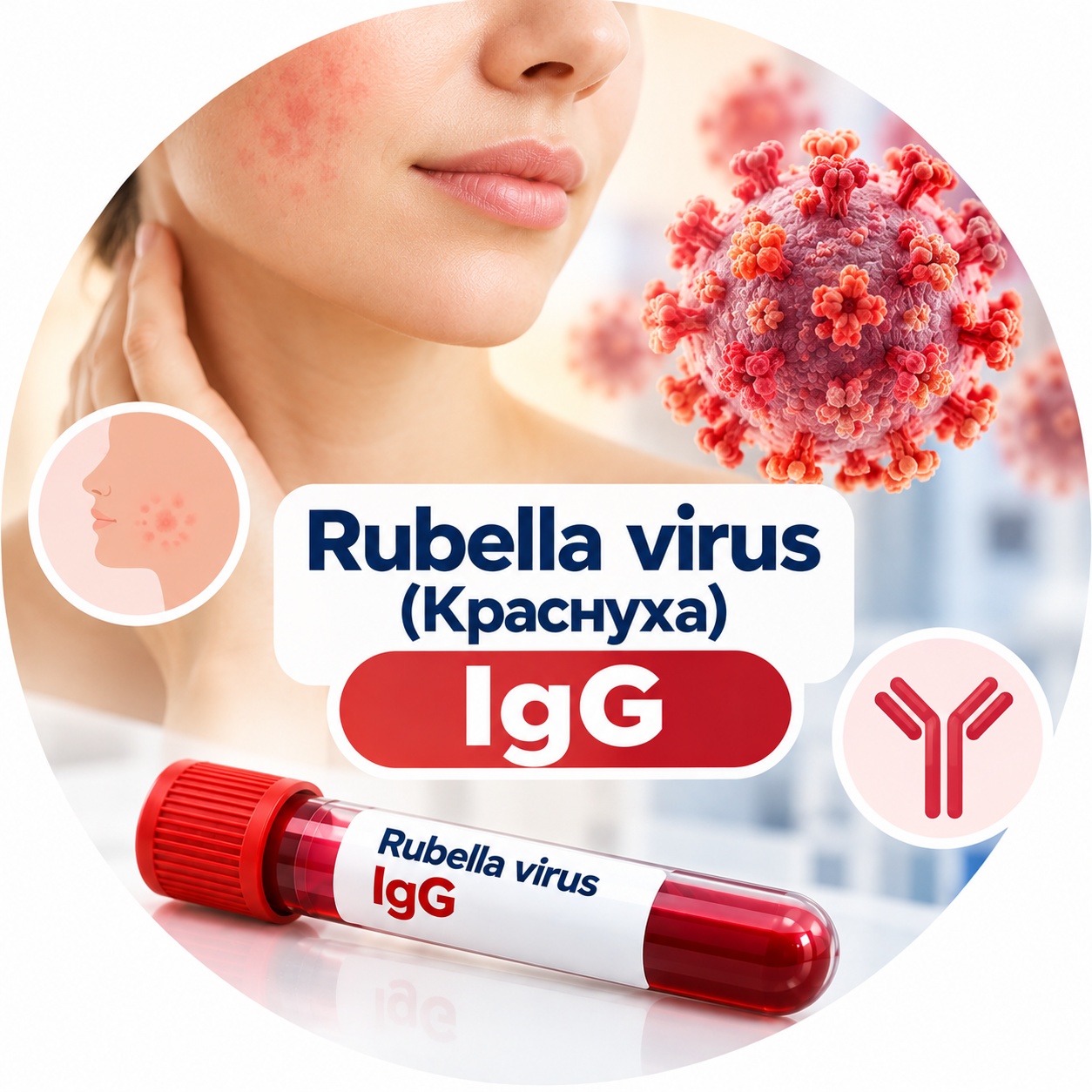
Rubella virus (Rubella), IgG
350 UAH
Infectious panel/Rubella
Rubella (also known as measles) is a disease caused by the rubella virus, which is mainly spread by airborne droplets. This virus is a member of the Togaviridae family and has a spherical shape. Rubella is highly contagious, and it often occurs among children and adults who have not been immunized.
Of course, the best way to protect against this disease is vaccination. Rubella vaccination is part of mandatory vaccination schedules in many countries, and this helps reduce the spread of the virus and prevent outbreaks.
Exciter measles is a DNA virus with one selective type antigens – the rubella virus. This virus is easily spread by coughing or sneezing and can remain active in the air for up to several hours. The incubation period for rubella is approximately 14-21 days.
In general, symptoms of rubella are usually quite mild and include:
- Increased body temperature.
- Feeling unwell.
- A rash that usually starts on the face and spreads throughout the body.
- Weakness and muscle pain.
- Enlargement of lymph nodes.
In children, rubella may be more mild than in adults, and symptoms may be less severe.
An important component of the diagnosis of rubella is immunological tests, such as the determination of IgG antibodies to the virus. IgG is one of the classes of antibodies that the body produces produces to fight infection. After infection or vaccination, IgG levels to rubella virus increase, indicating an immune response. These antibodies can remain in the body for many years and provide immunity against reinfection.
To make a diagnosis and determine the level of IgG antibodies to the rubella virus, a doctor may take a blood sample from the patient and perform a laboratory test. This can be important for making a diagnosis, especially if the symptoms of rubella are not typical or if infection is suspected in pregnant women, as rubella can be particularly dangerous for unborn babies.
Overall, rubella is a serious disease, especially for pregnant women and newborns, and vaccination is the best way to prevent infection. Diagnosis using IgG antibody testing to the virus helps determine the degree of immunity in the body and control the spread of this virus in the population.
| Execution time | 1 day |
|---|---|
| Type of biomaterial | Venous blood |
Useful tests