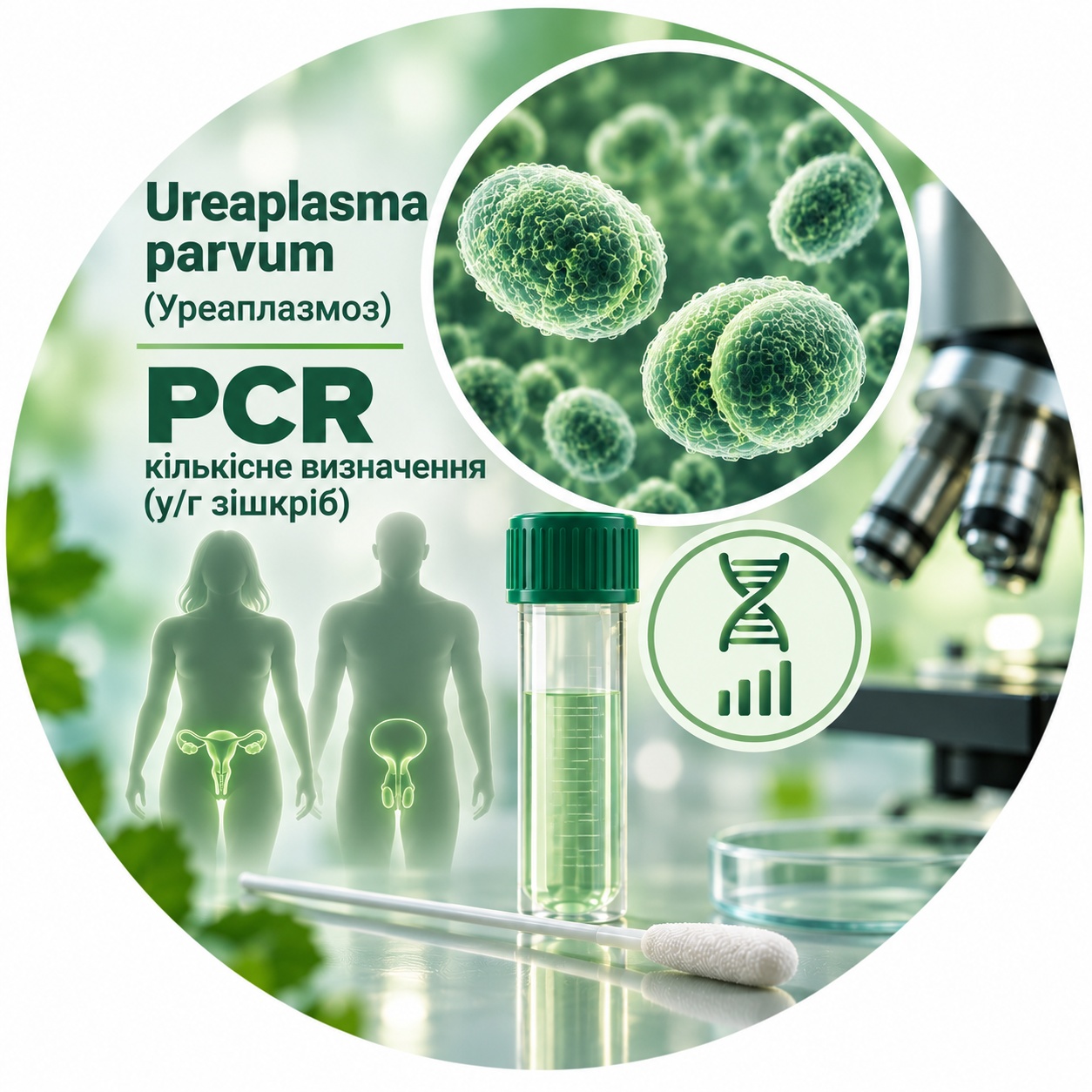
Ureaplasma parvum (Ureaplasmosis): PCR-quantitative determination (scrape)
560 UAH
Infectious panel/Diagnosis of ureaplasmosis.
Real-time PCR (PCR) – quantitative determination. The study is carried out only at the address: Kam'yanets'ka, 106
Description
Rules for preparing patients for a vaginal scraping in women
– Abstain from sexual intercourse for 3 days.
– Refrain from alcohol and spicy food for 3 days.
– Submit the material for examination before, or no earlier than 14 days after the end of the course of medical therapy (antibacterial and antifungal drugs), unless otherwise recommended by the doctor.
– During the day, refrain from using local dosage forms (suppositories, ointments, douches, contraceptives, etc.) and intimate hygiene products containing bactericidal additives.
– If the scraping will be performed from the urethra, do not urinate for at least 3 hours before taking the material.
– The material cannot be donated during menstruation (only 3 days after its end).
Rules for preparing patients for urinalysis in men
– Abstain from sexual intercourse for 3 days.
– Refrain from alcohol and spicy food for 3 days.
– Submit the material for examination before, or no earlier than 14 days after the end of the course of medical therapy (antibacterial and antifungal drugs), unless otherwise recommended by the doctor.
– Refrain from using local medications and procedures during the day.
– Immediately before taking the test, refrain from urinating for 2-3 hours.
Ureaplasmosis (Ureaplasma parvum): Infectious Panel and Diagnosis
Ureaplasmosis is one of the infections that affect the secretory system of the human genital organs and can cause various diseases. This infection is caused by microorganisms belonging to the genus Ureaplasma, and in particular, Ureaplasma parvum.
Ureaplasma parvum is a gram-negative, non-spore-forming microorganism that is distributed worldwide. It is part of a group of molecular clones that cause diseases related to the human urinary and genital organs. This bacterium is usually a normal microflora of the urinary tract, but in some cases it can cause disease, especially in patients with a reduced immune response.
Diagnosis of ureaplasmosis is an important part of clinical practice, as early detection and treatment of this infection can prevent further complications. Various methods are used to diagnose ureaplasmosis, and the infection panel is an important tool in the detection and analysis of this infection.
The infection panel for diagnosing ureaplasmosis includes the following methods:
- Polymerase chain reaction (PCR): This method allows to detect the presence of genetic material of Ureaplasma parvum in samples of biological material of the patient, such as urine or discharge from the genitals. PCR is a very sensitive and specific method, which allows to detect even low concentrations of bacteria.
- Cultural diagnostics: This method involves growing Ureaplasma parvum on special agar media. This can take several days and the results may be less sensitive than PCR. However, culture diagnostics allow determining the sensitivity of microorganisms to antibiotics, which is important for choosing the right treatment.
- Serological tests: These tests detect the presence of antibodies against Ureaplasma parvum in a patient's serum. They can serve as an indicator of previous infection and indicate immunity to this microorganism.
Diagnosis of ureaplasmosis is especially important for pregnant women, as this infection can be transmitted from mother to fetus during pregnancy and cause various complications for newborns.
Treatment for ureaplasmosis usually involves the use of antibiotics, such as azithromycin or doxycycline, depending on the sensitivity of the microorganisms to the drugs. After treatment, it is important to conduct follow-up tests to ensure the effectiveness of the therapy and the absence of a recurrence of the infection.
Ureaplasmosis is a serious infection that can affect reproductive health and the general condition of the patient. Therefore, timely diagnosis and treatment are important steps in overcoming this infection and preventing its further spread.
Additional information
| Type of biomaterial | Urogenital scraping |
|---|---|
| Execution time | 1 day |
Related products