Hepatitis C (HCV): IgG and IgM to core-Ag, NS3, NS4, NS5
620 UAH
Analysis for IgG and IgM antibodies to hepatitis C virus (HCV) antigens is a laboratory blood test to detect the immune response to viral proteins core-Ag, NS3, NS4 and NS5. The test is used to screen for contact with the hepatitis C virus. A positive result does not in itself confirm active infection, so to clarify the diagnosis, the doctor may prescribe a PCR test for HCV RNA. The results are evaluated taking into account clinical data and other examinations. Please check the conditions for preparation for the analysis in the Medi Lab Plus laboratory.
Hepatitis C (HCV) is a serious infectious disease of the liver caused by the hepatitis C virus. This infection can be asymptomatic for a long time, and if left undetected and untreated, it can lead to serious complications such as cirrhosis and liver cancer. Laboratory tests, such as measuring IgG and IgM levels to various HCV antigens, are important tools for detecting and monitoring hepatitis C.
Hepatitis C is caused by the HCV virus and has different genetic variants, called genotypes. To determine if you have hepatitis C and which genotype you are infected with, your doctor may order specific lab tests, such as measuring IgG and IgM antibodies to various HCV antigens, such as core-Ag, NS3, NS4, and NS5. Let's take a closer look at these antigens.
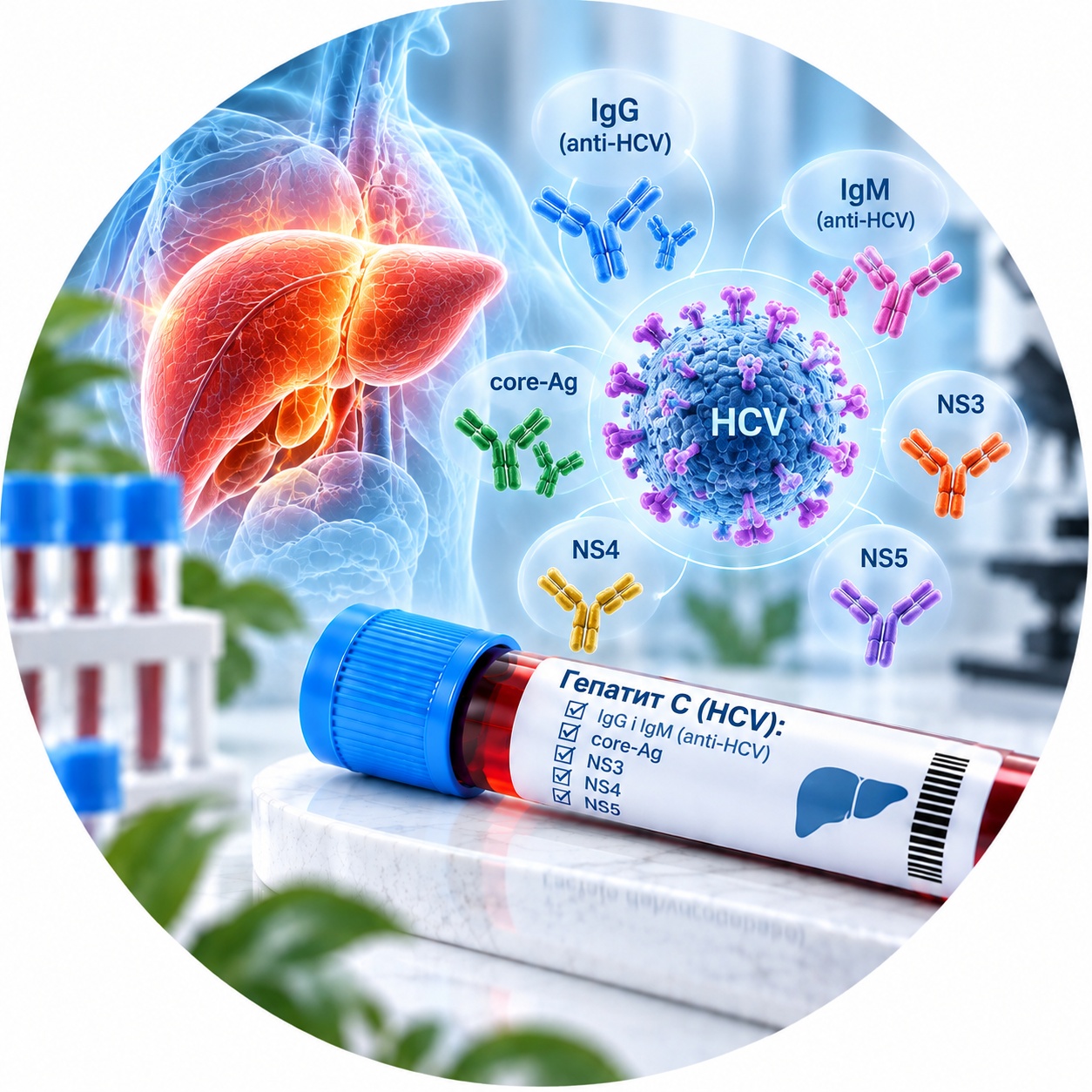
- IgG and IgM antibodies: These antibodies are proteins that the body produces in response to hepatitis C infection. Their presence in the blood indicates that the body is fighting the virus.
- core-Ag (core-antigen): The HCV core antigen is a structural protein found in the virus. The presence of IgG antibodies to core-Ag in the blood can confirm hepatitis C infection. This can be important for diagnosis.
- NS3, NS4 and NS5 (non-structural proteins): These proteins play an important role in the life cycle of the HCV virus and can be targets of the body's immune response. Testing for the presence of IgG antibodies to these proteins can help detect the infection and determine its stage and activity.
Laboratory tests IgG and IgM antibodies to HCV antigens, also including core-Ag, NS3, NS4, and NS5, help doctors diagnose hepatitis C and determine the stage of the disease. They are also important for choosing a treatment method and monitoring the effectiveness of treatment during therapy.
Treatment for hepatitis C usually involves antiviral therapy, which can lead to complete recovery or stabilization of the liver. It is important to detect this disease early and monitor its progress to prevent the development of serious complications.
Remember that the best way to prevent hepatitis C is to avoid possible contact with infected blood and to use protective measures during medical procedures and sharing syringes. Also, there is no vaccination available against hepatitis C, so prevention and early diagnosis are the best means of combating this disease.
| Execution time | 1 day |
|---|---|
| Type of biomaterial | Venous blood |
Useful tests