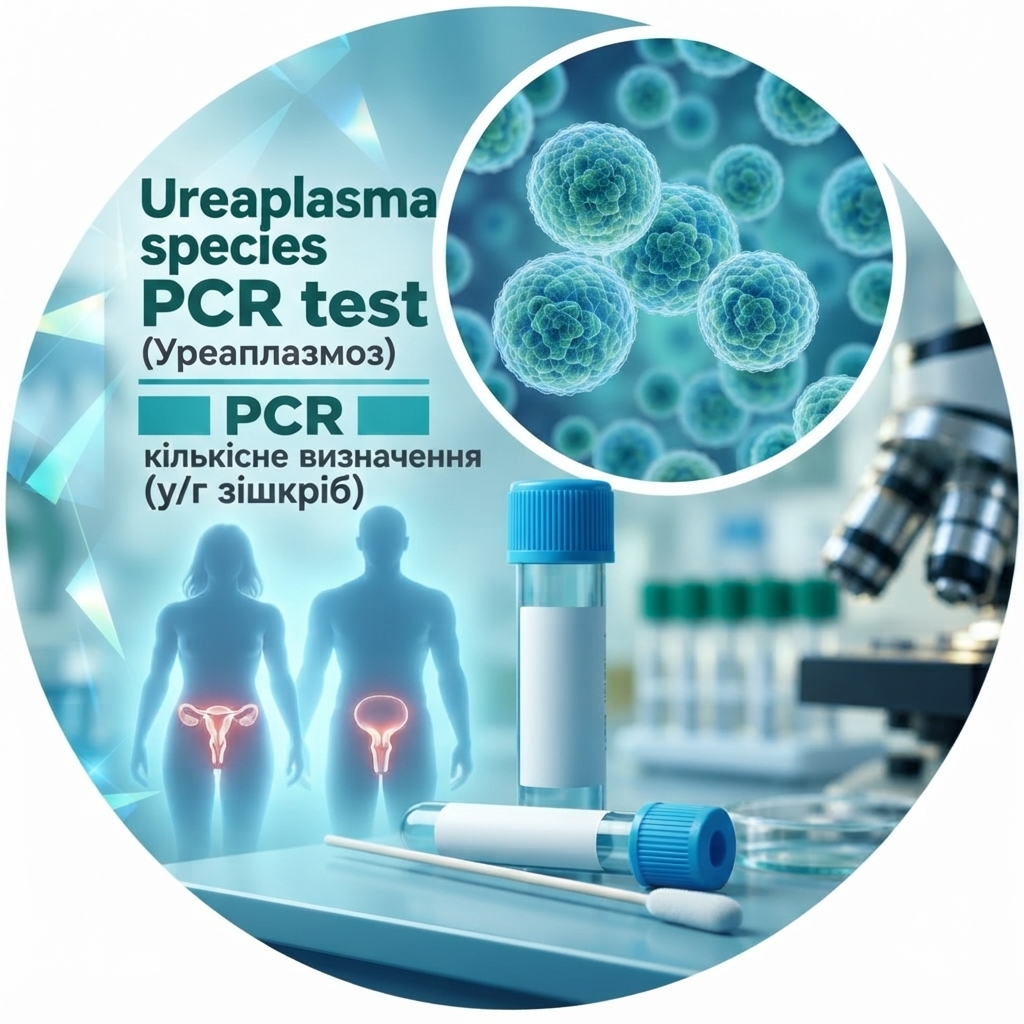
Ureaplasma species (Ureaplasmosis): PCR-qualitative determination
420 UAH
Infectious panel/Diagnosis of ureaplasmosis.
Real-time PCR (PCR) – qualitative determination. The study is carried out only at the address: Kam'yanets'ka, 106
Description
biomaterial: prostate secretion
– It is not recommended to visit a bathhouse or sauna during the day.
– Do not consume alcohol or spicy food during the day.
– Do not take antibacterial and antifungal medications for 14 days.
– Abstain from sexual contact for 3 days.
– On the day of donation, refrain from urinating for 2-3 hours.
– The sample is taken only by a doctor.
Ureaplasmosis is an infectious disease caused by microorganisms of the Ureaplasma species. This group of bacteria belongs to microorganisms that naturally inhabit the mucous membranes of the human body, in particular the genital tract and the urinary bladder. Ureaplasmas can cause disease, but also exist as healthy carriers.
Diagnosis of ureaplasmosis is important to prevent the development of serious complications and transmission of the infection from one person to another. Various methods are used for this, including laboratory tests and molecular diagnostics.
1. Clinical symptoms of ureaplasmosis
Symptoms of ureaplasmosis can be similar to those of other sexually transmitted diseases. These include:
- Polyuria (frequent urination).
- Burning and pain when urinating.
- Spoiled urea.
- A pronounced feeling of incomplete urination.
- Lower abdominal pain (especially in women).
- Vaginal discharge (in women).
2. Laboratory diagnostics
Laboratory diagnostics of ureaplasmosis includes several methods:
2.1. Smear microscopy. This method involves examining a sample of material from the genital or bladder mucosa under a microscope. Ureaplasmas can be seen as microorganisms that have a characteristic spiral shape.
2.2. Sowing on the crop. This method involves growing ureaplasmas on special nutrient media. It is more accurate, but requires more time to obtain results.
3. Molecular diagnostics
Modern molecular diagnostic methods, such as polymerase chain reaction (PCR), are reliable means of detecting ureaplasmas. They allow to detect the presence and type of Ureaplasma species in a shorter time.
4. Infection panel
An infection panel is a set of diagnostic tests used to detect various infectious agents, including ureaplasma. Such a panel may include PCR tests for various strains of Ureaplasma species, as well as other sexually transmitted infections such as chlamydia, mycoplasma, gonorrhea, and others.
5. Treatment and prevention
If the diagnosis of ureaplasmosis is confirmed, treatment involves prescribing antibiotics, usually tetracyclines or macrolides. It is important to follow your doctor's instructions and complete the full course of antibiotics.
Prevention of ureaplasmosis includes practicing safe sex, using condoms during sexual intercourse, and getting tested regularly for the infection. This is especially important for partners planning a pregnancy, as ureaplasmosis can be transmitted from mother to child during childbirth and cause pregnancy complications.
Ureaplasmosis is a serious disease, but with proper diagnosis and treatment, you can successfully cope with this infection and prevent its spread. It is important to lead a healthy lifestyle, follow safety rules during sexual intercourse, and regularly undergo a medical examination to identify possible infectious diseases.
Additional information
| Type of biomaterial | Ejaculate, Urine |
|---|---|
| Execution time | 1 day |
Related products