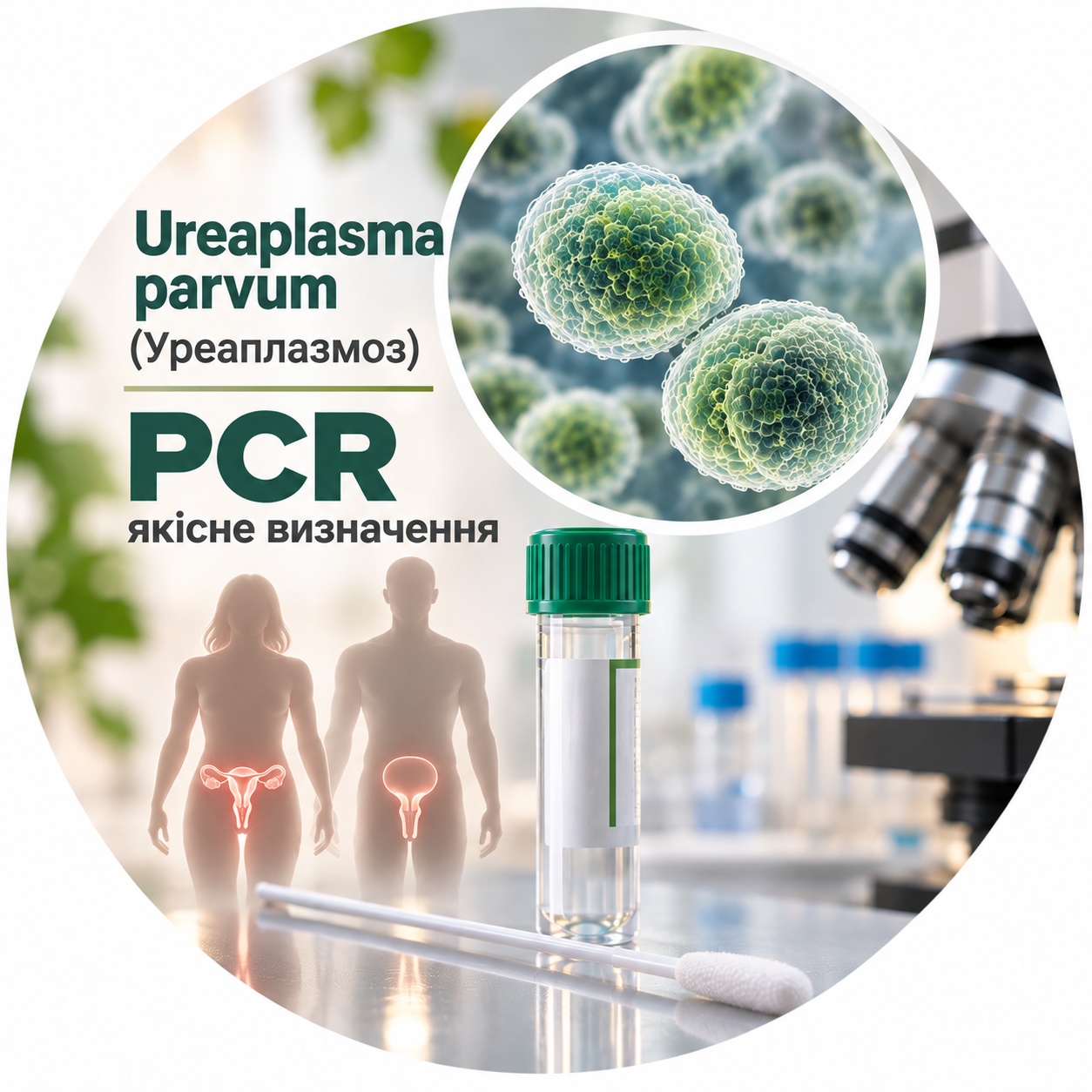
Ureaplasma parvum (Ureaplasmosis): PCR-qualitative determination
420 UAH
Infectious panel/Diagnosis of ureaplasmosis.
Real-time PCR (PCR) – qualitative determination. The study is carried out only at the address: Kam'yanets'ka, 106
Description
biomaterial: prostate secretion
– It is not recommended to visit a bathhouse or sauna during the day.
– Do not consume alcohol or spicy food during the day.
– Do not take antibacterial and antifungal medications for 14 days.
– Abstain from sexual contact for 3 days.
– On the day of donation, refrain from urinating for 2-3 hours.
– The sample is taken only by a doctor.
Ureaplasmosis, caused by the bacteria Ureaplasma parvum, is one of the most common sexually transmitted infections that can affect both men and women. This infection can be asymptomatic, but at the same time it can lead to serious consequences for reproductive health. For effective control of ureaplasmosis, it is important to correctly diagnose the infection and treat it in a timely manner. In this text, we will consider the diagnosis of ureaplasmosis and the infection panel to determine this disease.
Diagnosis of Ureaplasmosis:
Diagnosis of ureaplasmosis is an important step in preventing further spread of the infection and preserving reproductive health. There are several methods for diagnosing ureaplasmosis, including:
- Polymerase chain reaction (PCR): This method allows the detection of genetic material of Ureaplasma parvum in biological samples, such as urine or genital secretions. PCR is a very sensitive method and can determine the presence of the bacteria even in cases where other methods may fail.
- Cultural diagnostics: This method involves growing Ureaplasma parvum on special agar media. It can be a lengthy process and is less sensitive than PCR, but it allows you to identify the type of bacteria and determine its sensitivity to antibiotics.
- Serological tests: Serological tests can detect the presence of antibodies against Ureaplasma parvum in a patient's blood. This may indicate a previous infection, but is not always a reliable method for detecting an active infection.
Infectious Panel:
An infection panel is a set of diagnostic tests used to simultaneously diagnose multiple infectious agents, including ureaplasmosis. An infection panel can be especially useful in identifying sexually transmitted infections such as ureaplasmosis, gonorrhea, chlamydia, syphilis, and others. Here are some of the benefits of an infection panel:
- Simultaneous diagnostics: The infection panel allows you to test for multiple infections at once, making it quick and efficient for screening patients.
- Saving time and resources: Instead of conducting separate tests for each infection, an infection panel saves time and laboratory resources.
- Preventing the spread of infections: Timely diagnosis of various infectious agents helps avoid further spread of infections and ensures effective treatment.
Thanks to modern technologies, the infection panel can be performed quickly and reliably. It is important to remember that the infection panel and other diagnostic methods should be used under the supervision of a physician or infectious disease specialist. Only proper diagnosis and treatment can prevent the serious consequences of ureaplasmosis and other sexually transmitted infections.
Additional information
| Type of biomaterial | Ejaculate, Urine |
|---|---|
| Execution time | 1 day |
Related products