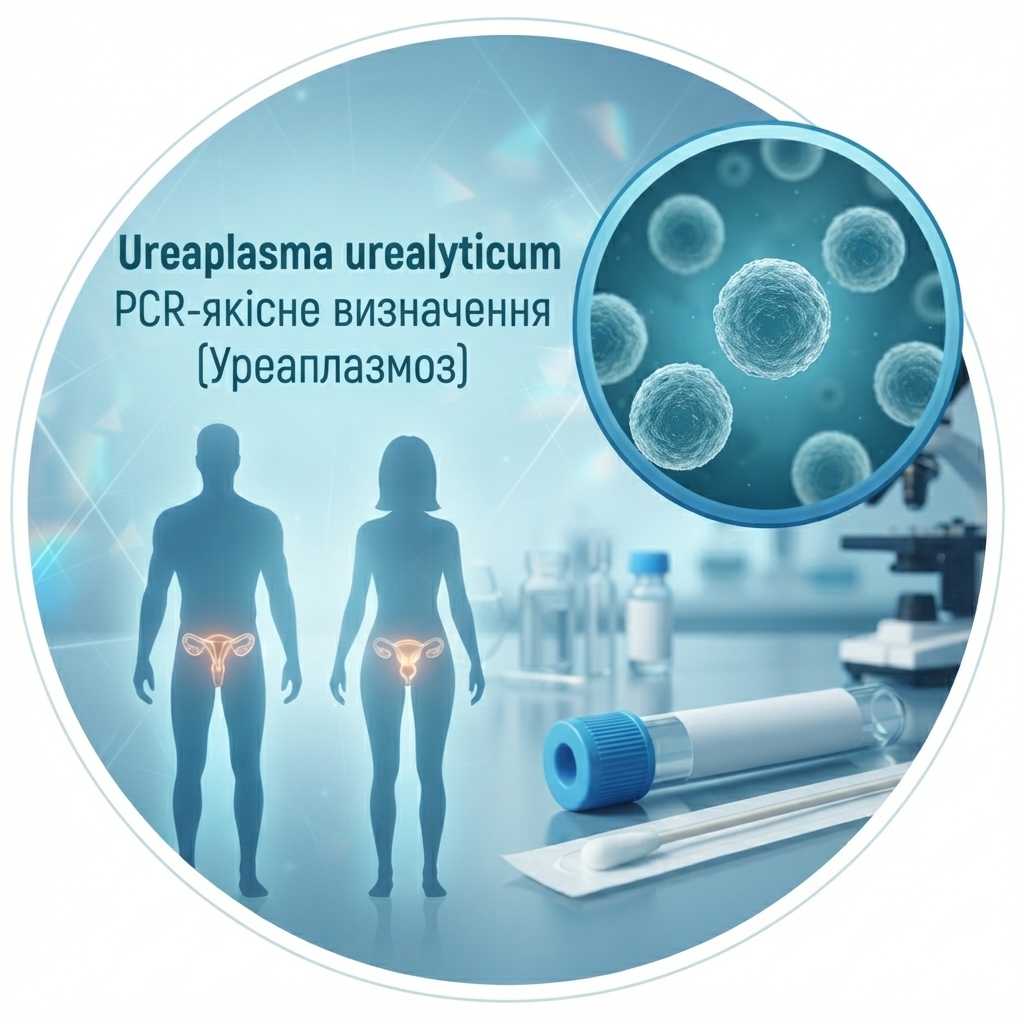
Ureaplasma urealiticum (Ureaplasmosis): PCR-qualitative determination
420 UAH
Infectious panel/Diagnosis of ureaplasmosis.
Real-time PCR (PCR) – qualitative determination. The study is carried out only at the address: Kam'yanets'ka, 106
Description
biomaterial: prostate secretion
– It is not recommended to visit a bathhouse or sauna during the day.
– Do not consume alcohol or spicy food during the day.
– Do not take antibacterial and antifungal medications for 14 days.
– Abstain from sexual contact for 3 days.
– On the day of donation, refrain from urinating for 2-3 hours.
– The sample is taken only by a doctor.
Ureaplasmosis: Infectious panel for diagnosis
Ureaplasmosis is one of the infectious diseases that has become relevant in recent decades. This disease is caused by microorganisms Ureaplasma urealiticum and Ureaplasma parvum, which belong to the genus Ureaplasma. These microorganisms are gram-negative, but differ from ordinary bacteria in that they do not have a cell wall, which makes them particularly adaptable and difficult to treat.
Ureaplasmosis can affect various organs and systems of the body, but most often it manifests itself in the genitourinary system, causing various health problems in both women and men. Symptoms of ureaplasmosis include inflammation of the bladder, arousal and pain during urination, as well as pregnancy of infectious pathology. In some cases, ureaplasmosis can lead to the transmission of sexually transmitted infections, as well as contribute to congenital malformations of the fetus in pregnant women.
For proper diagnosis and treatment of ureaplasmosis, it is important to take measures for early detection and monitor the infection in patients. One of the key tools for this is the infection panel for diagnosing ureaplasmosis.
The infectious panel for diagnosing ureaplasmosis includes several research methods:
- Polymerase chain reaction (PCR): This method allows the detection of Ureaplasma DNA in biological samples, such as urine or genital tract secretions. It is extremely sensitive and allows the detection of even small amounts of microorganisms.
- Cultural diagnostics: This method is used to grow ureaplasma on special agar media. It allows you to determine the sensitivity of microorganisms to antibiotics and other drugs.
- Immunological tests: Immunodiagnostics is based on the detection of antibodies to ureaplasma in blood serum. This allows you to determine whether there was an infection in the past and whether there are antibodies that can protect against re-infection.
- Microscopy: Examination of the discharge under a microscope can detect ureaplasma, but this method is less sensitive compared to PCR.
It is important to note that ureaplasmosis can manifest as an infection that is not even accompanied by symptoms, so diagnosis is important even in the absence of clinical manifestations. The infectious panel for diagnosis allows for timely detection of ureaplasma and determination of its sensitivity to antibiotics, which is important for effective treatment.
Treatment for ureaplasmosis usually involves the use of antibiotics such as azithromycin or doxycycline. After treatment, it is recommended to undergo re-diagnosis to check the effectiveness of the therapy.
Ureaplasmosis is a serious infection that can have significant health consequences. An infectious disease panel for diagnosis plays an important role in the detection and control of this disease. Early diagnosis and treatment help prevent complications and maintain health.
Additional information
| Type of biomaterial | Ejaculate, Urine |
|---|---|
| Execution time | 1 day |
Related products