Bordetella pertussis (Whooping cough), IgG
450 UAH
Infectious Disease Panel/Whooping Cough
Description
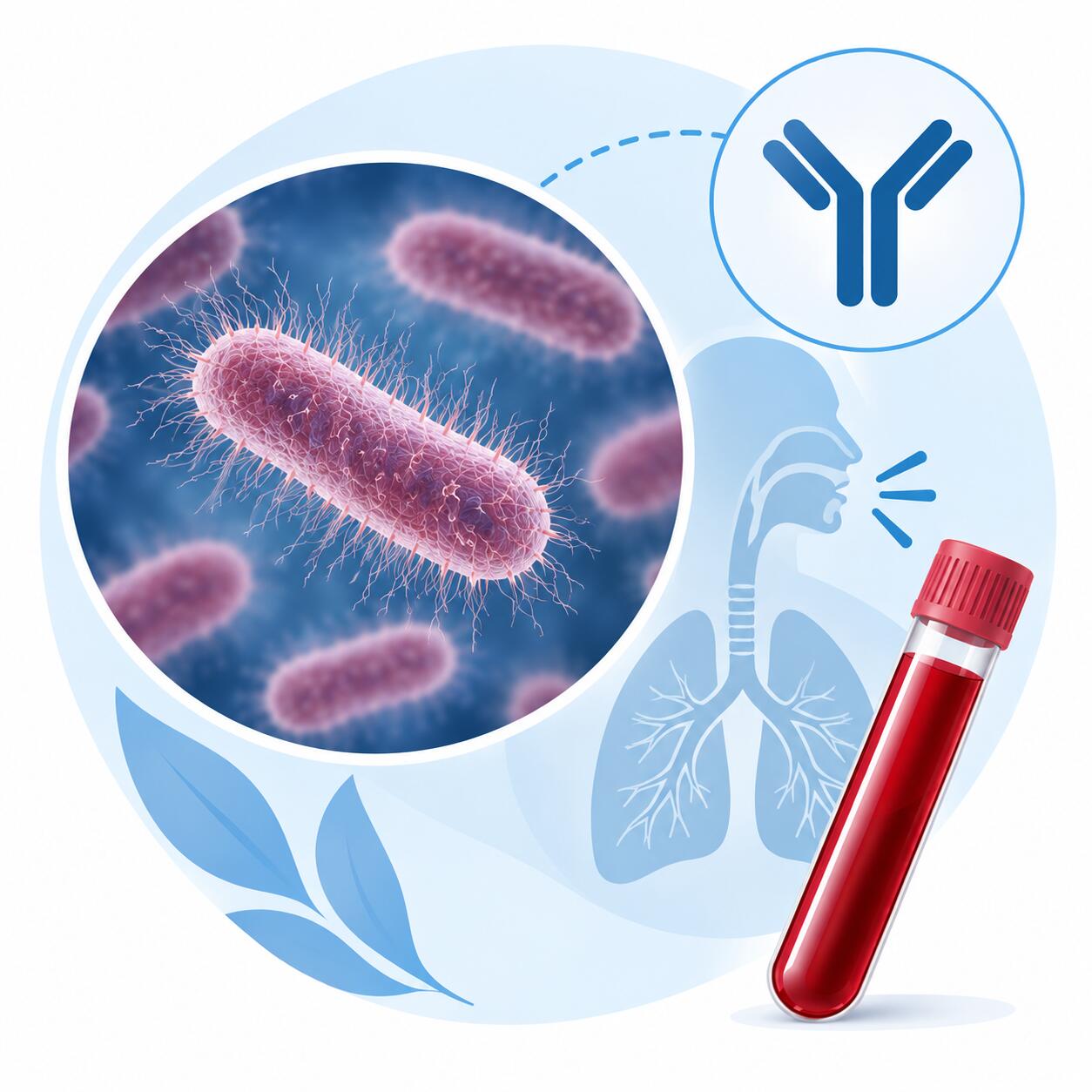
Bordetella Pertussis, also known as Whooping Cough, is a gram-negative bacterium that causes an acute respiratory infection in humans. Although the disease is considered diagnostically non-critical in adults, it can be dangerous for children, especially infants. Whooping cough is caused by Bordetella Pertussis, which is transmitted from one person to another through respiratory droplets produced during coughing or sneezing.
The causative agent of Pertussis is of great medical importance due to its high infectiousness and the ability to cause severe complications. These include pneumonia, complicated bronchitis, atelectasis of the lungs, and even seizures. The virus most often affects the lungs, respiratory tract, and related organs, but it can also affect other body systems.
Although most adults have natural immunity to pertussis, or have already had the disease in childhood, its release can be especially dangerous for infants and young children who have not yet received full immunity from vaccination. According to global statistics, several million cases of pertussis are recorded each year, with numerous deaths, mostly among children.
Vaccination is the most effective way to protect against pertussis. The vaccination schedule includes a series of childhood vaccinations, which are given in early childhood, usually starting at two months of age. The process involves several doses of the vaccine over a period of several months, which allows for the development of lasting immunity to the infection.
Immunoglobulin G (IgG) plays an important role in protecting the body from infections, also known as class G antibody. This antibody is able to cross the placenta from mother to baby during pregnancy, providing immunity to the baby against various diseases. Immunoglobulin G can also be used as a therapeutic agent to treat certain infectious diseases, or as a prophylactic agent for individuals at high risk of infection.
In the case of Pertussis, immunoglobulin G can be used to treat infants and children with reduced immunity or for prophylaxis in individuals who have been exposed to the disease. It is especially important to vaccinate around expectant mothers, as this will ensure that some level of immunity is passed from mother to child, greatly reducing the risk of infection in early life.
Overall, Bordetella Pertussis (Whooping Cough) is a serious disease that can be dangerous for children, especially infants. Vaccination and the use of immunoglobulin G are important means of controlling and preventing the disease. To maintain the overall health of the community, it is important to follow vaccination and immunization recommendations to prevent the spread of Pertussis and other infectious diseases.
Additional information
| Execution time | 1 day |
|---|---|
| Type of biomaterial | Venous blood |
Related products