
Tumor markers: what are they and when should you take the test?

What are tumor markers and what role do they play in cancer diagnosis?
Tumor markers are specific proteins or other substances that are produced by tumor cells or the body in response to the development of the oncological process. Determining the level of tumor markers in the blood helps to diagnose cancer in the early stages, assess the effectiveness of treatment, and monitor the risk of disease recurrence.
Laboratory analysis for tumor markers is not the only method for diagnosing cancer, but it helps to identify predisposition to cancer and assess the dynamics of treatment.
When to take a tumor marker test
Tumor markers may be useful in the following cases:
- Suspicion of cancer – if there are symptoms that may indicate a tumor (unexplained weight loss, chronic fatigue, changes in the body's functioning).
- Oncology treatment monitoring – monitoring the effectiveness of therapy and assessing the dynamics of the patient's condition.
- Preventive testing – for people with a hereditary predisposition to cancer.
- Post-treatment monitoring – to detect a possible recurrence of the disease.
It is important to understand that an elevated level Tumor markers do not always indicate the presence of cancer, therefore this analysis should be interpreted in conjunction with other diagnostic methods.

What tumor markers are most often used in diagnostics?
Depending on the type of tumor, different tumor markers are determined.
Main tumor markers and their significance
| Tumor marker | What determines | What types of cancer is it used for? |
| AFP (alpha-fetoprotein) | Diagnosis of liver tumors | Hepatocellular carcinoma, teratoma |
| CEA (carcinoembryonic antigen) | Indicates tumor processes in various organs | Colorectal cancer, lung cancer, breast cancer |
| CA-125 | Detects tumors of the reproductive system | Ovarian cancer, endometrium |
| CA 15-3 | Indicates the development of oncology in the mammary glands | Breast cancer |
| CA 19-9 | Detects tumors of the gastrointestinal tract | Cancer of the pancreas, stomach, intestines |
| PSA (prostate-specific antigen) | Indicates possible prostate pathologies | Prostate cancer |
| HE4 | Allows you to diagnose ovarian cancer | Ovarian cancer, female reproductive system |
| S-100 | Diagnosis of malignant skin neoplasms | Melanoma |
| hCG (human chorionic gonadotropin) | May be a marker of some tumor processes | Trophoblastic tumors, testicular cancer |
| Thyroglobulin | Indicates thyroid pathology | Thyroid cancer |
Some tumor markers may be elevated in inflammatory processes or benign neoplasms, so the analysis should always be interpreted in conjunction with other studies.
How to prepare for a tumor marker test
To get the most accurate results, you need to follow several rules before taking the analysis:
- The analysis is given on an empty stomach. – the last meal should be at least 8 hours before the test.
- It is recommended to avoid alcohol and fatty foods 24-48 hours before the analysis.
- Physical exertion and stress can affect the level of some tumor markers, so you should avoid overexertion before the test, and for completeness, doctors also often prescribe cytological examination fabrics.
- For men, you should abstain from sexual intercourse for 48 hours before a PSA test.
- You should not take the test during a cold or infectious disease, as this may affect the results.
Following these recommendations will help you obtain accurate data and avoid false deviations in indicators.
Where can I get tested for tumor markers?
Laboratory Medilab Plus offers a wide range of tests to determine the level tumor markers with high accuracy.
Advantages of conducting analysis at Medilab Plus
- Modern diagnostic methods with high accuracy of results.
- Get results quickly in the lab or online.
- Consultation with specialists regarding test results and further actions.
- Comprehensive research packages for health assessment.
Timely diagnostics allows you to detect possible pathologies at early stages and increase the effectiveness of treatment.
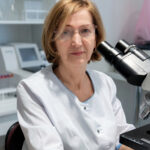
Highly qualified cytomorphologist with over 45 years of experience. For 33 years, she headed the cytology laboratory of the regional oncology clinic. Expert in early diagnosis of malignant neoplasms at Medi Lab Plus LLC. More details…

