
Immunity under stress: how emotional stress affects the body's defenses

Stress is the body's natural response to the challenges of the world around us. In the short term, it can be beneficial, as it mobilizes forces for a quick response. But if stress becomes chronic, its effect on the body changes - the immune system weakens, the body becomes vulnerable to infections and chronic diseases.
Modern research shows that prolonged exposure to cortisol and adrenaline can reduce lymphocyte activity, suppress antibody production, and even alter the gut microbiota. This explains why during periods of high stress, people are more likely to get colds, flu, or experience worsening allergies.
How stress affects the immune system
When a person is under stress, the body goes into "survival" mode:
concentration increases stress hormones (cortisol, adrenaline, noradrenaline);
the activity of T and B lymphocytes is suppressed;
the number of natural killer cells that fight viruses and tumor cells decreases;
the risk of inflammatory reactions increases.
Thus, the immune system loses its ability to fully protect the body, which leads to infections, slowed recovery, and even the development of autoimmune disorders.
Symptoms of weakened immunity during stress
frequent colds and flu;
long-term wound healing;
chronic fatigue;
sleep disturbances;
exacerbation of allergies;
digestive disorders associated with microflora imbalance.
Short-term and chronic stress
| Type of stress | Effect on the body | Implications for immunity |
|---|---|---|
| Acute (short) | Lasts minutes or hours, occurs during exams, speeches, emergencies | Temporarily activates immunity, increases readiness to fight infections |
| Chronic (long) | It lasts for weeks and months, occurs when there are constant problems at work or in your personal life. | Suppresses immunity, increases the risk of infections, cardiovascular and mental diseases |
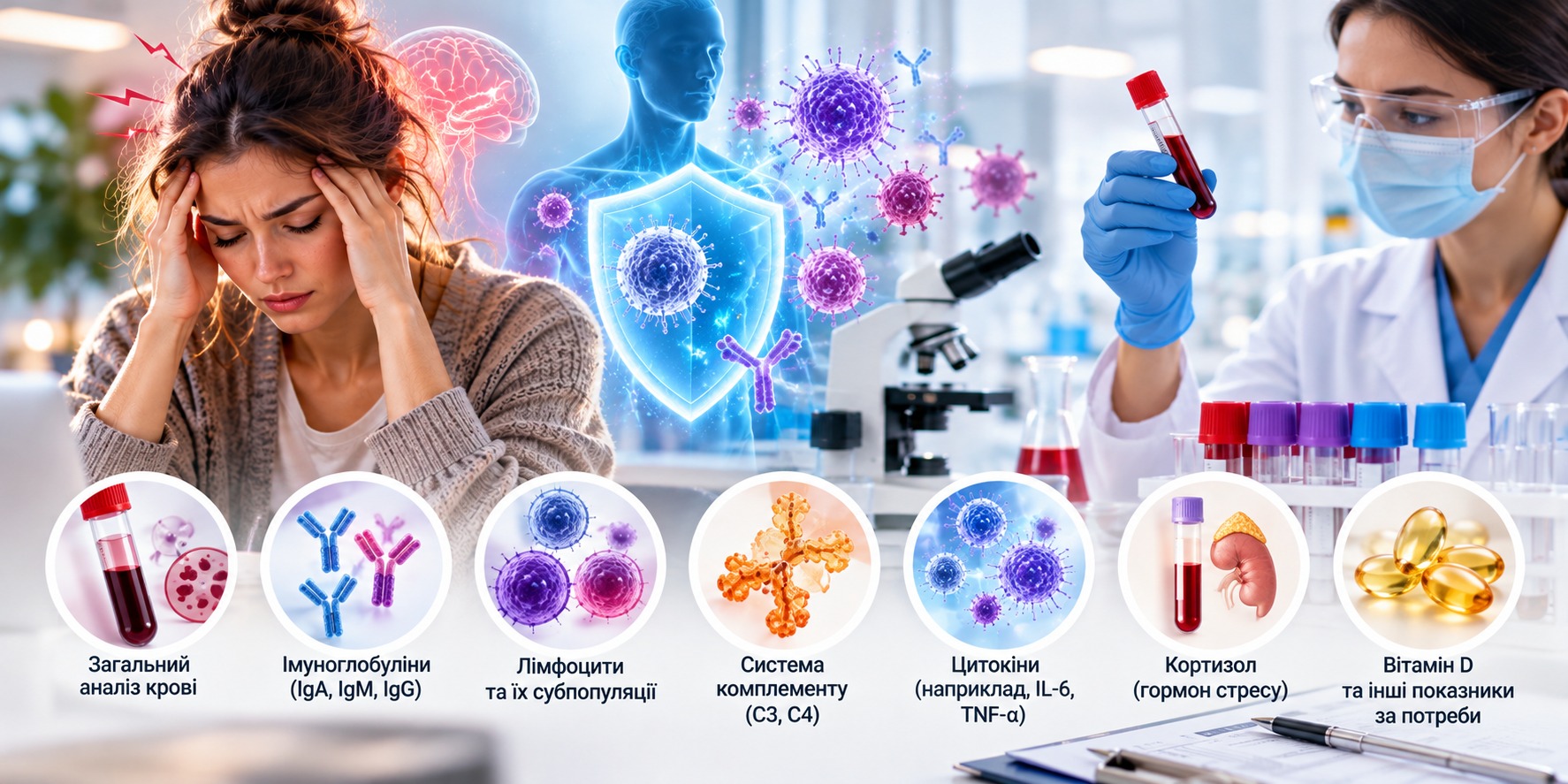
Tests to assess immunity during stress
A doctor may order lab tests to assess how stress has affected the immune system.
| Analysis | What does it show? | Value under stress |
|---|---|---|
| Complete blood count | The number of leukocytes, neutrophils, lymphocytes | Possible decrease in lymphocytes and increase in neutrophils |
| Immunogram | Content of T and B lymphocytes, NK cells, immunoglobulins | Gives a complete picture of the state of immunity, often shows a decrease in functional activity |
| Blood cortisol level/urine | The main stress hormone | With chronic stress, increased |
| C-reactive protein (CRP) | Inflammation marker | May be increased due to activation of inflammatory processes |
| Vitamin D | Regulation of the immune system | Low levels exacerbate immunodeficiency states |
| Glycated hemoglobin (HbA1c) | Assessment of metabolic status | May increase during stress, indicating risk of metabolic disorders |
These tests help the doctor determine whether the symptoms are indeed stress-related and create an individual recovery plan.
How to strengthen immunity during stress
Balanced diet with sufficient protein, vitamins C, D, zinc and selenium.
Regular sleep (7–8 hours a day).
Physical activity moderate intensity - walking, swimming, yoga.
Relaxation techniques — breathing exercises, meditation, art therapy.
Social and psychological support — reducing anxiety levels through communication and consultations with a psychologist.
Immunity and stress in the long term
Chronic stress can be a trigger for the development of serious diseases: cardiovascular, type 2 diabetes, autoimmune pathologies. That is why it is important not only to treat consequences weakened immunity, but also work on stress management.
Forming healthy habits — proper nutrition, adequate sleep, regular activity, and emotional control — gradually helps restore the balance of the immune and nervous systems.

Director of Medi Lab Plus LLC, a doctor of the highest category. Has over 45 years of practical experience in medicine and laboratory diagnostics. Founder and head of the laboratory since 2007. More details…

