
Down Syndrome Risk (DSR) – prenatal screening analysis to determine individual risk of Down Syndrome for the second trimester
100 UAH
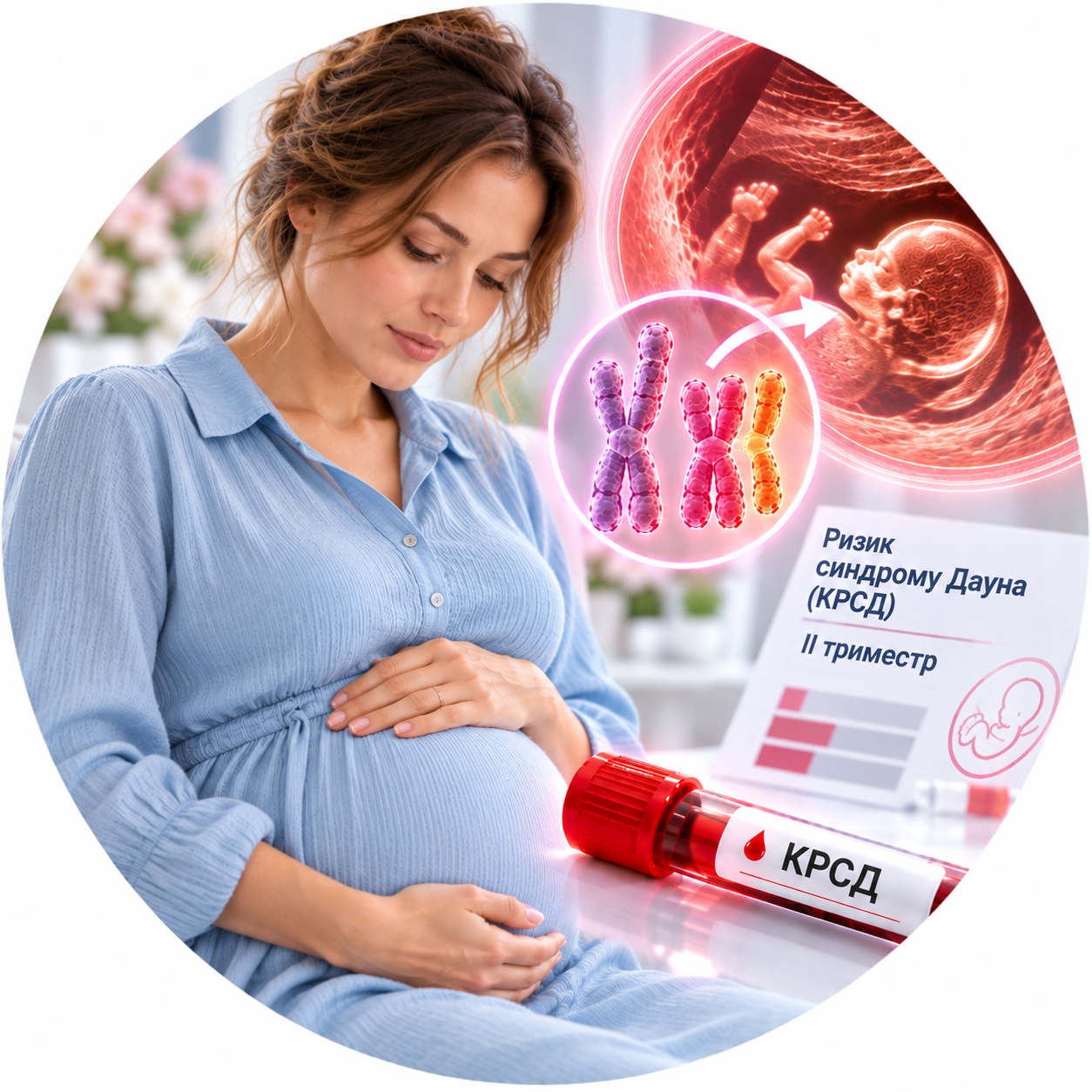
Prenatal screening in the second trimester to determine the individual risk of Down syndrome is a laboratory study that helps to assess the likelihood of trisomy 21 in the fetus. The risk is calculated based on biochemical parameters of the pregnant woman's blood and other data according to the screening protocol. The result is a risk assessment, not a final diagnosis. It must be interpreted together with the results of ultrasound and other clinical data. The optimal timing of the examination and preparation for it should be clarified with a doctor or laboratory.
Prenatal biochemical screening of the second trimester (16-20 weeks)
Down Syndrome Risk (DSR) – prenatal screening analysis to determine individual risk of Down Syndrome for the second trimester
Down syndrome, also known as trisomy 21, is one of the most common chromosomal abnormalities affecting human development. This genetic defect can lead to physical and mental disabilities, and it is often detected during fetal development. The exact mechanism of Down syndrome is not fully understood, but early diagnosis of the condition during pregnancy is important.
To determine individual risk Down syndrome in the second trimester of pregnancy, various methods, including hormonal panels and prenatal biochemical screening. These methods are aimed at assessing the risk of Down syndrome and help parents and medical staff make informed decisions about the further management of the pregnancy and the possible need for additional testing.
One of the methods risk analysis – hormonal a panel performed between 16 and 20 weeks of pregnancy. This panel involves measuring the levels of several hormones in the mother and establishing their relationships. Specifically, levels of alpha-fetoprotein (AFP), beta-chorionic gonadotropin (hCG), and estriol are analyzed. Changes in these levels may indicate an increased risk of Down syndrome.
Another important method is prenatal biochemical screening. It is also performed at 16-20 weeks of pregnancy and involves measuring the levels of various substances in the mother's blood. The levels of AFP, hCG, oral osteopontin (uE3), and dimeric gonadotropins (DIA) are usually examined. Higher or lower than normal levels of these substances may indicate a risk of Down syndrome.
It is important to note that none of these methods are completely accurate. They only provide information about the possible risk. If the results hormone panel or biochemical screening indicate an increased risk, your doctor may recommend further testing, such as amniocentesis or chorionic villus sampling, to obtain a more accurate diagnosis.
It is important to understand that screening results do not mean that the baby will definitely be born with Down syndrome. They are only information about the risk, and many parents decide to continue the pregnancy despite the increased risk. Others may choose to have additional tests or decide to terminate the pregnancy urgently, depending on the circumstances.
In any case, it is important to have prenatal screening under the guidance of qualified medical personnel and to discuss with the doctor all possible options and implications of the screening results. This helps parents make informed decisions and ensures the best outcome for the health of the mother and child.
| Execution time | 1 day |
|---|
Useful tests