

Cholesterol-LDL (low density lipoprotein) (Low density lipoprotein, LDL)
190 UAH
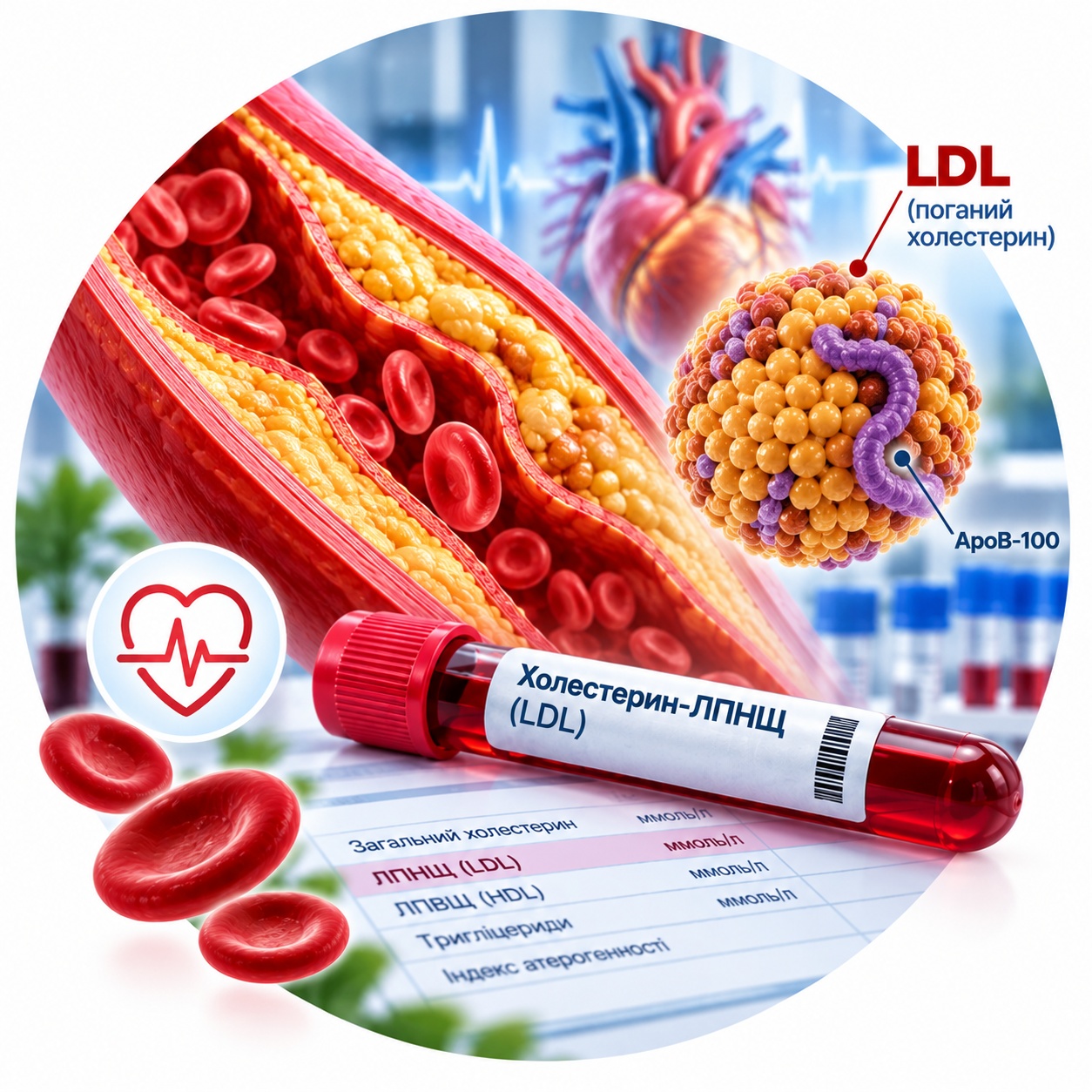
Blood test for LDL cholesterol is a test for the level of "bad" cholesterol, which carries fats from the liver to tissues and has a high tendency to be deposited on the walls of blood vessels. The test is a key indicator for assessing the risk of developing atherosclerosis, coronary heart disease, heart attack and stroke, as well as for monitoring the effectiveness of diet and drug therapy.
Blood test for LDL cholesterol (low-density lipoproteins) — is a key laboratory study of the level of "bad" cholesterol, which is the main building material for the formation of atherosclerotic plaques in blood vessels. The analysis allows you to assess the real risk of developing cardiovascular disasters (heart attack, stroke, coronary heart disease) and select effective therapy to protect blood vessels.
What is LDL cholesterol and why is it «bad»?
Cholesterol is a fat-like substance that does not dissolve in water, so it is transported through the circulatory system in the form of special complexes with proteins - lipoproteins.
LDL (low-density lipoprotein, or LDL) contain large amounts of cholesterol and transport it from the liver to the body's cells.
When there is an excess of LDL in the blood, its particles easily penetrate the inner wall of the arteries, where they oxidize and provoke inflammation.
At the site of inflammation, a atherosclerotic plaque, which gradually narrows the lumen of the vessel, reduces blood supply to organs and makes the vessel walls fragile.
That is why LDL is called "bad" cholesterol: the higher its level in the blood, the higher the risk of clogged arteries (atherosclerosis).
Why is a blood test for LDL prescribed?
Cardiac risk assessment: Definition of probability development of coronary artery disease heart disease (CHD), myocardial infarction, angina pectoris and atherosclerotic stroke.
Treatment monitoring: Assessing the effectiveness of a hypolipidemic diet, lifestyle changes, or medication (statins, ezetimibe, etc.).
Diagnostics hereditary disorders: Detection of familial hypercholesterolemia — a genetic a condition in which LDL levels are significantly elevated since childhood.
Preventive examinations: A mandatory component of vascular health screening in adults.
Who is recommended to take this test?
For persons aged 20 and over (for preventive assessment risk - once every 4–6 years).
Patients with high blood pressure (hypertension).
People with diabetes, metabolic syndrome, or overweight.
Patients who smoke or lead a sedentary lifestyle.
In the presence of a hereditary predisposition (if close relatives have had early heart attacks or strokes).
To monitor the safety and effectiveness of statins or other cholesterol-lowering drugs.
Preparing for the analysis
Compliance with the preparation rules guarantees the accuracy and reliability of the results:
On an empty stomach: Blood is donated strictly in the morning on an empty stomach, after a 10–12-hour overnight fast. It is allowed to drink clean, non-extracted water.
Diet for 1–2 days: On the eve of the study, you should exclude fatty, fried foods, alcohol from your diet, and avoid overeating.
Physical and emotional peace: Limit intense training, heavy physical labor, and stress 24 hours before the test.
Smoking: Do not smoke for at least 1–2 hours before blood collection.
Taking medication: Check with your doctor in advance about taking regular medications (especially statins, hormonal drugs, diuretics).
What do the results mean? (Interpretation)
Importantly: LDL target values vary significantly depending on the individual level of cardiovascular risk of a particular patient (according to ESC/EAS recommendations).
General guidelines for LDL (mmol/L):
Optimal level (for healthy adults without risks): < 3.0 mmol/L
Target level for high-risk patients (e.g., with diabetes or hypertension): < 1.8 mmol/l
Target level for very high-risk patients (after heart attack, stroke, stenting): < 1.4 mmol/l
Possible causes of elevated LDL (Hyperlipoproteinemia):
Hereditary (familial) hypercholesterolemia.
Unbalanced diet (high consumption of saturated and trans fats).
Sedentary lifestyle, obesity.
Hypothyroidism (decreased thyroid function).
Liver and biliary tract diseases (cholestasis, cirrhosis).
Chronic renal failure, nephrotic syndrome.
Diabetes.
Taking certain medications (steroids, anabolic steroids, progestins, sedatives).
Possible reasons for lowering LDL:
Severe liver damage (liver failure).
Hyperthyroidism (increased thyroid function).
Malabsorption syndrome (impaired absorption of nutrients in the intestines).
Chronic inflammatory or infectious diseases.
Exhaustion of the body, starvation, veganism without compensation for trace elements.
Hereditary abnormalities of lipid metabolism (abetaliprotienemia).
Get your LDL cholesterol test done at the Medi Lab Plus medical laboratory!
We guarantee high accuracy of research, professional blood sampling without pain and fast results. Take care of the health of your heart and blood vessels with us!
| Execution time | 1 day |
|---|---|
| Type of biomaterial | Venous blood |
Useful tests