
Genetics. PCR. Extended genetic marker of celiac disease HLA-DQ2.5, HLA-DQ2.2, HLA-DQ8, HLA-DRB1*04
1,940 UAH
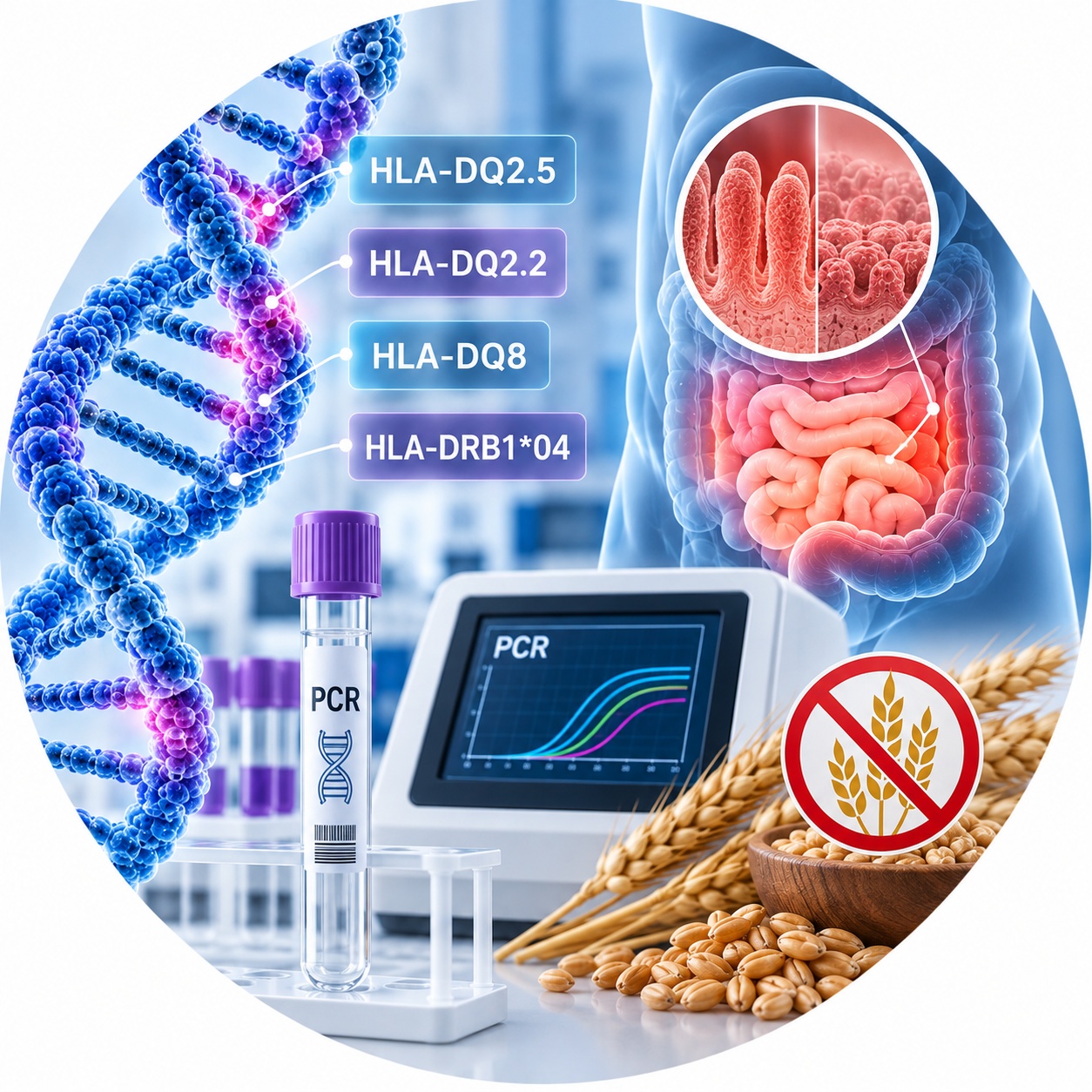
Comprehensive molecular genetic study to identify markers of genetic predisposition to celiac disease (gluten enteropathy) by analyzing key alleles of the HLA system — HLA-DQ2.5, HLA-DQ2.2, HLA-DQ8 and HLA-DRB1*04.
Biomaterial: Venous blood or buccal epithelium (swab from the inner surface of the cheek)
Research method: Polymerase chain reaction (PCR)
Appointment: Reliable exclusion of the diagnosis of celiac disease (high negative predictive value), assessment of genetic risk of developing the disease, differential diagnosis of gluten intolerance and chronic gastrointestinal disorders in patients from risk groups.
Genetic testing for celiac disease markers (HLA-DQ2.5, HLA-DQ2.2, HLA-DQ8, HLA-DRB1*04) is a highly accurate molecular analysis that allows determining the hereditary predisposition to celiac disease (gluten enteropathy). The main clinical value of this test lies in its high negative predictive value: the absence of specific genetic markers almost completely excludes the presence of celiac disease in the patient.
Celiac disease is a chronic systemic autoimmune disease of the small intestine that occurs in genetically susceptible individuals in response to the consumption of the protein gluten (found in wheat, rye, barley). Susceptibility to this condition is directly linked to the presence of certain alleles of the major histocompatibility complex (HLA) class II genes.
Since this is a DNA test, its result is unchanged throughout life and does not depend on whether the person is following a gluten-free diet at the time of the test.
Researched indicators and markers
HLA-DQ2.5 (complex of alleles DQA1*05:01 and DQB1*02:01) is the main and strongest marker of celiac disease, which is detected in the vast majority of patients with this diagnosis.
HLA-DQ2.2 (DQA1*02:01 and DQB1*02:02) — associated with a moderate risk of developing the disease (often found in combination with other markers).
HLA-DQ8 (DQA1*03 and DQB1*03:02) is the second most frequent susceptibility marker, which is found in a significant proportion of patients with celiac disease who do not have the DQ2 genotype.
HLA-DRB1*04 — an additional allelic marker that often accompanies or enhances genetic predisposition in combination with other indicators.
Indications for appointment
Chronic digestive disorders of unknown origin: prolonged diarrhea, bloating, flatulence, abdominal pain, irritable bowel syndrome (IBS).
Refractory iron deficiency anemia: decreased hemoglobin and iron levels that do not respond to standard therapy with iron preparations.
A burdened family history: presence of celiac disease in close blood relatives (parents, children, siblings).
Presence of concomitant autoimmune pathologies: type 1 diabetes, autoimmune thyroiditis (AIT), chronic hepatitis, dermatitis herpetiformis.
Differential diagnosis: the need to distinguish true genetically determined celiac disease from non-celiac gluten sensitivity or other food intolerances.
Systemic symptoms: chronic fatigue, weight loss, growth or sexual development delay in children, reproductive dysfunction.
Interpretation of results
Preparation for the study
Diet: Unlike blood tests for antibodies (antibody to tissue transglutaminase), It is NOT necessary to eliminate gluten or specifically introduce it into the diet before this genetic test.. DNA does not change from dietary habits.
If the biomaterial is venous blood: It is given on an empty stomach (8–12 hours of fasting is recommended), and it is allowed to drink pure water without gas.
If the biomaterial is buccal epithelium (cheek swab): You should refrain from eating, drinking, smoking, and chewing gum for 1–2 hours before the sample is taken. It is recommended to rinse your mouth with plain water before the procedure.
Frequently Asked Questions (FAQ)
1. Does a positive HLA-DQ2/DQ8 gene result mean I have celiac disease?
No. The presence of these genes only indicates genetic predisposition (They are found in approximately 30–40% of the population.) Susceptibility alone does not guarantee the development of the disease - celiac disease manifests itself only in a small proportion of genetically predisposed people.
2. Why is this analysis called an «exclusion test»?
Since celiac disease almost never develops in people who do not have either the HLA-DQ2 or HLA-DQ8 marker, a negative result of this test allows you to exclude this diagnosis with 100% (or close to it) certainty and look for other causes of the complaints.
3. Will this genetic analysis need to be repeated in the future?
No, a person's genetic profile remains unchanged throughout life, so it is enough to take this test once.
Recommendations after receiving the results
Be sure to contact a gastroenterologist or therapist with the results of the study.
In case of detection of high-risk markers (HLA-DQ2/DQ8) and the presence of clinical symptoms, the doctor usually prescribes additional serological tests (determination of the level of antibodies to tissue transglutaminase IgA and total IgA) to confirm or refute the active phase of the disease.
| Execution time | 1 day |
|---|---|
| Type of biomaterial | Blood |
Useful tests