
Calcitonin (CT)
480 UAH
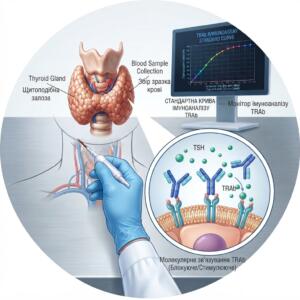
Calcitonin blood test (CT) — is a highly specific tumor marker produced by parafollicular (C-cells) of the thyroid gland and is the main indicator for the diagnosis and monitoring of medullary thyroid cancer. The study is prescribed for the initial detection of malignant C-cell neoplasms, assessment of the effectiveness of surgical treatment, timely detection of relapses and metastases, as well as for screening family members of patients with multiple endocrine neoplasia syndrome (MEN 2).
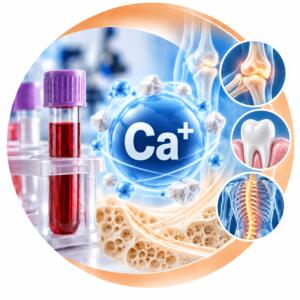
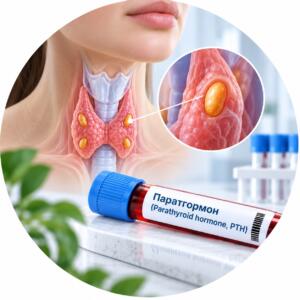
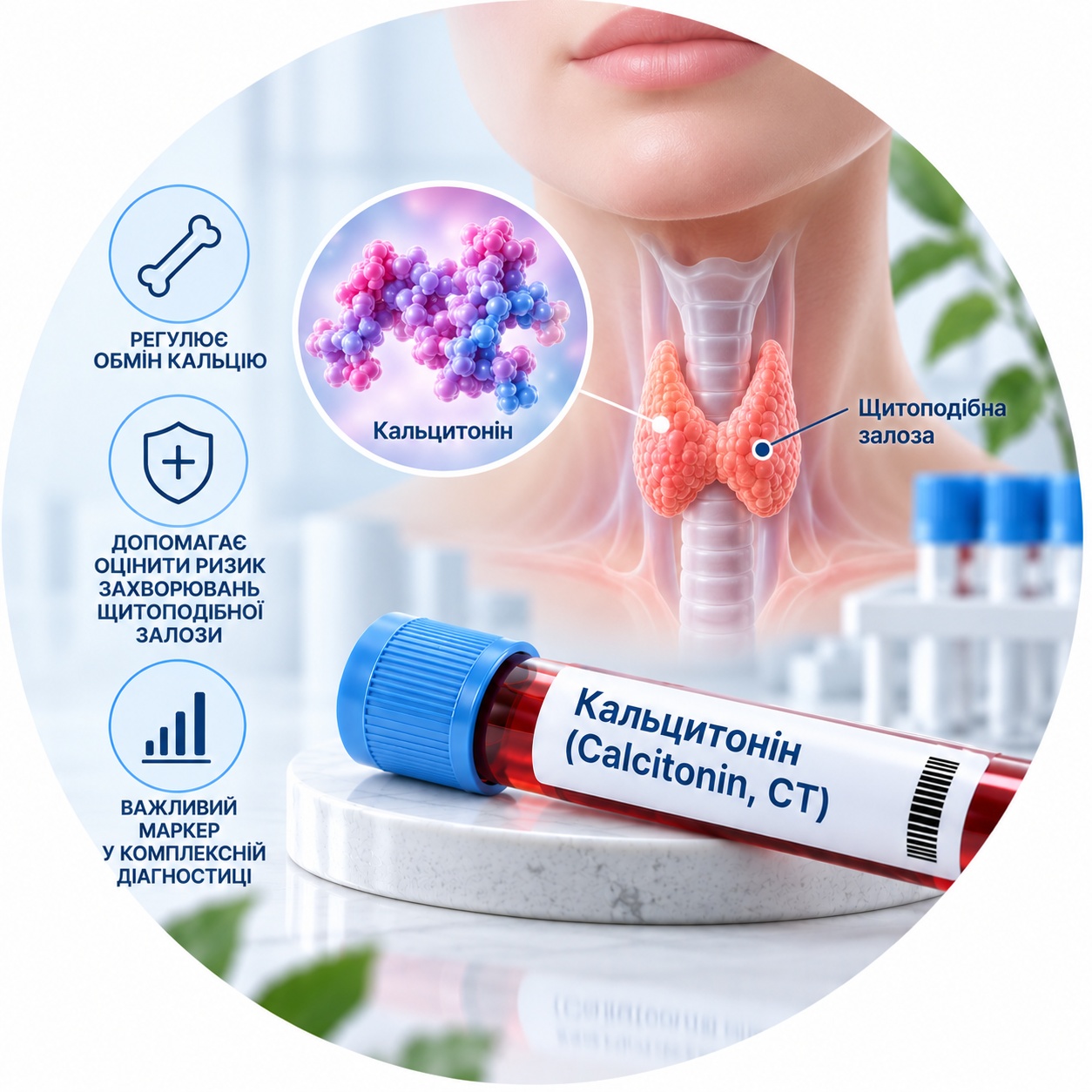
Calcitonin (CT) is a peptide hormone produced primarily in the parafollicular C cells of the thyroid gland. In terms of its physiological action, it is an antagonist of parathyroid hormone (PTH) and is involved in the regulation of calcium and phosphorus metabolism, inhibiting the activity of osteoclasts (cells that destroy bone tissue) and promoting the retention of calcium in the bones.
In laboratory diagnostics, calcitonin is primarily of crucial importance as a highly specific tumor marker. Its serum level is directly proportional to the mass of tumor tissue in medullary thyroid carcinoma, an aggressive form of cancer that develops from C cells.
What is this study for?
Diagnosis of medullary thyroid cancer (MTC): Primary detection of C-cell malignancy in early (sometimes preclinical) stages.
Postoperative monitoring: Assessment of the radicality of tumor removal (hormone levels should drop to undetectable values or normal).
Early detection of recurrences and metastases: Regular monitoring in the postoperative period for timely detection of tumor regrowth.
Family screening: Screening blood relatives of patients with medullary thyroid cancer or multiple endocrine neoplasia type 2 (MEN-2/MEN-2) syndrome for inherited mutations in the RET gene.
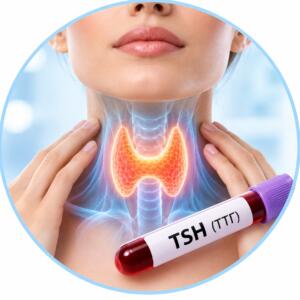
Differential diagnosis of thyroid nodules: Comprehensive evaluation of nodules together with TSH, VATS, and ultrasound.
Who is recommended to take the test?
Patients with detected nodules or masses in the thyroid gland (especially with suspicious signs according to ultrasound).
Individuals with confirmed medullary thyroid cancer before and after surgical treatment.
Close relatives (children, brothers, sisters, parents) of patients diagnosed with MRSA or MEN-2 syndrome.
Patients with complaints of unexplained enlargement of cervical lymph nodes, difficulty swallowing, hoarseness of voice in combination with nodes in the thyroid gland.
Preparation for the study
Material: Venous blood.
On an empty stomach: Blood is donated strictly in the morning on an empty stomach (after an 8–12-hour overnight fast). It is allowed to drink clean, non-carbonated water.
Alcohol and smoking: 24 hours before the analysis, you must avoid alcohol and 1–2 hours before the analysis, you must refrain from smoking.
Physical and emotional stress: On the eve of the study, you should avoid intensive training, stress, and physiotherapy procedures.
Taking medication: In consultation with your doctor, it is recommended to stop taking calcium, vitamin D, proton pump inhibitors, and estrogens a few days before donating blood, as they can affect hormone levels.
Interpretation of results
Important: Calcitonin norms depend on gender (in men, reference values are usually slightly higher than in women) and the specific laboratory research method.
Possible causes of elevated calcitonin levels:
Medullary thyroid cancer (significant increase - tens or hundreds of times).
C-cell hyperplasia of the thyroid gland (precancerous condition).
Multiple endocrine neoplasia syndrome type 2 (MEN-2A, MEN-2B).
Some neuroendocrine tumors of other locations (small cell lung cancer, carcinoid, pancreatic tumors).
Chronic renal failure.
Severe inflammatory diseases or sepsis.
Benign thyroid diseases (thyroiditis, some forms of goiter) cause a moderate increase.
Pregnancy (physiological increase).
Diagnostic value of low/undetectable level:
It is the norm for healthy people.
Indicates the success of the surgical treatment (absence of residual tumor tissue and metastases).
Take a calcitonin test at the Medi Lab Plus medical laboratory for an accurate and prompt assessment of the condition of your thyroid gland.
| Execution time | 1 day |
|---|---|
| Type of biomaterial | Venous blood |
Useful tests