
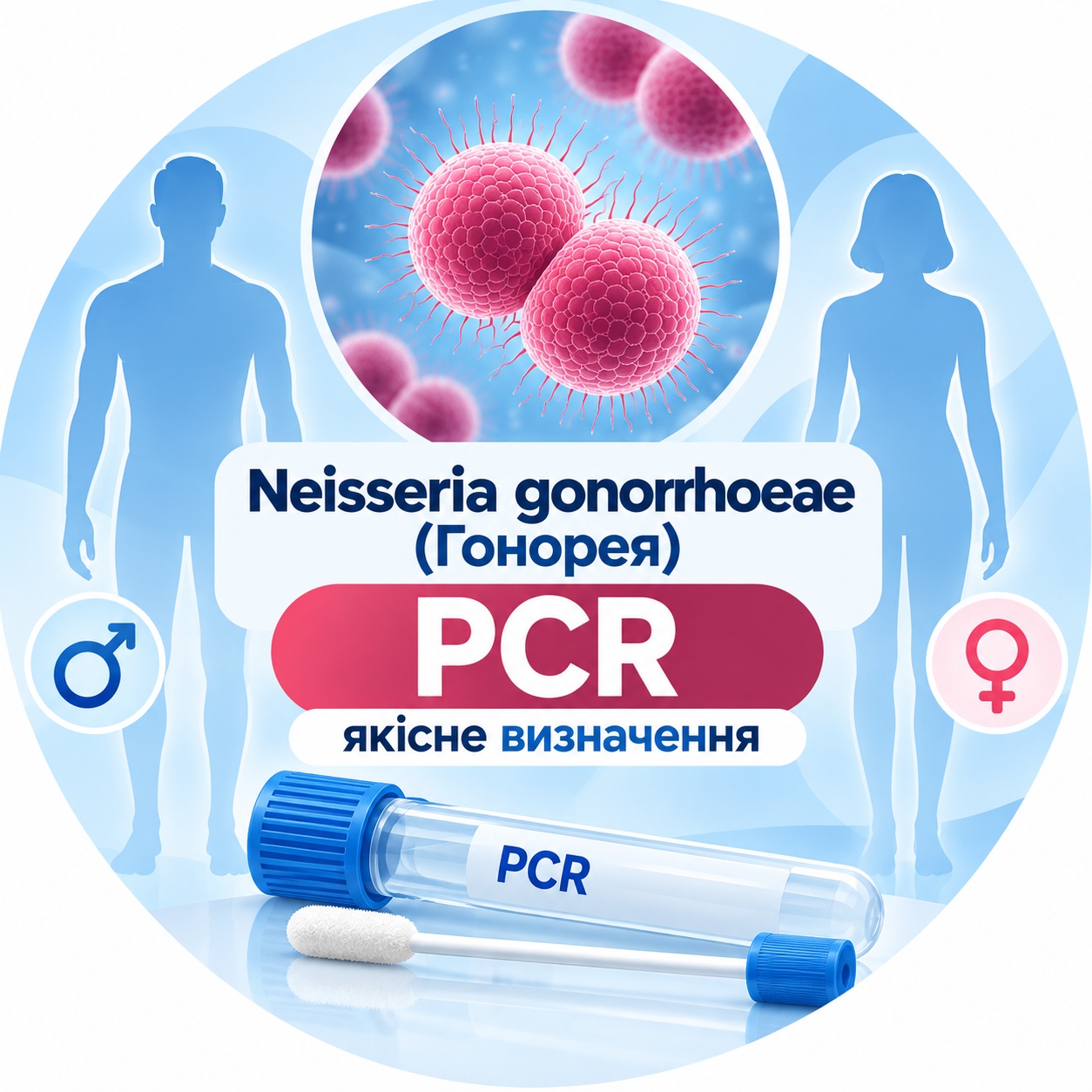
Neisseria gonorrhoeae (Gonorrhea): PCR-qualitative determination
420 UAH
Infectious panel/Gonorrhea diagnosis.
Real-time PCR (PCR) is a qualitative determination. The study is conducted only at the address: Kamyanets'ka, 106
Description
biomaterial: prostate secretion
– It is not recommended to visit a bathhouse or sauna during the day.
– Do not consume alcohol or spicy food during the day.
– Do not take antibacterial and antifungal medications for 14 days.
– Abstain from sexual contact for 3 days.
– On the day of donation, refrain from urinating for 2-3 hours.
– The sample is taken only by a doctor.
Gonorrhea, or nonspecific urethritis, is one of the most common sexually transmitted infections in the world, caused by the bacterium Neisseria gonorrhoeae. This microorganism causes inflammation of the mucous membrane of the genitourinary tract, and can also affect the eyes, anus, and throat. People who are sexually active are at greatest risk.
Diagnosing gonorrhea is critical to effective treatment and preventing the spread of the infection. Several methods are commonly used:
- Microscopic analysis of the smear. This method allows you to detect the bacteria taken from the mucous membrane of the affected area. It is important to note that sometimes microscopy can give false results due to the low sensitivity of the method.
- Bacteriological culture. This is a more accurate method that involves growing a culture of bacteria on special agar plates in a laboratory setting. It allows you to identify the type of bacteria and determine their sensitivity to antibiotics.
- Molecular genetic methods. They are based on the detection and analysis of Neisseria gonorrhoeae DNA. PCR (polymerase chain reaction) and other similar methods can detect even small amounts of the bacteria.
An infection panel for diagnosing gonorrhea may include several tests at once, as gonorrhea often coexists with other sexually transmitted infections, such as chlamydia, syphilis, or HIV infection.
It is important to emphasize that if you suspect you have gonorrhea, you should seek medical attention immediately. Delayed treatment can lead to serious complications, such as focal urethritis, an increased risk of HIV infection, and even infertility.
Treatment for gonorrhea usually involves the use of antibiotics, but due to the increasing resistance of bacteria to some drugs, it is important to choose an effective drug. Also, after completing the course of treatment, follow-up diagnostics are recommended to confirm cure.
It is important for everyone, regardless of gender and age, to remember the importance of regular medical examinations and testing for sexually transmitted infections for timely detection and treatment. Only in this way can complications be avoided and infections be prevented from spreading among the population.
Additional information
| Type of biomaterial | Ejaculate, Urine |
|---|---|
| Execution time | 1 day |
Related products








-20%