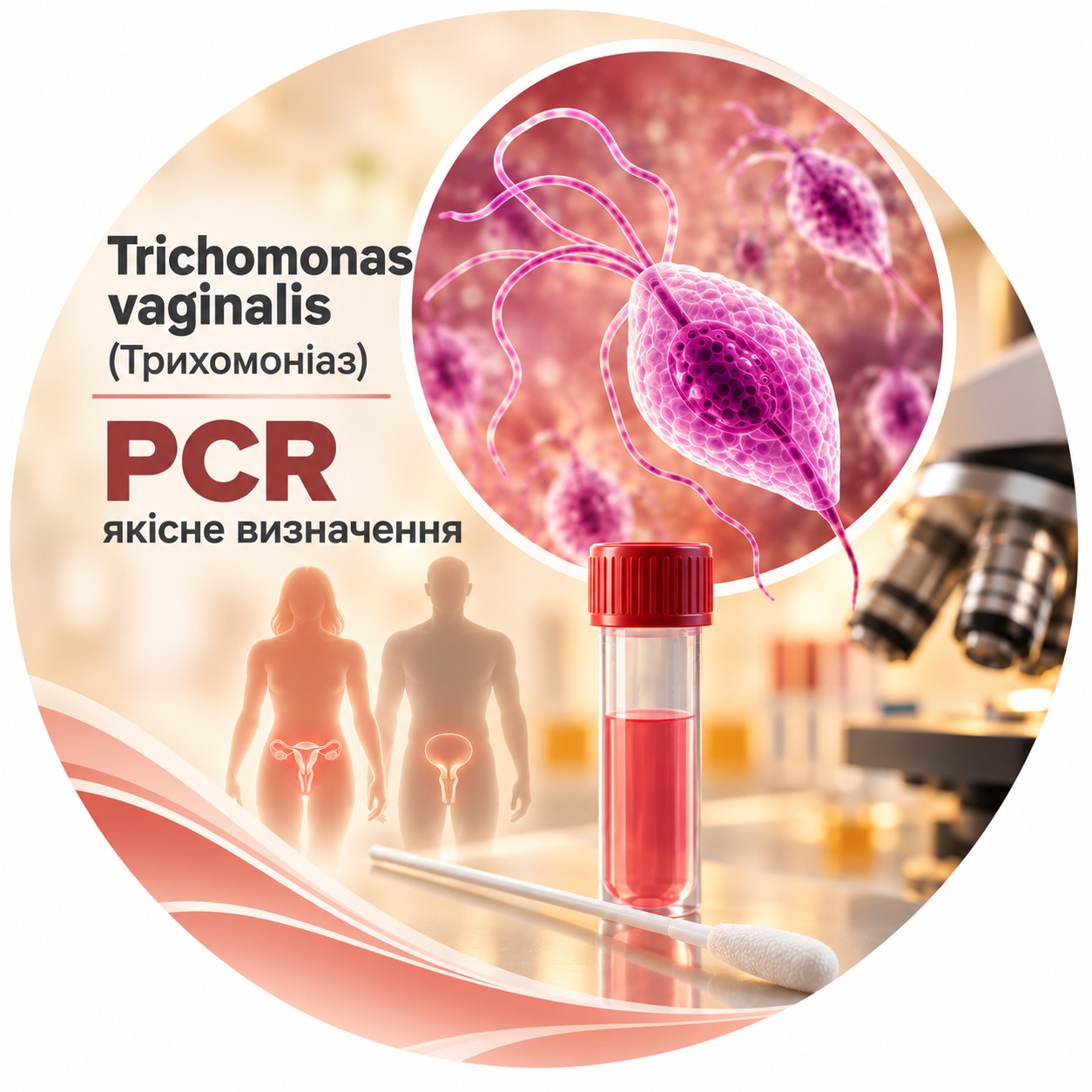
Trichomonas vaginalis (Trichomoniasis): PCR-qualitative determination
440 UAH
Infection panel/Trichomoniasis diagnosis.
Real-time PCR (PCR) – qualitative determination. The study is carried out only at the address: Kam'yanets'ka, 106
Description
biomaterial: prostate secretion
– It is not recommended to visit a bathhouse or sauna during the day.
– Do not consume alcohol or spicy food during the day.
– Do not take antibacterial and antifungal medications for 14 days.
– Abstain from sexual contact for 3 days.
– On the day of donation, refrain from urinating for 2-3 hours.
– The sample is taken only by a doctor.
biomaterial: urine
– Abstain from alcohol and medications the day before.
– Do not carry out local procedures during the day.
– Use plain water in the morning.
– For the study, the first portion of morning urine is taken.
Trichomoniasis (also known as “vaginal trichomoniasis” or “uterine trichomoniasis”) is an infectious disease caused by the single-celled microorganism Trichomonas vaginalis. This disease can affect both women and men, but it is most often known as a female infection because women are more likely to experience symptoms of trichomoniasis. Trichomoniasis can be sexually transmitted and causes significant discomfort and risk of complications if not treated properly. Diagnosis of this infection requires specialized techniques and an infection panel.
Symptoms of trichomoniasis:
Symptoms of trichomoniasis may include:
- Severe itching and irritation: This is one of the most common symptoms. Itching can be very annoying and uncomfortable.
- Vaginal discharge: Vaginal discharge tends to change color (often becoming greenish or yellow) and have an unpleasant odor.
- Increased body temperature: In some cases, trichomoniasis may be accompanied by a slight increase in body temperature.
- Joint pain: Sometimes women may experience pain in the genital area.
- Difficulty urinating: This symptom is not always present, but in some cases, trichomoniasis can lead to discomfort during urination.
Diagnosis of trichomoniasis:
Various methods are used to diagnose trichomoniasis, but the most effective are:
- Microscopic analysis of vaginal discharge: This method involves examining vaginal discharge under a microscope to detect Trichomonas vaginalis. However, it may be less sensitive than other methods.
- Polymerase chain reaction (PCR): This molecular diagnostic method allows the detection of Trichomonas vaginalis genetic material in vaginal discharge. It is highly sensitive and specific.
- Cultural diagnostics: This method involves collecting a sample of vaginal discharge and inoculating it on a special medium for the growth of Trichomonas vaginalis. This can take longer, but is considered very accurate.
- Immunodiagnostics: Some immunodiagnostic tests can detect antibodies to Trichomonas vaginalis in the patient's blood.
For accurate diagnosis and subsequent treatment of an infection, it is important to perform a specialized infection panel that includes selected diagnostic methods. This will allow the doctor to determine the presence of the infection, its severity, and the appropriate treatment regimen.
Treatment of trichomoniasis:
Treatment for trichomoniasis usually involves taking anti-inflammatory and antimicrobial drugs, such as metronidazole or tinidazole. Treatment should be given simultaneously to both sexual partners, and it is recommended to abstain from sexual contact during treatment. After treatment, it is important to repeat diagnostic tests to ensure complete recovery.
Prevention of trichomoniasis includes using condoms during sexual intercourse and avoiding sex partners with the infection. Regular examinations and testing for sexually transmitted infections are important for early detection and treatment of trichomoniasis and other infections.
Additional information
| Type of biomaterial | Ejaculate, Urine |
|---|---|
| Execution time | 1 day |
Related products