


Parasitic infections. No. 6
Original price was: 3,120 грн.2,800 UAHCurrent price is: 2,800 грн.
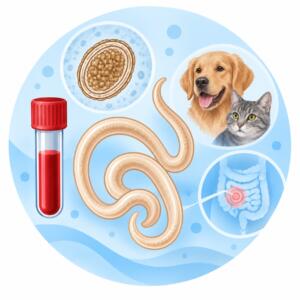
Comprehensive study «"Parasitic Infections No. 6"» involves the determination of antibodies to the causative agents of five parasitic infections. The analysis helps to assess the body's immune response and may be prescribed for suspected parasitic infection.
The study includes:
- Ascaris lumbricoides (roundworm) — IgG antibodies.
- Toxocara canis (toxocarosis) — IgG antibodies.
- Giardia lamblia (giardiasis) — total antibodies IgA + IgM + IgG.
- Giardia lamblia (giardiasis) — IgM antibodies.
- Opisthorchis felineus (opisthorchiasis) — IgG antibodies.
- Trichinella spiralis (trichinellosis) — IgG antibodies.
The results are evaluated taking into account symptoms, history, and other examinations. Detection of antibodies by itself does not always confirm active infection, so the doctor may prescribe additional diagnostics if necessary.
Parasitic invasions are one of the current problems of modern medicine and biology. This problem affects both humans and animals, and has a significant impact on health and the economy. To study and combat parasites, there is a need for comprehensive research in the field of parasitology.
Parasites are organisms that live on or in another organism, feed on it, and cause harm. They can be single-celled microorganisms, worms, insects, flatworms, roundworms, and various microscopic viruses, bacteria, and fungi. Parasites can cause a variety of diseases, from mild allergic reactions to serious diseases such as malaria, helminthiasis, and trypanosomiasis.
To understand and combat parasitic infestations, comprehensive studies are needed that include various aspects of parasitology: These studies should cover epidemiological, clinical and therapeutic aspects in order to fully understand the mechanisms of infection. It is especially important to study parasitic infections in humans, as they can have serious health consequences. The introduction of new diagnostic methods and treatment strategies is also key to effectively combat these diseases.
- Epidemiological studies: These allow us to establish the prevalence of parasites in the population and wildlife, identify risk factors and transmission routes of infestations. This helps to develop effective prevention and control measures.
- Diagnostics: The development of accurate and sensitive methods for diagnosing parasitic infestations is important for timely detection and treatment of diseases. Modern molecular methods, serological tests, and microscopy play an important role in diagnosis.
- Treatment and Prevention: Research in the fields of pharmacy and medicine helps develop drugs and vaccines for the treatment and prevention of parasitic diseases. It is also important to develop effective methods for controlling parasites in animals.
- Life cycle studies: Understanding the life cycles of parasites, their vectors, and hosts helps determine optimal control strategies. Research in this area reveals important points of vulnerability for parasites.
- Ecological studies: The ecological context is important for understanding the spread of parasites. Changes in the environment can affect vector and host populations, which in turn affects the spread of parasitic infestations.
Comprehensive research in parasitology requires collaboration between scientists, physicians, epidemiologists, and other professionals. It allows for the development of scientifically sound approaches to parasite control and improves human and animal health. In addition, this research contributes to the conservation of biodiversity and the reduction of losses in agriculture.
Awareness of the importance of parasitology and comprehensive research in this field is a step towards combating parasitic invasions and improving the quality of life of people and animals.
| Execution time | 1 day |
|---|---|
| Type of biomaterial | Venous blood |
Useful tests

“Female Hormonal Profile I” - a comprehensive laboratory study
Original price was: 3,970 грн.3,570 UAHCurrent price is: 3,570 грн.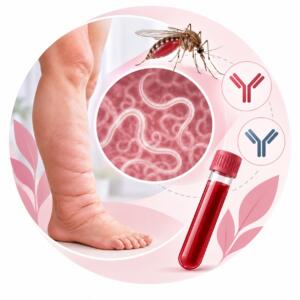



Sexually transmitted infections, STIs (men)
Original price was: 3,980 грн.3,180 UAHCurrent price is: 3,180 грн.