
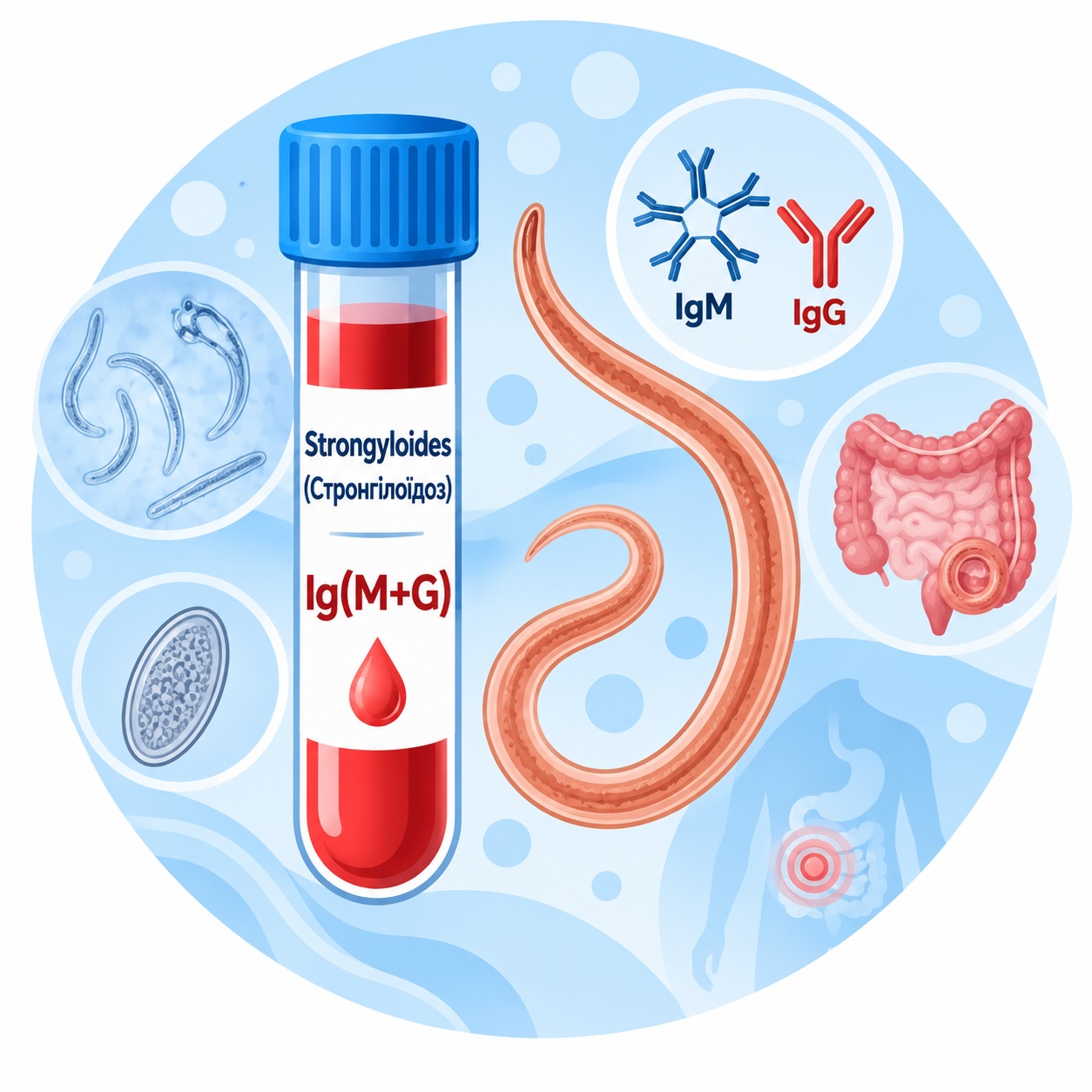

Strongyloides (Strongyloidosis), Ig(M+G)
690 UAH
Infectious panel/Parasitology
Description
Strongyloidiasis and immunoglobulin M+G: Important aspects in the infectious parasitology panel
Parasitic diseases have always been a pressing problem in the field of medicine and public health. One such disease is strongyloidiasis, caused by Strongyloides stercoralis, which is a dangerous parasitic infection of humans. Diagnosis and monitoring of strongyloidiasis are possible through the use of various methods, including immunological ones. In this article, we will consider the importance of determining the levels of immunoglobulin M+G (IgM+IgG) for the diagnosis and control of this infectious disease in the infectious parasitology panel.
Strongyloidiasis: General information
Strongyloidiasis is a parasitic disease that can have serious consequences for humans, particularly for immunocompromised patients. The main pathogen is the nematode Strongyloides stercoralis, which has the ability to penetrate the body through the skin and cause damage to tissues and organs. This infection is especially dangerous in cases where the immune system is weakened, for example, in patients with HIV/AIDS or after organ transplantation.
The role of immunoglobulins M and G in the diagnosis of strongyloidiasis
To diagnose strongyloidiasis, it is important to consider that the patient's immune system responds to the infection by producing immunoglobulins, in particular immunoglobulins M (IgM) and G (IgG).
- IgM (immunoglobulin M): Elevated IgM levels may indicate an active stage of infection. Elevated IgM levels can be observed in the early stages of Strongyloides stercoralis infection. This indicates an active immune response of the body to the presence of the parasite.
- IgG (immunoglobulin G): After active disease and successful treatment, IgG levels may rise in the patient's blood. This indicates that there is immunity to the infection that has developed as a result of contact with the parasite. For patients with strongyloidiasis, monitoring IgG levels is important to determine the effectiveness of treatment and to check for relapses.
The significance of IgM and IgG measurements in the infectious parasitology panel
Immunological methods for determining the levels of immunoglobulins M and G in the infectious parasitology panel help to detect the presence of strongyloidiasis, as well as to establish the stage of infection and the effectiveness of treatment.
In patients suspected of having strongyloidiasis, it is important to regularly monitor immunoglobulin M and G levels, especially after a course of antiparasitic treatment. This helps to confirm recovery and determine the risk of relapse.
In conclusion, immunoglobulins M and G play an important role in the diagnosis and monitoring of strongyloidiasis. Their measurement in the infectious parasitology panel helps to detect the infection in time, establish the stage of the disease and determine the effectiveness of treatment. This allows physicians to make informed decisions and ensures a better treatment outcome for patients with strongyloidiasis.
Additional information
| Execution time | 1 day |
|---|---|
| Type of biomaterial | Venous blood |
Related products



-20%