Borrelia burgdorferi sl (Borreliosis), Real-time PCR-qualitative determination
580 UAH
Infectious Disease Panel/Lyme Disease (Borreliosis)
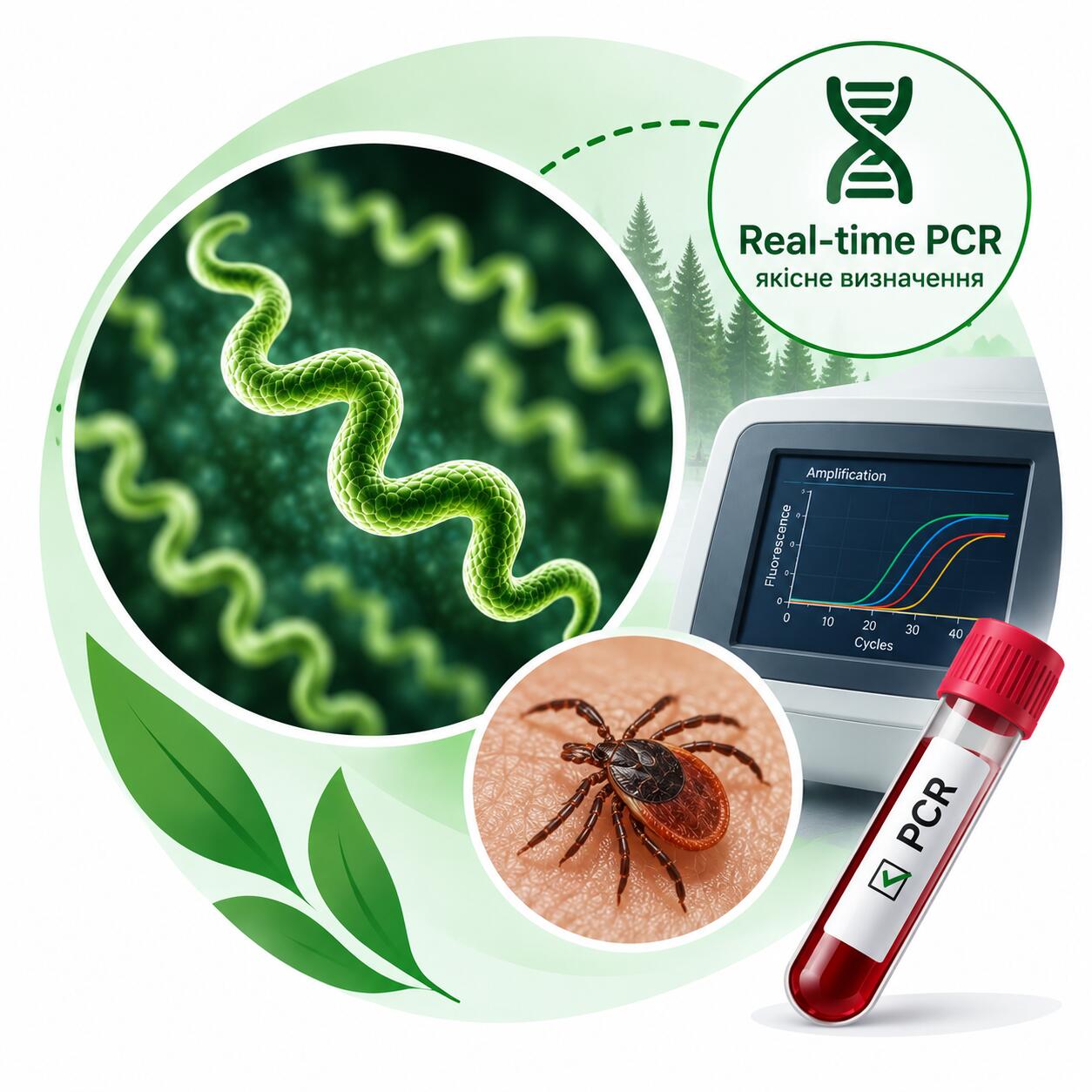
Lyme borreliosis is an infectious disease caused by bacteria of the Lyme complex. Borrelia burgdorferi sensu lato. Human infection occurs mainly through bites of infected ticks of the genus Ixodes. Timely detection of the pathogen and correct interpretation of laboratory test results help the doctor determine further examination and treatment tactics.
Clinical manifestations of Lyme disease depend on the stage of the disease. Possible symptoms include erythema migrans (a gradually increasing redness of the skin), neurological disorders, joint pain and inflammation, and certain cardiac manifestations.
What does the analysis for Borrelia burgdorferi sl by Real-time PCR show?
Real-time polymerase chain reaction (Real-time PCR) is a molecular genetic method that allows the detection of specific fragments of Borrelia DNA in the biological material under study.
The analysis uses specific primers and probes that recognize target sequences of the pathogen's genetic material. This allows the presence of Borrelia DNA in the sample to be determined.
The study can be useful in the diagnosis of Lyme borreliosis under appropriate clinical indications. However, the possibility of detecting the pathogen depends on the type of biomaterial, the stage of the disease, and other factors.
Features of the Real-time PCR method
The advantages of the method include:
- Specificity. The use of primers and probes targeting specific regions of DNA helps detect the genetic material of the target pathogen.
- High analytical sensitivity. The method can detect small amounts of target DNA provided the sample is properly collected and prepared.
- Detection of the pathogen's genetic material. Unlike serological tests that detect antibodies, PCR is aimed at directly detecting Borrelia DNA.
It is important to note that a negative PCR result does not always rule out Lyme disease. It may depend on the location of the pathogen, the stage of infection, and the type of material tested. Therefore, the results of the analysis are evaluated in conjunction with clinical manifestations, history, and, if necessary, other laboratory tests.
When should you see a doctor?
After a tick bite or if you develop symptoms that may indicate Lyme disease, you should consult a doctor. He or she will assess the risk of infection, clinical manifestations, and determine which laboratory tests are appropriate in your specific situation.
Laboratory diagnostics are an important component of the examination, but the choice of method depends on the clinical picture and the time elapsed since possible infection.
So, qualitative DNA determination Borrelia burgdorferi sensu lato Real-time PCR is one of the tools for laboratory diagnostics of Lyme borreliosis. For correct interpretation of the result, it is necessary to take into account the type of biomaterial, the stage of the disease and the patient's clinical data.
| Type of biomaterial | Venous blood |
|---|---|
| Execution time | 1 day |
Useful tests