

Determination of group A streptococcal antigen
250 UAH
Rapid test for the detection of group A streptococcal antigen (Strep A)
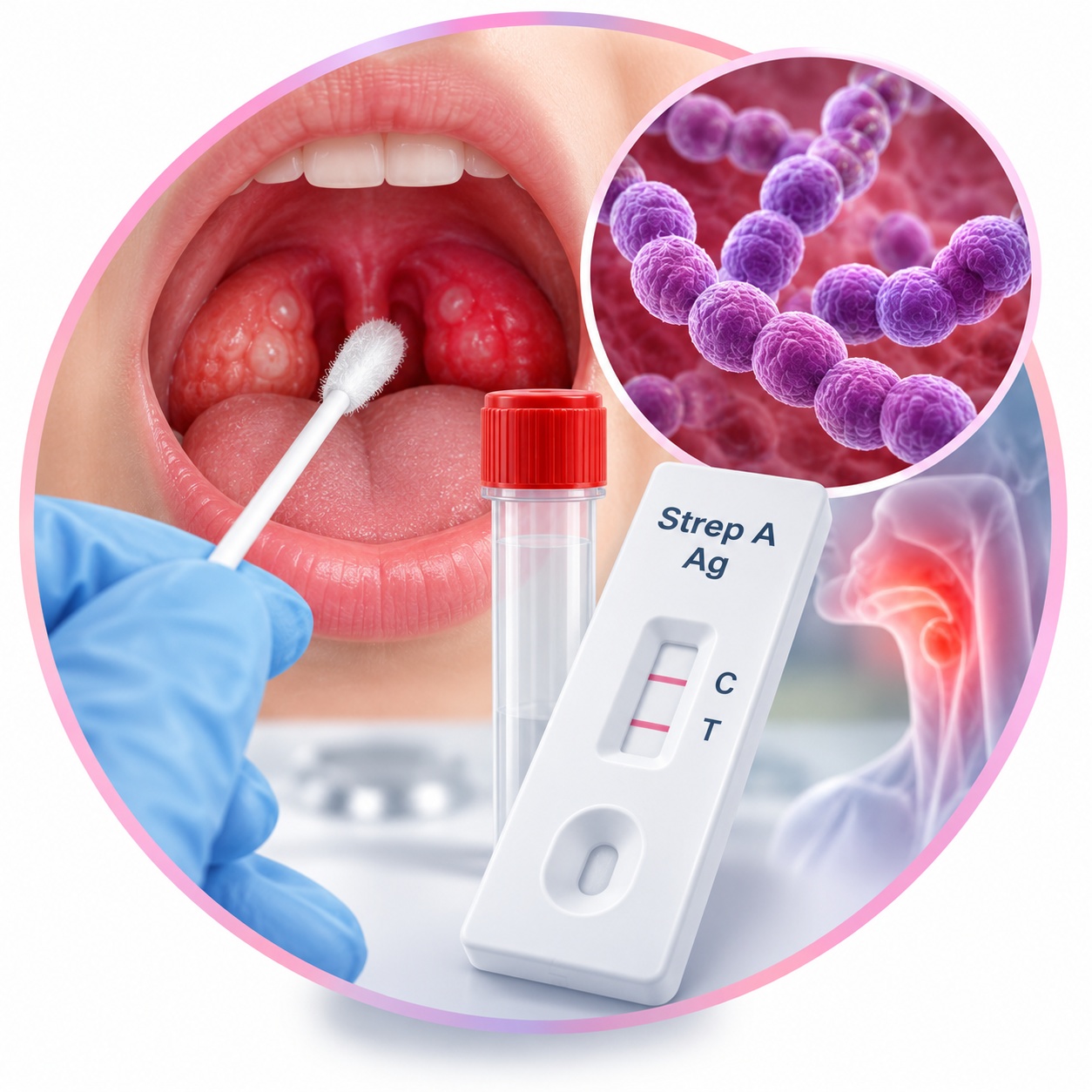
Appointment: A rapid, qualitative immunochromatographic test for the diagnosis of streptococcal pharyngitis (tonsillitis) by detecting Streptococcus pyogenes antigens in swabs from the tonsils and posterior pharyngeal wall.
Description
Group A streptococci are one of the most common pathogens among humans. They can cause a number of diseases, including sore throat, scarlet fever, rheumatic fever, and other infectious diseases. One of the key methods for identifying streptococcal infection and determining its type are bacteriological studies. In this article we will look at, how is group A streptococcal antigen determined and how Bacteriological studies are being conducted to diagnose this infection.
- Group A Streptococcus: General Information Group A streptococcus, or Streptococcus pyogenes, are gram-positive cocci that cause a variety of diseases from soft tissue and throat infections to serious infections such as rheumatic fever and glomerulonephritis. An important part of diagnosing a streptococcal infection is determining its group, as this affects the treatment and prognosis of the disease.
- Determination of Group A Streptococcal Antigen Immunological methods such as immunodiffusion, enzyme-linked immunosorbent assay, and immunoclinical tests are used to determine Group A Streptococcal antigen. The primary purpose of these methods is to detect the presence of Group A antigen in a specimen obtained from a patient. If Group A antigen is detected in the specimen, it confirms the presence of a streptococcal infection.
- Bacteriological studies Bacteriological studies play an important role in the diagnosis of streptococcal infection and determining its properties, such as antibiotic susceptibility. The main steps of bacteriological studies include the following:
- Sample collection: To perform the test, a doctor usually takes a swab from the patient's throat or nose. This test helps detect the presence of group A streptococci.
- Agar plate: The collected sample is plated on a special agar that promotes bacterial growth. This agar usually contains additional substances that help distinguish group A streptococci from other microorganisms.
- Identification: After the bacteria grow on agar, identification is performed, which involves determining the morphology of the bacteria and their properties. Group A streptococci are characterized by certain morphological and biochemical features.
- Antibiotic sensitivity: The study may also include determining the sensitivity of streptococci to antibiotics. This helps to choose an effective course of treatment.
- Conclusion Group A streptococcal antigen testing and bacteriological testing are important tools for the diagnosis and treatment of streptococcal infections. These procedures are typically performed in a laboratory setting by trained personnel. Early diagnosis and treatment of streptococcal infections help prevent complications and improve the prognosis for patients.
Additional information
| Execution time | 1 day |
|---|---|
| Type of biomaterial | naso-oropharyngeal scraping |