
Anti-Treponema pallidum, (IgM+IgG)
350 UAH
Infection Panel/Syphilis Diagnosis
Description
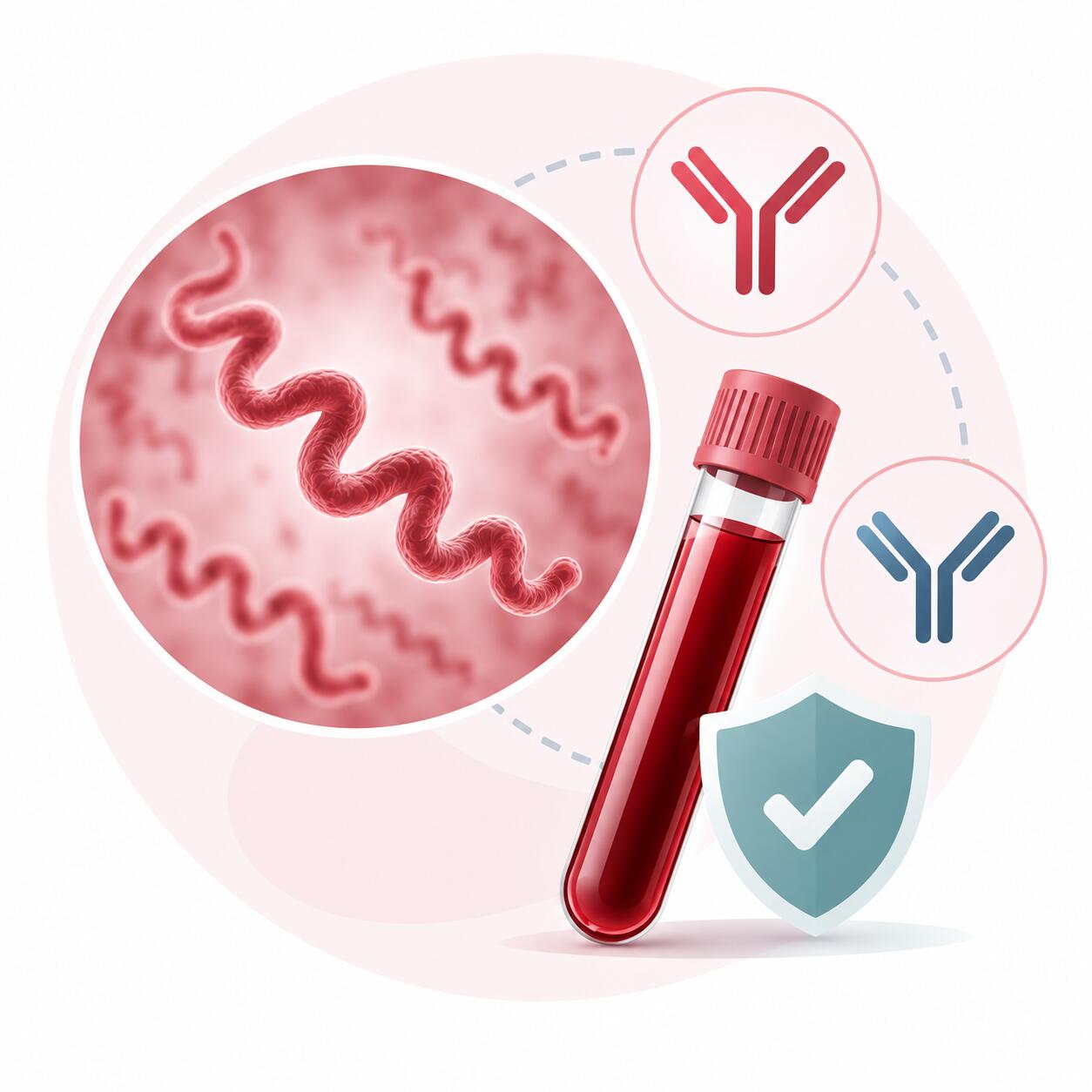
Anti-Treponema pallidum (IgM+IgG): Primary source of immune response and diagnostic methods. Treponema pallidum is the bacterium that causes syphilis, one of the most common sexually transmitted diseases in the world. Syphilis is a chronic infectious disease that can cause serious complications if not detected and treated early. The body's immune response to the presence of Treponema pallidum plays an important role in the diagnosis of syphilis and control of the spread of the disease.
IgM (immunoglobulin M) and IgG (immunoglobulin G) are two types of antibodies that occur in the body according to different stages of infections and immune responses. Various methods such as immunological tests and serological tests are used to diagnose anti-Treponema pallidum (IgM+IgG).
In the diagnosis of syphilis, immunoglobulins IgM and IgG become key markers. IgM antibodies are formed in the initial stages of infection and are usually detected 1-3 weeks after contact with the pathogen. Their appearance indicates an active infection process. However, IgM immunoglobulins can also be present in other infections or even chronic diseases, so for an accurate diagnosis it is necessary to combine them with other clinical data.
IgG antibodies are formed in the later stages of infection and remain in the body for many years after successful treatment for syphilis. They can be useful for detecting previous infections that have been cured, as well as for monitoring the effectiveness of treatment.
One of the most common methods for diagnosing anti-Treponema pallidum is the enzyme-linked immunosorbent assay (ELISA). This test is based on the interaction of antibodies with Treponema pallidum antigens, which allows detecting the presence of IgM and IgG antibodies in the patient's blood plasma. ELISA is a highly sensitive and specific method for diagnosing syphilis, but requires laboratory equipment and qualified specialists to perform it.
Another method is immunochromatographic tests (seret tests). They allow to quickly determine the presence of anti-Treponema pallidum antibodies in the patient's blood. These tests are easy to use, do not require laboratory equipment and can be performed in an outpatient setting. However, they are less sensitive than ELISA and can give false results in some cases.
The main goal of anti-Treponema pallidum (IgM+IgG) diagnostics is to detect infection at an early stage to prevent further spread of the disease and to prescribe treatment in a timely manner. If syphilis is not detected at an early stage, it can progress to more serious stages, leading to complications for the patient and his contacts.
In case of a positive anti-Treponema pallidum (IgM+IgG) test result, additional clinical studies are necessary to confirm the diagnosis. The doctor should take a detailed history, identify all possible sources of infection and prescribe appropriate treatment to help the patient return to health.
Therefore, anti-Treponema pallidum (IgM+IgG) testing plays an important role in the control and treatment of syphilis. Immunoassays, such as ELISA and immunochromatographic tests, allow rapid and accurate detection of antibodies, which allows treatment to be initiated at an early stage of the disease. Prevention and early detection of syphilis are key factors in controlling this serious infection and maintaining public health.
Additional information
| Execution time | 1 day |
|---|---|
| Type of biomaterial | Venous blood |
Related products







-20%