
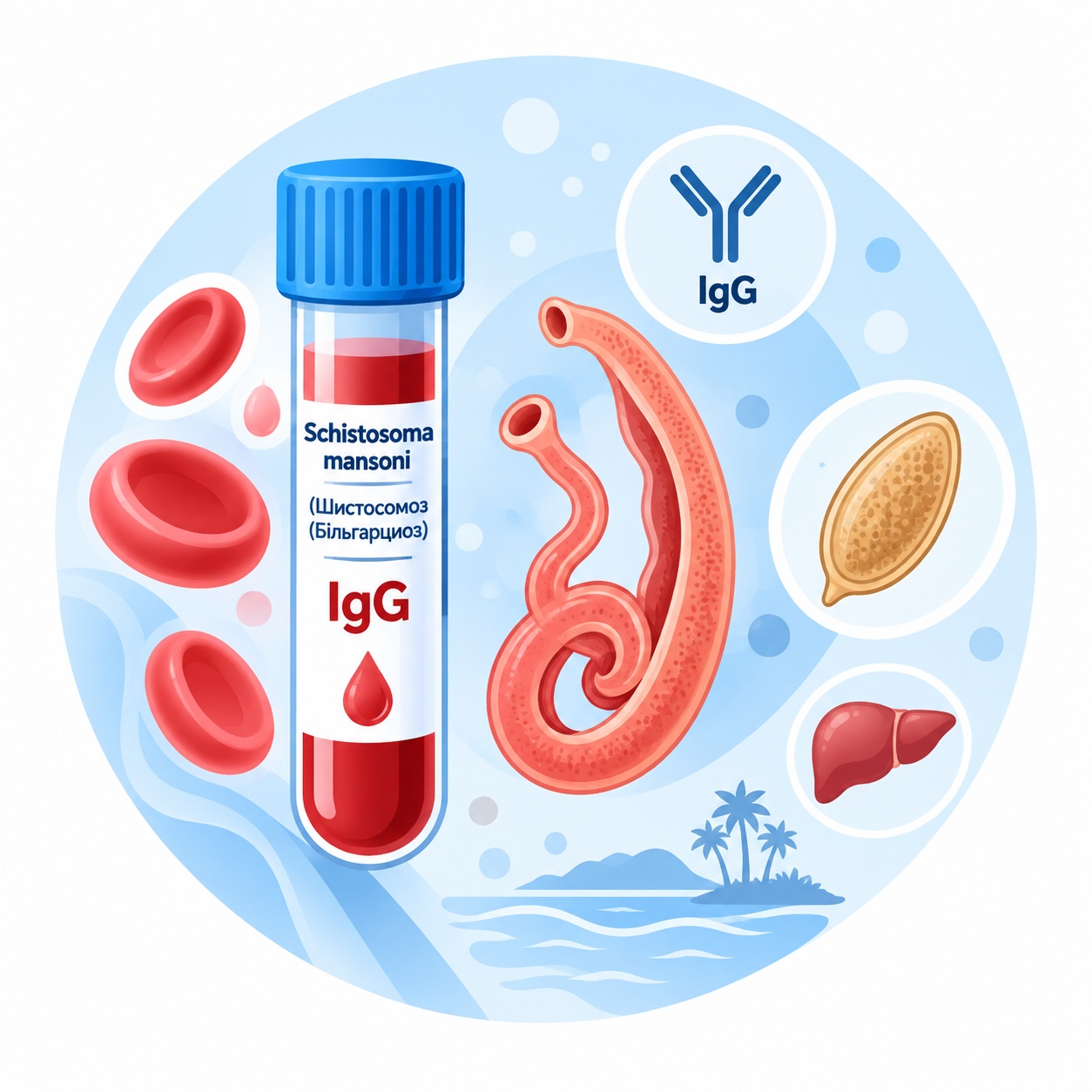
Schistosoma mansoni (Schistosomiasis (Bilhartiosis)), IgG
1,200 UAH
Infectious panel/Parasitology
Description
Schistosoma mansoni: Parasitological characterization and determination of IgG infectious panel
Schistosomiasis, also known as bilharzia, is an important parasitic infection caused by the flatworm Schistosoma mansoni. The disease is common in many tropical and subtropical regions of the world, especially in Africa, Latin America, and the Middle East. Schistosomiasis has a significant medical and social impact in affected regions.
Life cycle of Schistosoma mansoni
The life cycle of Schistosoma mansoni is quite complex and involves two hosts: humans and an intermediate host, a crustacean. Infection occurs through contact with contaminated water sources where the infective stages of this helminth exist. After entering the human body, the larvae develop in the body and lead to the formation of ovipositors in internal organs, especially in the liver. Mature eggs are excreted along with the kidneys into the water, where they can infect mollusks.
In mollusks, the larvae will develop into cercariae, which are infectious to humans. The cercariae then leave the mollusk and enter the human body, penetrating through the skin when in contact with contaminated water. Once inside the body, they travel to the blood vessels and eventually develop into adult worms.
Symptoms and complications
Schistosomiasis can have a serious impact on human health. Initial symptoms may be similar to the flu, including fever, muscle and joint pain, fatigue, and headache. Over a long period of infection, more serious complications can develop, such as liver ulcers and fibrosis, intestinal bleeding, and in some cases, even cancer.
Diagnostics and IgG infection panel
To diagnose schistosomiasis, doctors use various methods, including microscopy of eggs in stool, blood, or tissue after biopsy, as well as immunological tests, including determining the levels of IgG antibodies in the patient's blood.
IgG antibodies are immunological proteins produced by the body in response to infection. Measuring levels of IgG antibodies to Schistosoma mansoni can be useful in making a diagnosis and assessing the activity of the infection. Elevated levels of IgG antibodies may indicate active infection, while low levels may indicate past infection or no infection at all.
Prevention and treatment
Prevention of schistosomiasis includes unique protection from contact with infected water, for example, through the use of protective clothing or avoiding swimming in bodies of water where there may be a risk of infection.
Schistosomiasis is usually treated with antiparasitic drugs such as praziquantel or oxamniquine. Treatment is usually effective, especially with early diagnosis and correct dosing.
Conclusion
Schistosoma mansoni, or bilharzia, is a serious parasitic infection common in tropical and subtropical regions of the world. Diagnosis of this disease involves measuring the levels of IgG antibodies in the patient's blood, which can help confirm the diagnosis and determine the activity of the infection. Treatment with available antiparasitic drugs is usually effective, but prevention and avoidance of contact with infected water remain important components of the control of this disease.
Additional information
| Execution time | 1 day |
|---|---|
| Type of biomaterial | Venous blood |
Related products






-20%