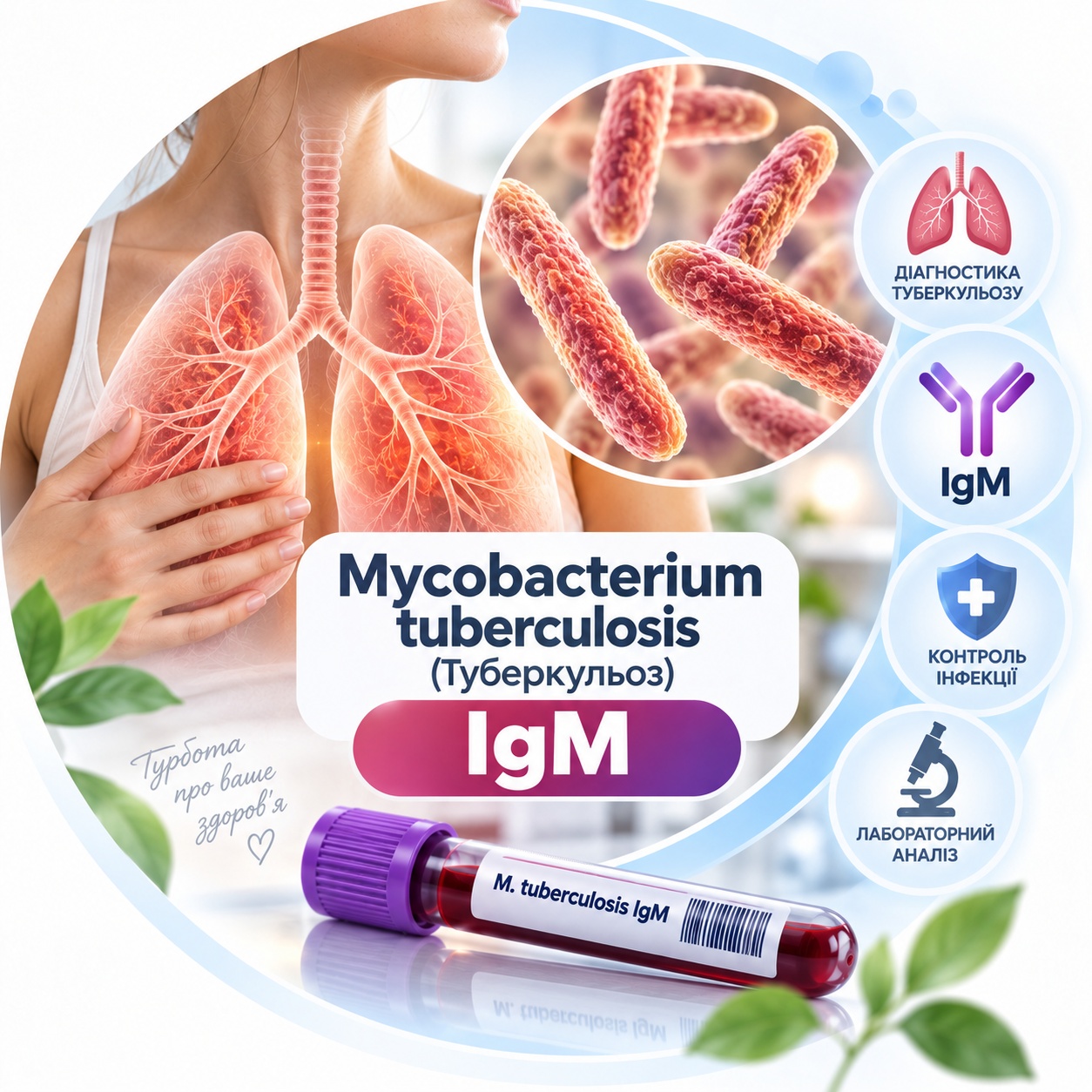

Mycobacterium tuberculosis (Tuberculosis), IgM
380 UAH
Infectious Disease Panel/Tuberculosis
Description
Mycobacterium tuberculosis, often called the tubercle bacillus, is the bacterium that causes the serious infectious disease known as tuberculosis (TB). The disease has historically been identified as one of the world's deadliest infectious diseases and continues to be a serious global public health problem.
Tuberculosis can affect different organs in the body, but most often it attacks the lungs. Symptoms tuberculosis Symptoms can vary and depend on which part of the body is infected. They usually include a cough, fever, weight loss, and fluid buildup in the lungs. Left untreated, tuberculosis can lead to serious complications and death.
The immune response to Mycobacterium tuberculosis plays an important role in fighting infection. One of the key elements of this response is immunoglobulin M (IgM), which is a type of antibody. IgM is produced by white blood cells that are activated upon contact with an infection. They play an important role in phagocytosis (the process of engulfing and destroying bacteria) and in activating other elements of the immune system.
An immunological panel that includes measurements of IgM levels and other immunological parameters can be used to diagnose tuberculosis and determine the effectiveness of treatment for the infection. Determination of IgM levels can indicate the activity of the infection and the effectiveness of the patient's immune response to tuberculosis.
Treatment for tuberculosis usually involves taking antibiotics, such as isoniazid and rifampicin, for a long period of time (usually 6 months or more) to completely eliminate the bacteria from the body and prevent relapse. It is important to take antibiotics exactly as your doctor recommends and to complete the full course of treatment, even if your symptoms have gone away, as not taking enough can lead to the development of drug-resistant tuberculosis, which is much harder to treat.
Prevention of tuberculosis includes vaccination (BCG vaccine) and adherence to hygiene rules, such as proper hand washing and avoiding contact with infected individuals. The main goal is to prevent the spread of the tuberculosis bacteria and reduce the risk of infection.
In summary, tuberculosis is a serious infectious disease that can affect various organs of the body, including the lungs. The immune response, in particular IgM levels, plays an important role in combating the infection. Diagnosis and treatment of tuberculosis require specialized medical care, and prevention involves vaccination and adherence to hygiene standards. The fight against this disease remains an urgent global public health challenge.
Additional information
| Execution time | 1 day |
|---|---|
| Type of biomaterial | Venous blood |
Related products