Partial kidney resection (PG045)
800 UAH
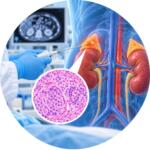
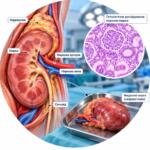
Partial kidney resection (PG045) — histological examination of the removed kidney fragment to assess the tissue structure, determine the nature of pathological changes and morphological features of the detected formation.
Histological material is taken only in medical institutions.
Pathomorphological examination in partial kidney resection — is a histological analysis of the removed part of the organ (tumor with an adjacent area of healthy tissue). This organ-preserving operation (resection of the kidney) is the modern standard of treatment for small neoplasms. The study under the code PG045 allows you to accurately establish the diagnosis and, most importantly, confirm whether the tumor was completely removed.
Research objective: The main task is to verify the histological type of the tumor and assess the radicality of the operation. The pathologist must confirm the status of a «clean margin», which guarantees the absence of residual cancer cells in the kidney and minimizes the risk of local recurrence.
What does the pathologist evaluate:
Histological subtype of cancer: determination of the specific type (clear cell, papillary, chromophobe renal cell carcinoma, or benign oncocytoma).
Degree of aggressiveness (Furman/ISUP Grade): an assessment of how different the tumor cells are from normal ones (from G1 to G4).
Surgical margin status (R0/R1): Microscopic examination of the incision margin. Absence of tumor at the margin (R0) indicates successful removal.
Invasion into the capsule and vessels: Checking whether the tumor has spread beyond the renal capsule and has not grown into small intra-organ vessels.
Condition of non-tumor tissue: assessment of the surrounding parenchyma for the presence of concomitant diseases (nephrosclerosis, nephritis).
Clinical significance: The conclusion under the code PG045 directly affects the further plan of observation. If the tumor turned out to be benign or malignant with a low degree of aggressiveness and «clean» edges, the patient only needs routine ultrasound or CT scans. In case of detection of aggressive forms or a positive resection margin, the oncologist may prescribe additional treatment or more frequent monitoring.
When is it prescribed:
after laparoscopic or open kidney resection for stage T1 tumors (up to 7 cm);
when removing neoplasms of a single kidney to preserve its function;
if large benign renal tumors are suspected (e.g., angiomyolipoma);
after removal of complex renal cysts with suspected malignancy (Bosniak III-IV).
| Execution time | 2 days |
|---|---|
| Type of biomaterial | Tissues and organs |
Useful tests