
Antibodies to thyroid peroxidase (ATPO, ATRA)
320 UAH
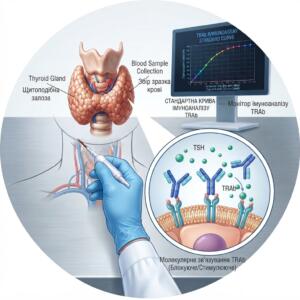
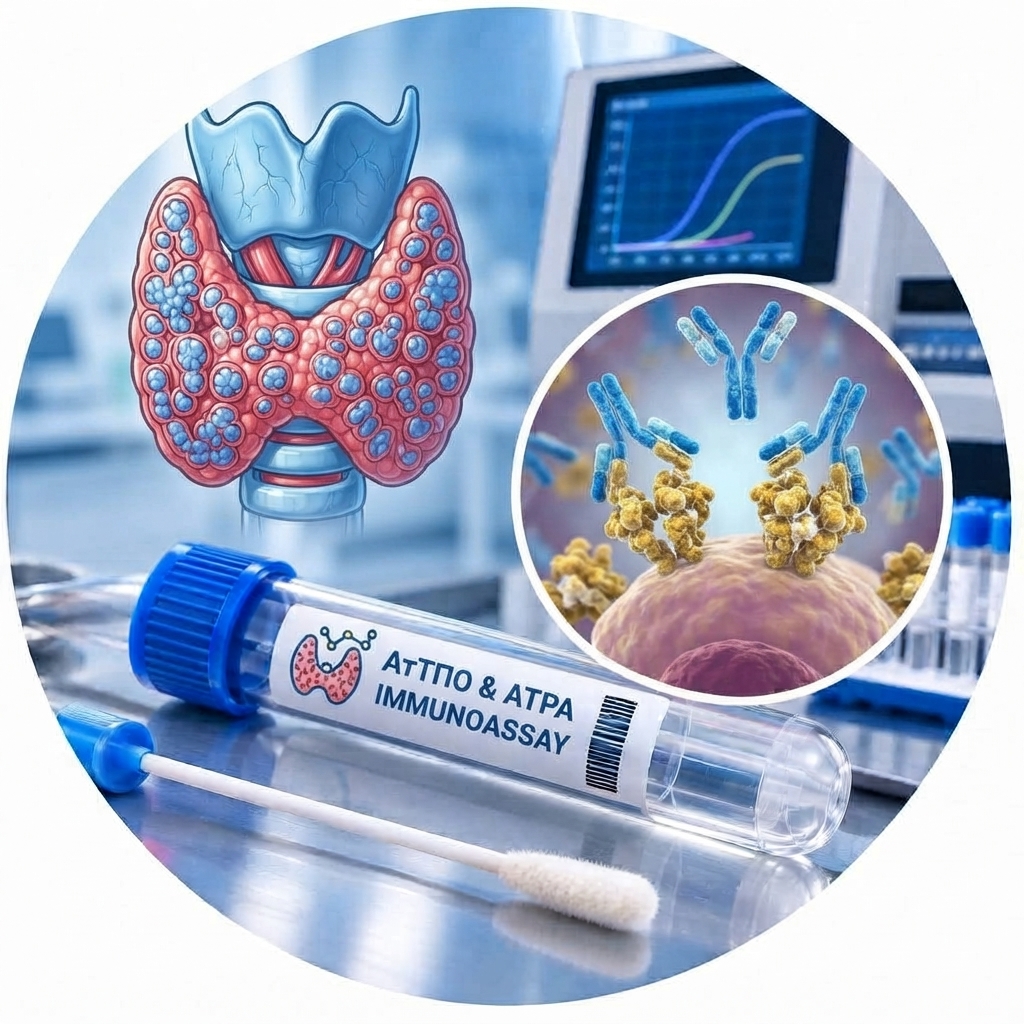
This comprehensive test measures the levels of two types of antibodies — anti-thyroid peroxidase (ATPO) and anti-TSH receptor (ATRA). The determination of these markers allows doctors to differentiate between different forms of autoimmune thyroid diseases, such as Graves' disease and Hashimoto's thyroiditis. The results of this immunoassay are key to establishing an accurate diagnosis and choosing the most effective treatment strategy.
Thyroid Peroxidase Antibodies (TPO, ATRA) and Thyroid Panel: Role in Diagnosis and Thyroid Health
The thyroid gland is one of the key organs of the human endocrine system. It is responsible for the production of hormones that regulate metabolism, energy balance, and the function of numerous organs and systems. One of the main components of the thyroid gland's function is the production of the hormones thyroxine (T4) and triiodothyronine (T3). The balance of these hormones is critical for the health and normal functioning of the body.
Anti-thyroid peroxidase antibodies, also known as ATPO or ATRA, – these are antibodies, which are produced by the body's immune system against thyroid tissue. The presence of these antibodies can be an indicator of various thyroid diseases, especially autoimmune diseases such as Hashimoto's disease and nodular goiter.
A thyroid hormone panel, also known as a thyroid panel, includes various tests designed to determine the levels of hormones produced by the thyroid gland. The main components of this panel are:
- Serum thyroid-stimulating hormone (TSH): TSH is produced by the anterior pituitary gland and stimulates the thyroid gland to produce thyroxine (T4) and triiodothyronine (T3). Elevated TSH levels may indicate hypothyroidism, while decreased levels may be a sign of hyperthyroidism.
- Thyroxine (T4): T4 is the main hormone produced by the thyroid gland. Total and free forms of T4 are measured. Total T4 includes T4 that is bound to proteins in the blood, while free T4 is the active form of the hormone. Changes in these levels can be associated with various thyroid diseases.
- Triiodothyronine (T3): T3 is the active hormone that is formed from T4. Total and free forms of T3 are measured. High levels of T3 may indicate hyperthyroidism.
Antithyroid peroxidase antibodies (ATPO) are often measured along with these hormones because their combined measurement can aid in the early diagnosis of thyroid disease. High levels of ATPO may indicate the presence of autoimmune inflammation of the thyroid gland and require further investigation and treatment.
The presence of these antibodies is also important for women during pregnancy, as high levels of ATTP may be associated with the risk of hypothyroidism in the newborn. Proper treatment and monitoring of thyroid function are important for the health of both mother and child.
In conclusion, measuring ATP and thyroid hormone levels is important for the early diagnosis and management of thyroid diseases. This information helps doctors prescribe appropriate therapy and monitor thyroid status to ensure optimal patient health.
| Execution time | 1 day |
|---|---|
| Type of biomaterial | Venous blood |
Useful tests